Inside the mind of Erica Parkinson: How Lionesses teenager's elite mentality will help her become an NWSL success - and potentially earn her a Women's World Cup call-up
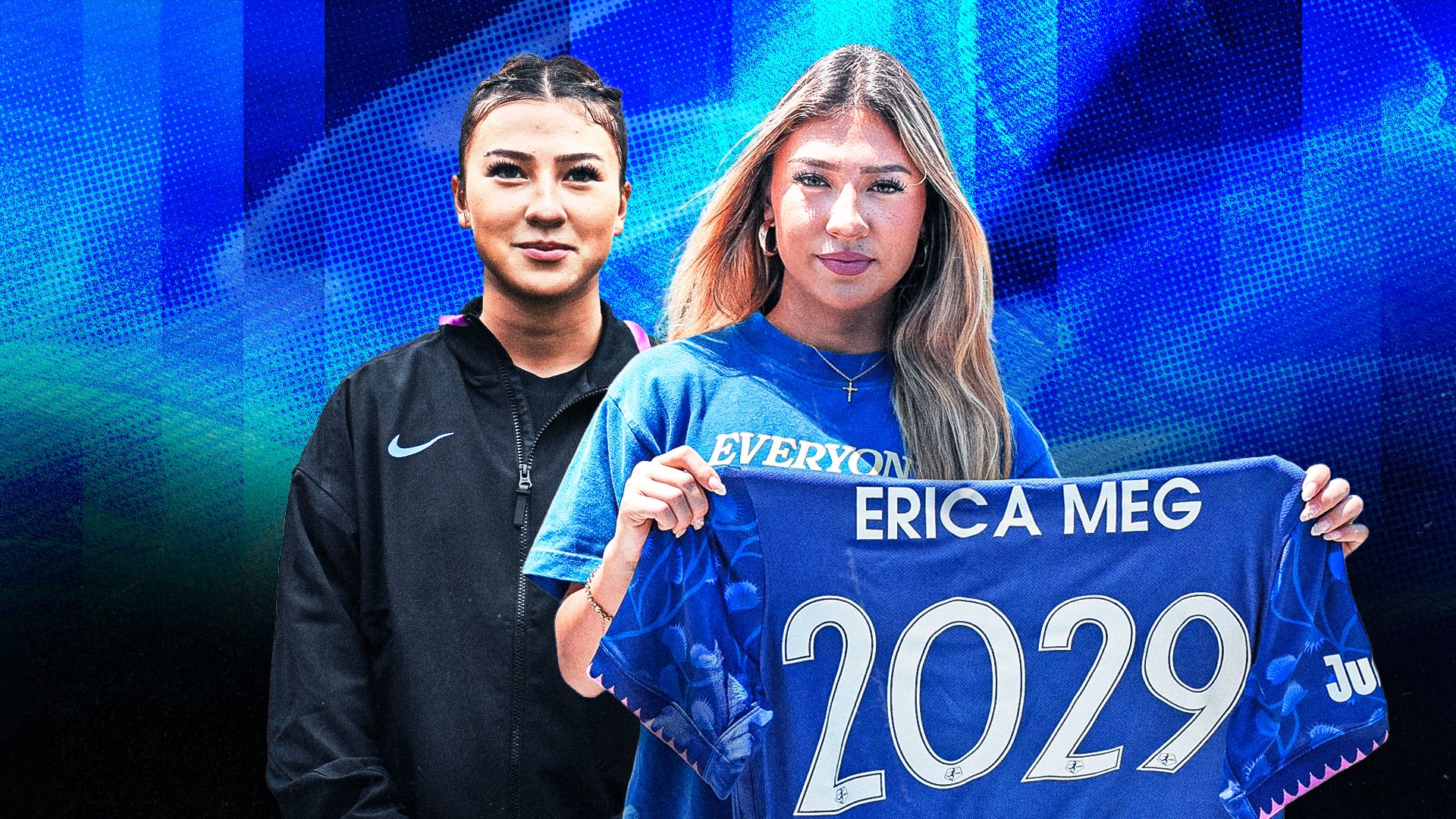
For years, the All Blacks, New Zealand's famous rugby union team, had been underperforming. After winning the first Rugby World Cup in 1987, the regular pre-tournament favourites would lose three semi-finals and one final in the next four editions, before going out in the quarter-finals in 2007. Something had to change.And it did. Working with Gazing Performance, using their ‘Red2Blue’ principle, the All Blacks learned how to transform the stress and anxiety of pursuing that second World Cup title (the red head) into the clear, focused mindset needed to deliver it (the blue head). It was a factor talked about heavily in the aftermath of New Zealand’s triumph on home soil in 2011 and it significantly raised the profile of Gazing Performance, so much so that it would eventually come onto the radar of Parkinson’s father.When that happened, the Parkinson family were moving. Denis, Erica’s older brother, had been scouted to play for Porto’s academy, meaning it was only a short flight for their father to head to London to meet with Martin Fairn, the CEO of Gazing. It was there that he inquired about the possibility of the company working with both Denis and Erica in some one-to-one mindset coaching."I said, ‘I’d be delighted if they want to do it and if you want to do it’," Fairn recalls now, speaking to GOAL. "So I met with them both. Denis was, 'Yep, yep. I'm on it'. Very studious, very clear, very emotionally intelligent as a young man. And Erica, as a 12-year-old, said, 'What's he doing? I want to have a go at that'. And if you've met Erica, you know that's how she is."Gazing can count people from so many different sports and walks of life among its clientele. From rugby to football, motor racing to cricket, mountaineering to marathon running, the Red2Blue principle is also used in military settings, businesses and ordinary everyday scenarios like customer service."It’s human first," Fairn explains, "so it works across multiple places." But what about when you are working with a 12-year-old?"When you meet someone like Erica, she's different," Fairn says, as he recalls the first conversation he had with her, in which she declared her dream was to play for England at a World Cup. "When you hear something like that, you're opening the door to a conversation that could well go forward in a very positive and helpful frame."There are adaptations made to account for different ages, of course, and there is a need for the client to be locked in, in a way that not all 12-year-olds would be."Then you introduce the key thing that, whether they're 12 or 50 or whatever they might be, mentality is a skill and the notion of it being a skill immediately connects to anybody who has the idea of getting better at something," Fairn explains. "You can learn it and you can practice it and, most of all, like any skill, you can get better at it."Unsurprisingly, that connected with Parkinson and her competitive spirit. So, on top of learning and practicing and getting better in a footballing sense for years, she’s also been doing so in a mental sense, with both going hand-in-hand to help her rise to the point she is at now.And that rise has come with great adaptation. Progressing through a boys’ academy in Portugal, to senior football with Valadares Gaia, through each youth category at England before eventually stepping into the Lionesses’ environment, the 18-year-old has had to adjust to each jump, and her work on her mindset has helped with it."Each time she's gone to different levels, she does work with me, and primarily with herself, just to ensure that she's ready for the change in levels," Fairn explains. "She’s ready for the sources of pressure, she's ready for the moments on the field that she's going to experience and she's ready for the moments around the field as well, which is, I would argue, as important as being ready on the pitch, to be ready for what you're going to experience around the pitch as well."It’s work that should stand Parkinson in good stead for what is about to come, after she penned a three-year deal with the North Carolina Courage. The NWSL is one of the best leagues in the women’s game, home to world-class talent like Trinity Rodman, Barbra Banda and Temwa Chawinga. The level is extremely high.But it is also an excellent league when it comes to developing young talent, with players born in 2005 or later granted an average of 726 minutes each in the 2025 season. When compared to Europe's top five leagues in the 2025-26 campaign, that ranked second, only behind Spain's Liga F."From the first moment I spoke to [the club], I thought they were a very organised club," Parkinson said upon her unveiling, asked why she chose to sign for the Courage. "They had a very good plan for me and it was something that aligned with what I look for as a player. I think the playing style and, from the games that I’ve watched, the way the team likes to attack, it’s something that I align myself with a lot."I think they are really exciting on the pitch so that’s something maybe I can add to as well. Then, overall, I’ve heard a lot of great things about the culture."Despite her age and relative inexperience, Parkinson has plenty to contribute to the North Carolina Courage from the get-go, too. Only six teams in the NWSL have created fewer big chances, per 90 minutes, than Mak Lind’s side, all of them sat below the Courage in the standings. If they want to keep pace with the Championship contenders, improving in that realm will be vital, and Parkinson, with her wonderful eye for a pass and excellent spatial awareness, can help.The teenager showcased those qualities throughout her time in Portugal, to be crowned Best Young Player in Liga BPI in the 2024-25 season, and throughout the England youth teams, to rise from the U17s to the U23s in the space of just 13 months, before getting her senior call-up only two camps later.Carry those qualities over to the United States, and showcase them regularly, and there’s no reason why Parkinson can’t stay in the mix for a place in Wiegman’s squad moving forward, even if injuries paved the way for her to get that first nod.New challenges will arise. The spotlight is getting brighter, attention is growing and the stages are becoming much bigger, with more pressure. But Parkinson has been preparing for this sort of thing ever since she was 12 years old, ever since she decided that working with a mindset coach was the right thing for her to do in order to achieve her biggest dreams.It’s early days, but the signs are there that the teenager is well-prepared, too. After jetting off to that first Lionesses camp in April, Fairn caught up with Parkinson, to talk about her preparation for the week ahead. She’d already done the work and identified the pressures to be overcome. When he spoke to her after the camp, Parkinson admitted it was quite daunting and overwhelming, as she’d expected, but that, amid it all, she felt at home. Every milestone is seen as a step, and that keeps things clear in the mind."She's just ready," Fairn believes. "I'm not saying so therefore she's going to be the next best England player ever. She's just ready mentally for what she's going to experience. That will allow her physical and technical and tactical skills to speak for themselves."That will continue to be Parkinson’s goal as she heads to the U.S. for the next step of her compelling journey.

Most Popular
.jpeg?width=1200&auto=webp&quality=75)


Majestic Olise pulling France's strings
10 hours ago