
WSL academies: Can they improve to help homegrown talent?
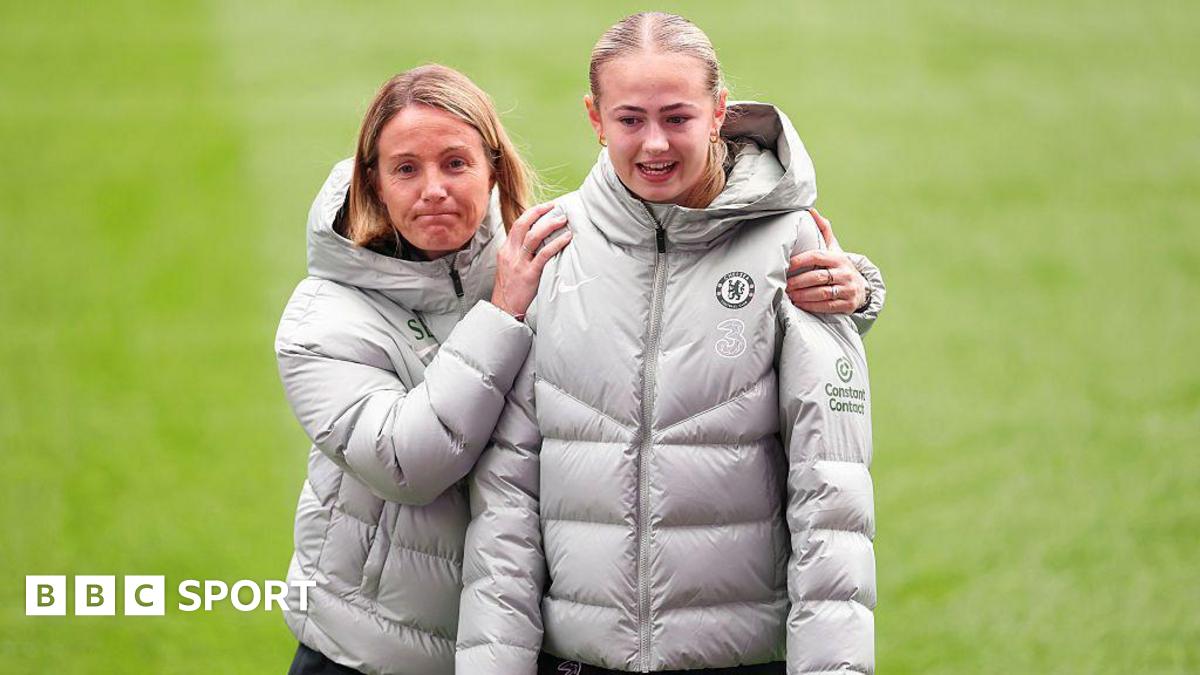
While the Women‘s Super League grows each season, so does the challenge for England's youngsters hoping to break through - as Sonia Bompastor has noted.Chelsea's manager has raised concerns over the gap between academy football and first-team level - so is it an issue? And if so, how can it be solved?Last month, Bompastor flagged that her squad depth as thin - but did not feel she could call on many from the club's academy."We wanted to come into this game with 20 players including the bench and we couldn't for many reasons," she said following their Women's League Cup final victory over Manchester United."When I was in Lyon before, I could really have four or five players from the academy and they were able to perform at a really good level in the first team."Here, I think they are playing at a level where there is a huge gap and they are not ready."The FA (Football Association) should reflect with the top clubs about the structure of the competitions in order for the young players to be able to bridge the gap."According to sources at WSL clubs, Bompastor's comments are widely agreed with.At the leading English clubs, players are developed by Professional Game Academies (PGA), funded and operated by the Football Association.The FA first awarded 20 initial PGA licences to clubs in England’s two top tiers in 2023 as part of a major revamp.From the 2028-29 season, WSL Football - the company that operates the Women's Super League - will take over full responsibility.As well as the PGAs, lower-tier clubs often create partnerships with schools and colleges to form a local talent pool. They can also set up their own youth teams and academies but would not be part of a professional league.The FA has linked up with Women's National League clubs - the third tier - to provide funds and resources for developing young talent, as well as building connections with WSL sides who want to loan players out to clubs at that level.Some academies have also been involved in the Women's National League Cup and Plate competitions, and they can enter local Senior County Cup tournaments.The maximum number of matches teams can play in a PGA league - competitions set up for age groups up to Under-21 level - has increased from 19 to 27 in the past five seasons.In summary, England's youngsters are getting more game time and playing in a wider range of competitions - but it is not at the elite level.There are gaps in the data but both the FA and WSL Football have confirmed the number of minutes played in the top tier by English academy graduates has dropped dramatically in recent seasons because of the increased competition for places.Manchester City manager Andree Jeglertz told BBC Sport it is "the biggest step a young player will take" when they break into a WSL squad."I can only look at our own academy and it is a big step to go from there to being a senior player, especially for clubs like Chelsea and Manchester City - teams who want to be competing in Europe," he added."What is the best solution to that? I don't know. There definitely has to be some way to bridge that gap, whether that's how they are training or [the] professional [environment]."One way City have prepared their young players is by having them train regularly alongside boys.It is a tactic mirrored by several WSL clubs, including Chelsea, who believe the increased intensity and physicality of boys' training is helpful.This month, England manager Sarina Wiegman called up teenager Erica Meg Parkinson to the squad after she had played regular women's first team football in Portugal and had spent a number of years training with boys.But Chelsea boss Bompastor says other leagues across Europe are tackling the problem in a different way and England could follow suit.During her eight years at Lyon, where she was also head of their academy, Bompastor held discussions with the French federation, which later introduced a system allowing top-tier academies to play in the second division."The young players play with the adults. There are some rules, so for example when I was at Lyon, the reserve team could not have players older than 23," said Bompastor."The biggest fear for the French federation was for a club like Lyon to go and take all the best players from other clubs. If you make the right rules, then the objective is to play young kids in that division."Playing against senior players will make them progress a lot. You need to find a good balance for them to have a really good competition in order to develop them."There have been huge developments at national level.Lionesses manager Sarina Wiegman has called up more than 20 youth-team players in her four-and-a-half years in charge after a restructuring of England's pathway.There has always been talent in England - back-to-back European success for the Lionesses has shown that - but many of those players gained regular club first-team football at a young age which isn’t happening now.It is understood that WSL Football is working on major proposals regarding the structure of the domestic women's game, which could include allowing academy teams from the top tier to play in the Women's National League.Sources say WSL Football's future plans are centred around five key themes which include:Consistently producing world-class talentCreating an accessible route between grassroots and elite levelsPersonalised support systems for every player to develop on and off the pitchBuilding sustainable and 'investable' club environmentsEmbedding high professional standards across all leaguesThe current dual registration system is expected to remain in place - allowing WSL academy players to represent their parent club's PGA, as well as play in the Women's National League.Tottenham defender Grace Breen, on a dual registration with QPR, recently summed up how playing on WSL 2 differed from academy football.She told Spurs' website: "The main differences I'd say is probably the intensity is higher, the stakes are higher and it's less about development and more about performance and success."



Most Popular


Bisons Down Christian Brothers 6
10 hours ago


Oklahoma State University Athletics
11 hours ago