Save Wales: can the Hundred get cricket in the country ticking again?
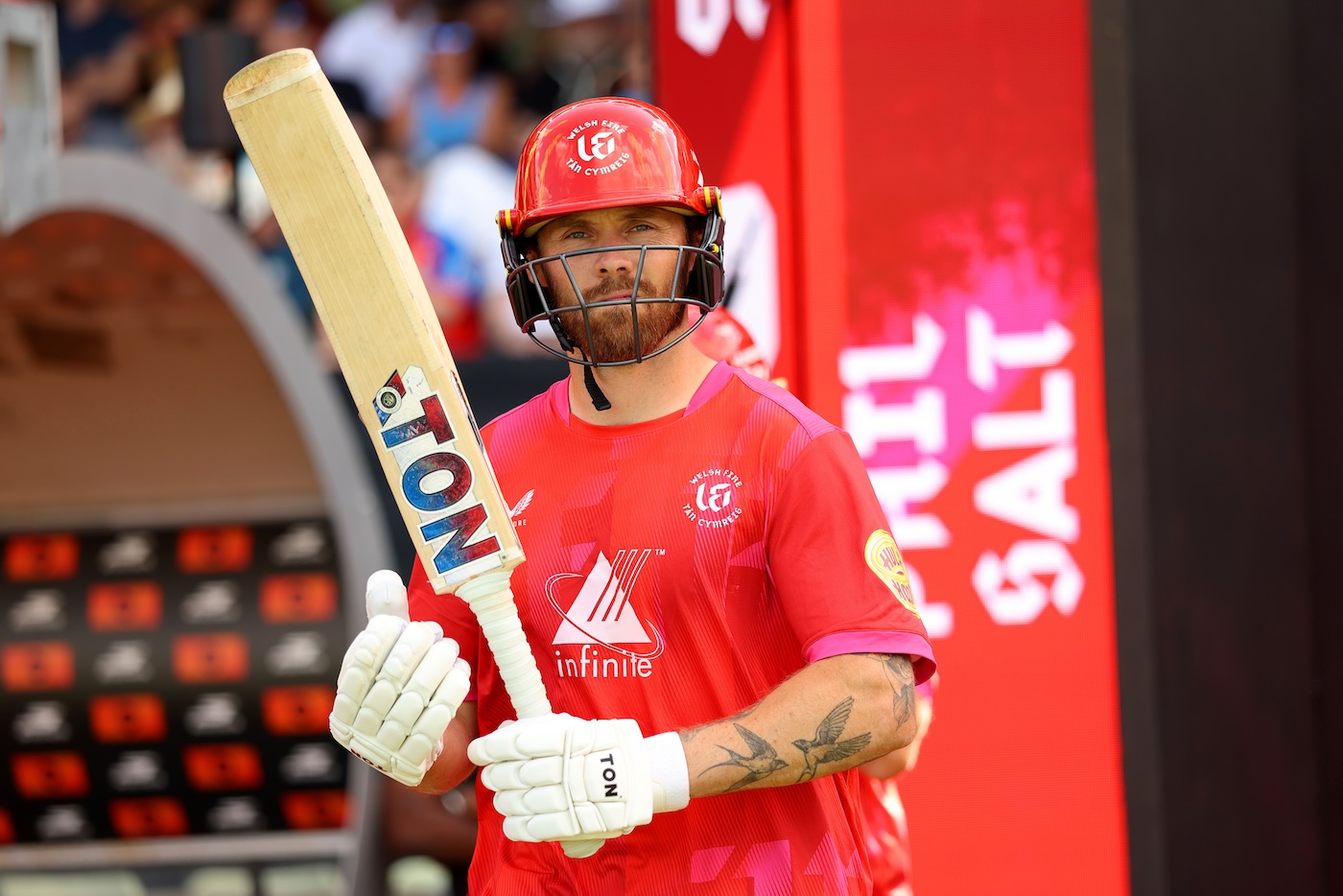
Not since Simon Jones injured his ankle in the 2005 Ashes Test at Trent Bridge has a Glamorgan cricketer represented England, in any format. Only one Welshman, Phil Salt, has bucked the trend. He has no affiliation to the club that represents not only a county but a nation of 3.2 million people; in fact, he turned them down as a young player making his way with Sussex.The club has arguably helped produce more players for Australia than for England in the past two decades. Marnus Labuschagne had already made his Test debut when he joined Glamorgan in 2019, and is really a product of the Queensland system, but he was quick to credit the county with accelerating his progress early in his international career, and has since returned for five separate stints as an overseas player.It is a damning player-development record, and one that the club is naturally desperate to change. "The ECB have been very supportive of us," Mark Rhydderch-Roberts, Glamorgan's convivial chairman, says on a sunny morning at Sophia Gardens. "But to be honest, our part of the contract hasn't been fulfilled because of the debt we were carrying post building the stadium.Glamorgan redeveloped Sophia Gardens nearly 20 years ago, in time to host the first Test of the 2009 Ashes. That fulfilled the long-standing ambition of Paul Russell, the club's chairman then, to bring Test cricket to Wales, but it was almost financially ruinous. Glamorgan took on substantial debt, and a sparsely attended Sri Lanka Test in 2011, where only 922 watched England pull off an unlikely final-day win, cost the club over £1m (about US$1.35m)."We had about £17 million ($23m) at the peak," Rhydderch-Roberts says. "[The redevelopment] really did starve us of resource in every other area of our operations, particularly cricket. We didn't go bust, but we were severely constrained for a very long period. We didn't produce England players, and we weren't winning anything; I totally hold my hands up for that.""For years, we've been patronised as 'poor little Glamorgan'. Anyone with a brain could see this is a sleeping giant. I really mean that, and we're going to maximise it""That Test caused some of the major financial problems that we had," Dan Cherry, Glamorgan's chief executive, says. "It left the club in a really difficult situation, which none of us want to go back to."Hugh Morris, the club's former captain, returned as chief executive in 2013, after six years as the managing director of English cricket, and two years later managed to write off most of the debt Glamorgan owed its main creditors, Allied Irish Bank, Cardiff Council, and Russell himself. It was a landmark moment, which Morris said was essential to the club's future.Glamorgan continued to host international cricket, including another Ashes Test (in 2015) and Champions Trophy fixtures (2013 and 2017), but came to an agreement with the ECB that they would not apply to host Tests from 2020 through 2024 in exchange for an annual fee. Those payments were controversial and brought about the resignations of the ECB board members - including Richard Thompson, who has since returned as chair - though they were later cleared by an external review.Morris also managed to secure hosting rights to a franchise in the ECB's "New T20 Competition" in 2018, which later evolved into the Hundred. Sophia Gardens is the smallest of the eight host venues, with a capacity of 16,000, and several other counties - Gloucestershire, Durham and Somerset among them - were put out by the decision.For Glamorgan, it has proved transformational. They partnered with Sanjay Govil, an Indian-American tech entrepreneur who runs Washington Freedom in Major League Cricket, to run Welsh Fire as a joint venture, and have used their initial payments from the ECB's sales process to wipe out the club's remaining debt.The redevelopment of Sophia Gardens nearly sank Glamorgan, but Hundred money brought the roses back to their cheeks Matthew Horwood / © ECB/Getty Images"In all my time working at the club, I can't ever remember us being in such a strong financial position," says Cherry, who spent ten years as a player for the county from 1998 to 2007. "We always tended to operate year by year."Morris died last December, aged 62, after a battle with bowel cancer. Glamorgan were devastated by his passing, and have since renamed their indoor centre in his honour. "He did an amazing job," Cherry, his successor, says. "When he came back here, the club was struggling financially and some of the structures around the club and the pathway were broken… He did a huge amount of work and brought back some identity to the club."Fire was widely predicted to be the cheapest Hundred franchise but defied expectations with a final valuation of £84.6m ($114m), higher than both Trent Rockets and Birmingham Phoenix. "For years, we've been patronised as 'poor little Glamorgan'," says Rhydderch-Roberts. "Anyone with a brain could see this is a sleeping giant. I really mean that, and we're going to maximise it."They were underperformers in the Hundred's first five seasons, across both men's and women's teams, winning 25 matches and losing 49. The two teams reached the knockouts once between them and were the only franchise never to get to a final. Nasser Hussain said after their men's winless season in 2022 that there had "neither been many Welsh nor much Fire", and the tagline stuck."In all my time at the club, I can't ever remember us being in such a strong financial position. We always tended to operate year by year"The franchise was initially supposed to represent the south-west, a loosely-defined catchment area that includes Somerset and Gloucestershire; in practice, neither club's fans had any interest in supporting them, not least when Welsh Fire was chosen ahead of Western Fire as the name. They are now taking the chance to be "a little more unapologetic" about their Welsh identity, Cherry says.That included the statement signing, in the off season, of Salt, who joined as men's captain after being sold a vision by head coach Mike Hussey and list manager Michael Klinger. Salt had competitive offers from at least two other franchises - London Spirit and Manchester Super Giants - but signed a £450,000 ($579,000) contract, which makes him the Hundred's joint second-highest-paid player. He was also the only player in the room for the men's auction last March."It was a challenge not to romanticise it," Salt says. "I had to weigh up a lot of things from a cricket point of view: we all know the wickets are quite a big factor down here. You don't come here if you're got the pick of the teams and you're desperate to be in the top run-scorers in the competitions. The franchise hasn't had a lot of success, and it was a chance to do something new, and something fresh."Salt was born in Bodelwyddan, North Wales, and lived there until the age of 11, when his family relocated to Barbados. Thanks to his mother's influence, he considers himself Welsh and has always supported them in rugby's Six Nations and in international football (he is also a Manchester City fan, and his shirt number, 61, is a nod to a famous 6-1 win against Manchester United).But cricket has always been different. "The goal has always been to play for England," Salt says. "I've never found that bit too strange, because I've always known that the two sides were together." Wales has long been the silent "W" in ECB, the England and Wales Cricket Board's universal initialism, and Fire have positioned themselves as the closest thing to a national team.Welsh Fire Women, like their male counterparts, haven't set the Hundred ablaze but are things going to look up for them soon? Harry Trump / © ECB/Getty ImagesWales' best amateur players represent Wales National County in the national counties (previously minor counties) set-up. A Welsh national team took on England in warm-up matches before home ODI series from 2002 to 2004, an arrangement that owed to Duncan Fletcher's time at Glamorgan. They won convincingly in 2002 under the captaincy of Steve James, the former Glamorgan captain and now Times journalist, with Jacques Kallis in their ranks as an overseas player.The prospect of Wales breaking away from the ECB is negligible. "You can't have a Wales team and Glamorgan as a first-class county in England," James says. "It has to be one or the other."We won that game [in 2002] and there might've been a time when we might have been reasonably competitive, but now it would just be silly: the level you'd have to start at would be so low."Cherry describes the prospect as a non-starter. "Our business model would change: we wouldn't be able to host [England] international cricket, it may put our Hundred franchise at risk, and the support that we get is fantastic… Starting from scratch again would put the future of Glamorgan and the stadium at risk."Robert Croft, who played 21 Tests from 1996 to 2001, used to compare himself playing cricket for Glamorgan to playing rugby for Wales, and playing cricket for England to playing rugby for the British and Irish Lions. "It was a good analogy," James says. "I'm only an adopted Welshman, but we did try and trade on that: when people came to play in Wales, we wanted to try to make it difficult for them. Somewhere along the way, that got lost.""It was a challenge not to romanticise it. I had to weigh up a lot of things from a cricket point of view"The tide has started to turn. Glamorgan's first-team squad now features a core of young players who are Welsh-born and came through their pathways, and others who went to university in Cardiff. In June, teenaged seamer Tom Norton, from Abergavenny, took seven wickets on first-class debut - including a hat-trick - against Surrey. Last month two academy products - Jack Hope-Bell and Alex Horton - both hit maiden first-team hundreds in a One-Day Cup win over Sussex.Unlike Somerset, for example, Glamorgan do not have a pipeline of players from private schools, and instead rely heavily on their close links with Cardiff's universities. Kiran Carlson, their captain, is a business graduate from Cardiff University. Asa Tribe, who has played for England Lions, first joined the club while studying at Cardiff Met.Rhydderch-Roberts says he has had "robust conversations" with Thompson and Richard Gould over the ECB's decision to pull funding of the Centres of Excellence scheme two years ago, and Glamorgan have stepped in to fund the programme in Cardiff. "I know there are financial pressures, always," he says, "but I think it's rather myopic not to support the university system."Gradually Glamorgan have started winning again. They enjoyed huge success in the 1990s with a core of home-grown players supplemented by overseas stars: Viv Richards helped them to the Sunday League title in 1993, and Waqar Younis took 68 wickets when they won the County Championship in 1997.They won two more one-day titles in the early 2000s but results then fell away badly. "We were desperately trying to win," Cherry recalls, "but the focus went more on bringing in players through the Kolpak system, overseas players, and players from other counties, than concentrating our efforts on developing our own."Hugh Morris (right), the former Glamorgan chief executive, in his playing heyday, lifting the Sunday League trophy with Viv Richards in 1993 Ben Radford / © Getty ImagesThere has been an overdue correction in recent years: Glamorgan have taken back control of talent pathways from Cricket Wales, the governing body that looks after the recreational game, and results have improved significantly. They won the One-Day Cup in 2021 and 2024, and have held their own in their first year back in Division One of the County Championship this year under head coach Richard Dawson.Fire's results have picked up, too. Their women's team are no longer in contention but have remained competitive despite a calf injury to Sophie Devine, their captain. Their men, under Salt, need other results to fall their way to reach the playoffs, but if they beat London Spirit on Wednesday, it would make this their most successful season yet with five wins out of eight.Fire saw the recruitment of Joe Root, England's newly reappointed Test captain, as a statement signing. Tribe and the ambidextrous allrounder Ben Kellaway brought a Glamorgan connection (though have both been dropped in the second half of the season). Salt was particularly clear that he wanted to construct a side capable of overcoming challenging pitches and unusual ground dimensions at home, and they have won two from three at Sophia Gardens.But whether they qualify or not, one night this year proved that the franchise does have potential. Glamorgan officials were frustrated by Fire's fixtures - which include two early Wednesday starts and a Monday evening - but their Saturday double header in the third weekend of July was a breakthrough moment, with a record crowd of 11,796 for their wins over MI London.Josh Navidi, the former Wales back-row forward, played a DJ set between the women's and men's fixtures but the raucous crowd was really there for the cricket, and watched Devine, Rachin Ravindra and Lockie Ferguson lead Fire to wins. Roger Skyrme, Glamorgan's long-serving dressing-room attendant, told Salt that it was the best atmosphere he had ever experienced in his 27 years at Sophia Gardens."I'm only an adopted Welshman, but we did try and trade on that: when people came to play in Wales, we wanted to try to make it difficult for them. Somewhere along the way, that got lost""This is the closest thing that I'll get to playing for Wales at sport," Salt says. "Rachin was talking about how cool it is being here and getting the opportunity to represent a nation. For a Kiwi to come in and play one game in Cardiff and think like that… Maybe I've got my rose-tinted glasses on here, but I think that shows how special it is."Rhydderch-Roberts has lofty ambitions for Fire, and believes they can become a force beyond the Hundred. He is a well-connected man who had a long career in investment banking, and put together a consortium earlier this year that reached the final four in the bidding process for Rajasthan Royals, and which is now interested in buying a stake in a Big Bash League franchise.He has brought in senior officials with relevant expertise: Fire general manager Dhiraj Malhotra was involved in the early years of the IPL and has worked for the BCCI, ICC and Delhi Capitals. Strategic advisor Mike Fordham has helped launch various T20 leagues around the world, including the Hundred."My personal view is that with the changes in cricket, there's a seat at the top table which was previously occupied by one of the larger counties," Rhydderch-Roberts says. "We're going to take that place. That's the ambition in English cricket. In global cricket, we aim to be part of a global group of franchises, which we will run and will fund jointly [with external investors]."Glamorgan's more immediate focus is on financial sustainability. "We need to improve our commercial revenue and our day-to-day P&L [profit and loss]," Cherry says. "But now that the debt is paid off, it allows us to look forward with ambition and positivity. We've got money from the Hundred sales that sits beneath there, and we can start planning on a longer-term basis.Long may his tribe increase: Asa Tribe is one of a handful of exciting young players who have come up through the Glamorgan pathways Harry Trump / © ECB/Getty Images"We were always constrained, not only financially but in terms of resources, putting money into our coaching to develop players, squad sizes... We now feel that we've got an opportunity to invest in the right areas to drive the club forward. Our vision and strategy remain the same: we're here to develop players and develop successful teams."That now includes a Glamorgan women's team, which launched two years ago and will join "Tier One" of the English county system next season. It is a major landmark for women's cricket in Wales: they were previously bundled into the Western Storm set-up in the regional structure, playing primarily in Bristol or Taunton.Ann-Marie Smale, Glamorgan's deputy chair, led the club's presentation when the ECB invited bids for professional women's county teams in early 2024. "For those who've come through our pathway, to put the Glamorgan badge on is just much more special," she says. "That's what all of them will be aspiring to, so it's a brilliant opportunity, which can only improve as we move into Tier One."Smale has direct experience of the men's and women's talent pathways at Glamorgan as a parent: her son Will is on the club's first team, and her daughter Sophia joined Essex two years ago and has played every game for Welsh Fire in the Hundred this year. "There definitely was a gap," she says. "It didn't have that same professional feel that the men had when they were starting at Glamorgan or at other counties - but you've seen that gap close now."Glamorgan's unique status as a county representing a country throws up unusual challenges. The club is based in Cardiff in the south-east of Wales and plays almost all of its fixtures there, but it also has a responsibility to bring through players from the rest of Wales, even if they live closer to English counties.Robert Croft, who played 21 Tests from 1996 to 2001, used to compare himself playing cricket for Glamorgan to playing rugby for Wales, and playing cricket for England to playing rugby for the British and Irish LionsSalt's example reflects the challenges. He grew up dreaming of playing at Sophia Gardens - "I probably wouldn't even have been able to tell you it was in Cardiff, but it was always this promised land" - but lived much closer to Old Trafford, and his early memories of watching county cricket all involved Lancashire.He had an unusual journey to becoming a professional, relocating to Barbados before moving to Reed's School in Surrey on a cricket scholarship, then joining Sussex. But those familiar with his situation believe that he would have struggled to reach his current status as one of the world's top-ranked T20 batters if he had stayed in North Wales throughout his childhood.Early in his Sussex career Salt had the chance to join Glamorgan but turned it down on the advice of his landlord in Hove, Tony Cottey. "I'd have been 20 or 21," he says. "I came up here and met Hugh [Morris], who showed me around and took me to Cardiff Bay, where they were going to put me up. It wasn't the right move for my cricket at that point in time. That was a massive decision, and I don't think I'd have got it right without Cotts."Mark Rhydderch-Roberts: "We were severely constrained for a very long period. We didn't produce England players, and we weren't winning anything; I totally hold my hands up for that" © Getty ImagesHow can Glamorgan ensure that the next time a player finds themselves in Salt's situation - whether as a talented North Walian teenager living a four-hour drive from Cardiff, or as a Welshman playing for an English county with the chance to move "home" - they make a different choice?There is a wider facilities problem in Wales, which is not a wealthy country. The St Helen's Ground in Swansea is being redeveloped by Ospreys Rugby and no longer hosts cricket, while Colwyn Bay has not staged a Glamorgan fixture since 2019. Steve James believes that poor infrastructure outside of Cardiff is the single biggest challenge facing Welsh cricket. "I'd love to know what they're going to do, because this is their one chance to future-proof the cricketing side of things with the right facilities and pitches."Cherry agrees, and says that it is vital Glamorgan is "Wales-centric rather than Cardiff-centric" as a club. "We need all the Welsh-born players to be playing for Glamorgan," he says. "We don't want to see them playing for other counties. We are looking to do more in North Wales, and I'm trying to identify partners at the minute to work with us."ECB chairman Richard Thompson has been a strong advocate for cricket "domes" - all-weather, covered facilities - and Cherry believes that North Wales is an ideal location for one. "It means that young players don't have to travel four hours to come to Cardiff," he says. We're looking at venues up there to support the return of first-class cricket and 50-over cricket as well."Likewise in West Wales, which has traditionally been a hotbed of cricket. Some of our best players - Alan Jones, Don Shepherd, Simon Jones, Robert Croft - have come from West Wales, and we're not producing as many cricketers from that part of the world as we used to. We need to work with all areas of the country and give opportunities to boys and girls from all parts of Wales."It is a noble ambition and underlines the sense that Glamorgan's leadership understands the scale of the opportunity in front of them. But they also know that until Glamorgan next produce a man or woman who can break into international cricket, the England question will continue to linger at Wales's professional club.Matt Roller is a senior correspondent at Cricinfo. @mroller98© Jiostar India Pvt Ltd.

Most Popular



Maradona death trial: Warning signs ignored
3 hours ago
.jpg?w=1120&h=630)