
Guardiola's seven innovations that revolutionised Premier League tactics
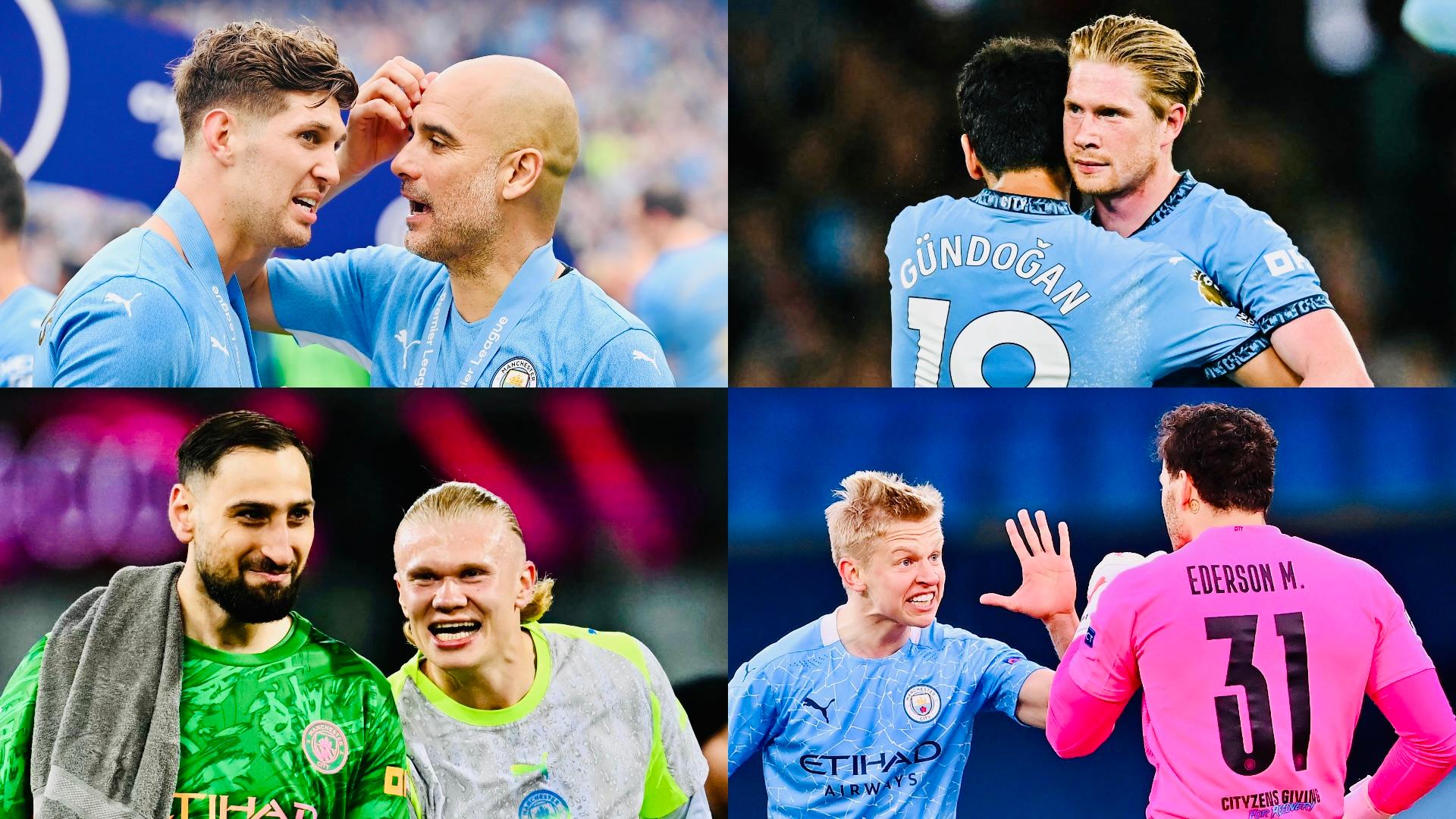
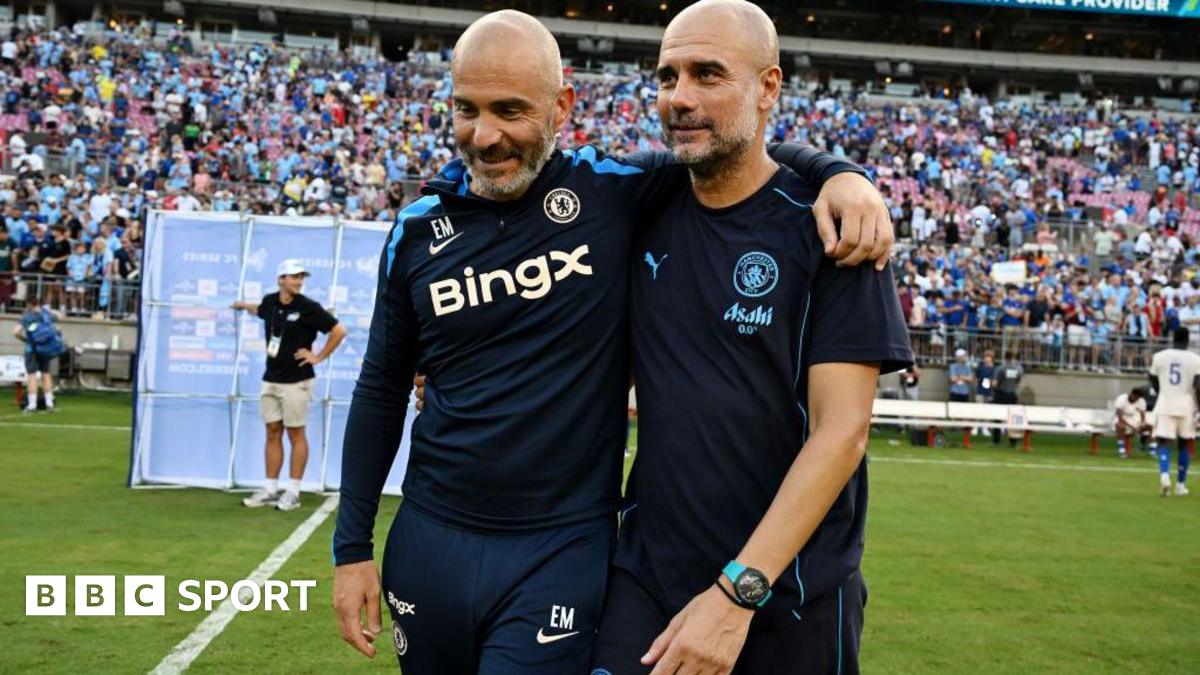
Pep Guardiola leaves Manchester City’s after a decade at the club and his legacy goes way beyond the 20 trophies he won at the Etihad Stadium.When Guardiola arrived in England in 2016, he was already widely regarded as the world’s greater tactical innovator, but still nobody could have foreseen the extraordinary impact he would have on how football is played in this country, as shown by the success of his disciples.Former assistant manager Mikel Arteta has just won the Premier League title with Arsenal, while another, Enzo Maresca, won two major trophies with Chelsea in an 18-month spell. Then there's the new Chelsea manager Xabi Alonso, who played under him at Bayern Munich, where his former Man City captain Vincent Kompany has overseen back-to-back Bundesliga titles.Even that does not capture the full extent of his revolutionary impact. Back in 2016 possession football was a niche pursuit. Now, clubs throughout the Premier League, EFL and beyond try to play that style.Here, we dive into some of Guardiola’s greatest tactical innovations:Implementing a possession-heavy gameIn the early 2010s, a couple of Premier League managers had already begun to copy the possession football of Guardiola’s Barcelona.But the tactical shift was dramatic after Guardiola came to England, as the stats show. Opta’s analysis of successful passes per-game by Premier League managers since 2008/09 reveals that all but one of the top 26 instances came after Pep’s tenure at City began:Guardiola’s ideas of possession football, based on short passes played quickly between players in choreographed triangular patterns, is a development of the Johan Cruyff model, but Guardiola’s positional play took things a whole lot further.City quickly came to dominate the ball, dominate territory, and dominate the division. Before long, everyone was doing it, or at least attempting to.Giving prominence to the ball-playing goalkeeperOne of Guardiola’s first big decisions was replacing goalkeeper Joe Hart with Claudio Bravo, and although the latter quickly gave way to Ederson, the shift was hugely symbolic.Guardiola was the first in England to truly invest in the ball-playing goalkeeper, prioritising the keeper’s distribution over shot-stopping.That mentality is so commonplace now it is completely unquestioned, but that was not always the case. In the few years before Pep, recent Premier League title-winning goalkeepers included more traditional shot-stoppers, like Hart, David de Gea, and Kasper Schmeichel.Nowadays, every 'keeper needs to be superb with the ball at their feet.Inverted full-backsNowhere did Guardiola innovate more than in the full-back positions, most famously inventing the inverted full-back (moving into central midfield) at Bayern Munich and bringing it to Man City, where the likes of Oleksandr Zinchenko and Fabian Delph helped control midfield in title-winning seasons.But Guardiola did more than that. He abandoned the inverted full-back just as others began to copy it, resorting to four strapping centre-backs across the back line during the 2022/23 treble-winning season.Kyle Walker also regularly sat deep to play in a back three as part of a 3-2-5 system that made up the bulk of Guardiola’s Man City, and more recently players like Nico O’Reilly have featured almost as No 8s from full-back, drifting infield but attacking the box.Using two ‘free No 8s’ to defy English normsFor the first few years of Pep - including the Centurion season – the 4-3-3 formation was built on two small, nimble No 8s shuttling up and down as playmakers either side of a powerful defensive midfielder.David Silva, Bernardo Silva and Ilkay Gundogan do not conform to the ideas of a British No 8, and at first there was disbelief that two fleet-footed playmakers could operate together in a Premier League midfield.That was soon put to bed – not least because Pep kept finding new ways to support the man at the base, Fernandinho or Rodri.The birth of the ‘box midfield’After the two free No 8s in the 4-3-3, the second defining part of Guardiola's Man City tenure – roughly from 2021 onwards – was characterised by a 3-2-5 – or 3-box-3 – formation, in which a box is formed by two deeper midfielders and two higher ones.Guardiola's contribution to this tactical development was the shock use of John Stones as a kind of inverted centre-back. So unusual was the trick of instructing a centre-back to push on into central midfield, nobody ever thought to name it.The change came towards the end of 2022/23 and triggered Man City’s surge to finish above Arsenal – and on to complete the treble.Winning the league without a strikerGuardiola invented the "false nine" when he famously moved Lionel Messi to the top of the pitch at Barcelona, but at City he utilised Sergio Aguero for the first few years.Then, for the title-winning 2020/21 and 2021/22 seasons, he played without a striker altogether, using players like Kevin De Bruyne, Phil Foden, and Gundogan as "false nines".That had never been attempted in the Premier League before.Pivoting to direct footballPerhaps we should call this anti-innovation, retrovation, because Guardiola helping to return the Premier League to an older era is not the same a regression: to keep moving, to reinvent and rediscover, is one thing; to drag the league forward by dragging it backwards is a supremely smart move.Over the last few seasons Guardiola let go of many of the tactical innovations he had brought to England, primarily because his ideas had been copied so dutifully that they no longer provided an edge.In other words, he had to rebel against his own rebellion in an attempt to stay ahead.The blunt force of Erling Haaland is the antithesis of the "false nine", changing the whole shape of how City attack and who takes all the shots:Man City's top three players for big chances, 2017/18 to 2023/24Man City's title-winning seasons Players Big chances 2017/18 Aguero, Jesus, Sterling 27, 26, 26 2018/19 Aguero, Jesus, Sterling 24, 23, 20 2020/21 Sterling, Gundogan, De Bruyne 20,14,13 2021/22 Sterling, Jesus, Mahrez 25, 13, 13 2022/23 Haaland, Gundogan, Alvarez 57, 13, 10 2023/24 Haaland, Alvarez, Foden 55, 19, 14Gianluigi Donnarumma is the pure shot-stopper Guardiola rejected 10 years ago.His wingers have boomeranged from Leroy Sane and Raheem Sterling getting to the byline for cutbacks, to Foden-types discarding wing-play, to Jeremy Doku and Antoine Semenyo operating as a hybrid of those two ideas: taking on their man, but occupying more central spaces.In that process, Man City have consciously become more direct and less inclined to hog possession.And herein lies the key to Guardiola’s genius and indeed his tactical legacy. His greatest innovation of all was the perpetual desire to innovate.The result is a Premier League more complex, and more changeable than ever before.
Most Popular



What to look out for in final La Liga weekend
8 hours ago