Man Utd: How Michael Carrick's side are shaping up for Premier League season
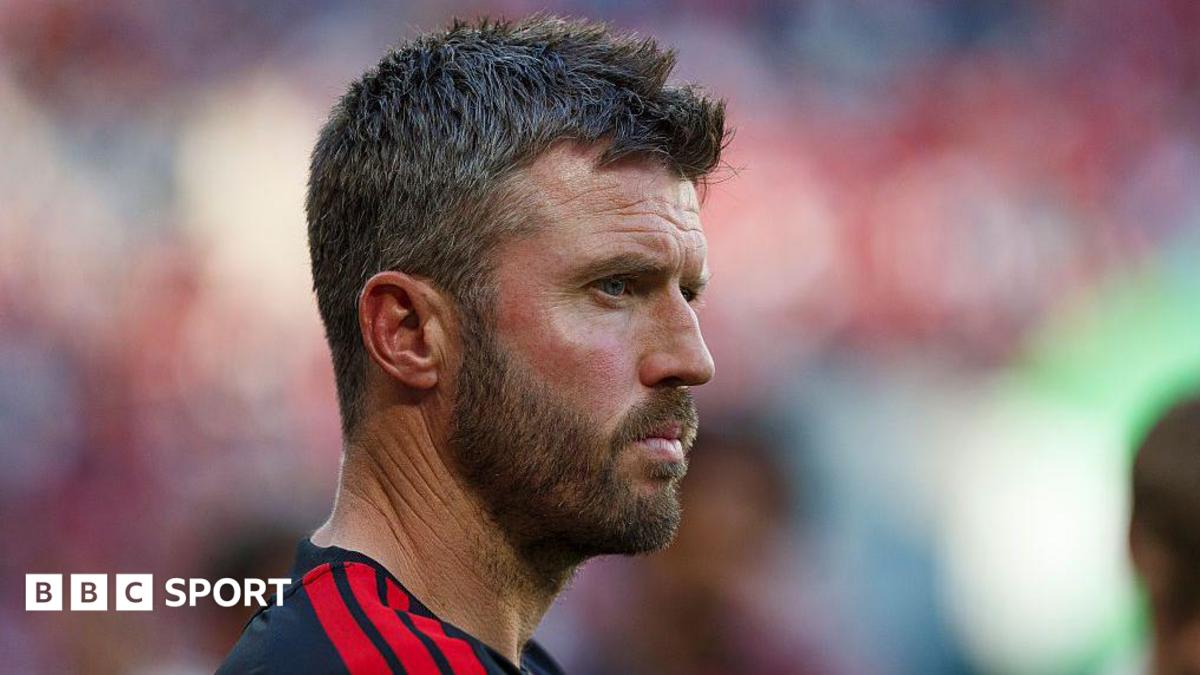
"First and foremost, we want to win," said Michael Carrick when asked what style of football he wanted his Manchester United team to play this season.But he quickly clarified, "we want to be excited - that's why we love this club. I'm fully aware that we need to do it in a certain way".Carrick echoed the sentiment of the architect of United's most successful era, Sir Alex Ferguson, who in 2017 said: "I think you have a duty to entertain. We have to always remember there's a public to be entertained."'United DNA' has often been referenced when fans, ex-players and pundits have discussed the club in recent years.And after failed attempts from managers to mould the team into a slower, more measured, possession-heavy side, Carrick is aiming to create a style and system that mirrors United's traditions.Before the Red Devils kick off their Premier League season at Hull City this Saturday (12:30 BST) what have we learned from how Carrick has approached pre-season tactically?Beginning with the shape of United's squad provides much-needed context, but it is important to note that much of their play is based on tactical principles, not just formations.In build-up play, United have looked to play short.Former manager Ruben Amorim's solution to the increase in man-to-man pressure across the Premier League was to encourage goalkeeper Senne Lammens to play long. This was to avoid the risk associated with short passing - something he tried to mixed results early in his tenure.Carrick has instead looked to revert United's mindset here, asking them to take that risk again.The shape his team have used from goal-kicks has been a 4-2-4 with Lammens between the two central defenders. The front four play in a very fluid manner with the four defenders and two central midfielders taking up more consistent positions behind them.Overall, building out from the back has been a promising part of United's game in pre-season and where we have most clearly seen some of the principles Carrick has tried to instil in his squad.Going back to Amorim's United once more, when they did play out from the back, they would execute pre-planned passing routines.Carrick's United instead look to escape pressure through trios of players passing the ball between each other in a less choreographed manner.Pre-season coaching has reinforced the players' understanding around supporting team-mates to create clusters of threes.Which three players converge differs throughout the game and the players are given a level of personal responsibility to interpret the match during it.More specifically, a collective principle being taught to the players is to look to make third-man runs - often off the back of their marker - to receive the ball with time and space.Once United have broken the opposition's initial pressure in the described manner, they often find themselves in open space with pacy attackers ahead of them ready to attack in a more direct fashion.The signings of technical, deep-lying midfielders aid these overarching concepts.Andrey Santos, Youri Tielemans and Mason Mount in particular have combined well to help United get up the pitch. This style of play suits the strengths of Kobbie Mainoo too, who returned to action with a cameo in Saturday's 4-2 defeat by AC Milan.The increased responsibility players have to interpret the game has benefits and trade-offs as with all tactical approaches.Against Milan, we saw the introduction of arguably United's best player last season, Bruno Fernandes. Alongside Tielemans and Santos, the midfield trio struggled to build up and create a solid platform upon which United could dominate the ball.The natural instincts of these players in the conditions of the game resulted in a United side that looked to play forward too often and too early - resulting in turnovers and a lack of control.Carrick wants United to maximise the quality of their fast attackers by playing more vertically - pleased when his side transition from their half into the opponent's with as few passes as necessary, while also hoping United do not lose the ball carelessly.AC Milan's win against United, however, may have provided clues as to how teams might counteract Carrick's defensive set-up - notably with the use of a 5-2-3 formation.United's two central attackers would look to block passes into Milan's midfield two before pressing the defenders.Milan's wing-backs would drop very deep, making it easy for the central defenders to find them around United's narrow front four.This required United's full-back to cover a large distance to close down the wing-back on the ball. By the time pressure was applied, the ball had already been moved on.With how fast the tactical landscape changes in the Premier League, Carrick will have to be nimble in how his side defends against such solutions.Looking at both the tactics Carrick has used in pre-season and the signings United have made, the story of the season will likely revolve around the difficult task of moving away from relying solely on the counter-attack, something they used so effectively towards the end of last season.After starting brightly, Erik ten Hag and Ole Gunnar Solskjaer stumbled when they looked to bridge that same gap in the hopes of remaining direct and dangerous when needed, while also controlling games for longer periods.

Most Popular