
A 2000s tennis takeover at the Canadian Open as the ATP Tour evolves

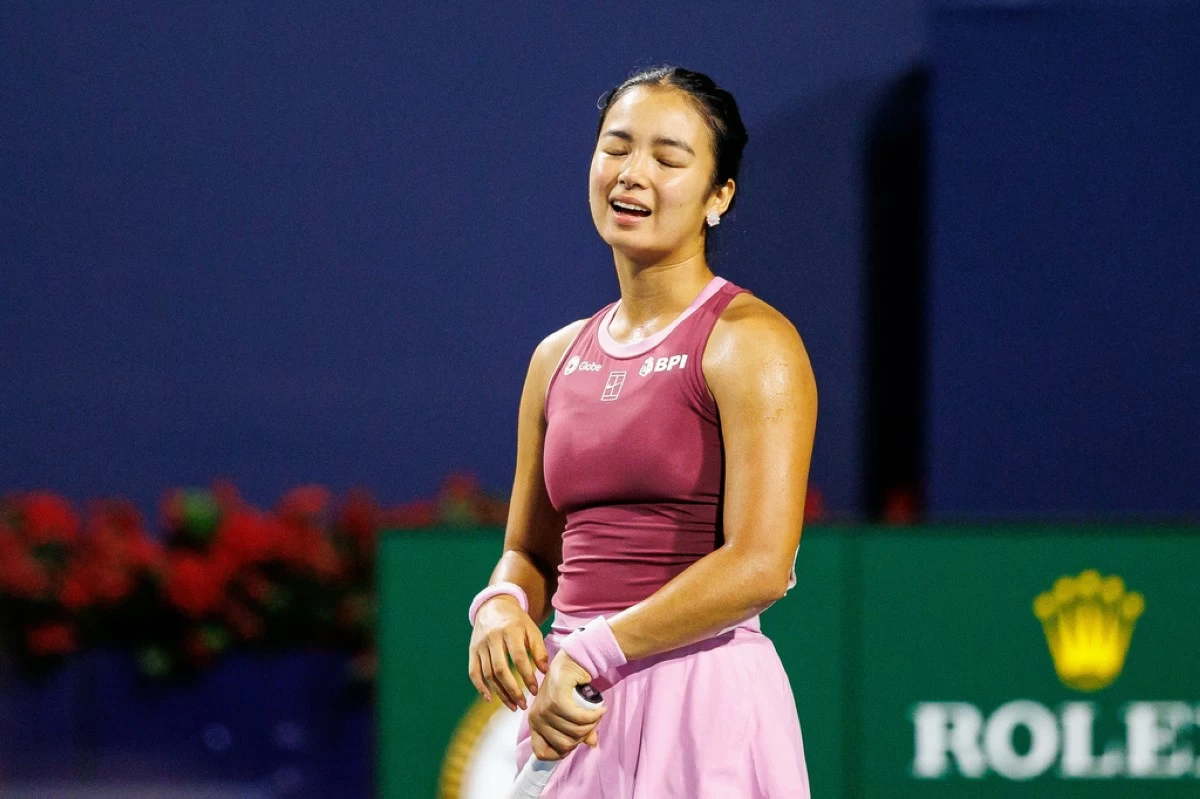
Welcome back to the Monday Tennis Briefing, where The Athletic will explain the stories behind the stories from the past week on court.This week, there was a first on the ATP Tour, a quest for world No. 1 hung on one shot and a rising talent made up for some lost time.If you’d like to follow our fantastic tennis coverage, click here.How did a generational takeover happen at the Canadian Open?It was “Retro Night” Saturday at the Canadian Open in Montreal, where during changeovers and in the walkways between courts the tournament spun classics by such luminaries as Michelle Branch, Smash Mouth, Vanessa Carlton and No Doubt. It was a great playlist. Not even tennis tournaments can resist the nostalgia for the 1990s and 2000s holding society hostage lately.As trendy as they were, Montreal’s throwback vibes were in direct opposition to the action on court this week, where the ATP Tour’s youths have taken over.In the wake of a raft of upsets and injuries to the more experienced players, the 2026 Canadian Open is the first ATP Masters 1000 event (one rung below the Grand Slams) to have a quarterfinal field made up of players born in the 2000s. At 25, American Brandon Nakashima is the elder statesman of the bunch, while Spaniard Rafael Jódar is the youngest at 19.This milestone puts some pressure on the generation just above them. If the guys in their late 20s aren’t going to take advantage of Jannik Sinner, Carlos Alcaraz and Novak Djokovic’s absence from big tournaments, the young players are happy to lap up the experience and rankings points.The surge isn’t quite a movement. Not because the young players weren’t the ones beating the top seeds, or because some contenders were injured, but because the players involved have been serving notice to their elders for some time.“It’s interesting to look at. I think it’s cool, obviously, to see the ‘Next Gen’ do so well,” 23-year-old American Ben Shelton, who beat 19-year-old João Fonseca 6-3, 7-6(3) on Sunday to advance to the quarterfinals, said in a news conference.“I think it’s funny that it’s all kind of happening at once. But it is guys who’ve had massive breakthrough seasons and are continuing to inch towards the top of the game. So it’s something that I love to see. I’m a big fan of a lot of the guys who are still in the draw, you’ve got guys who went to college, young Americans, other guys that I’m friends with.”In the semifinals, Shelton will face 20-year-old Jakub Menšík of the Czech Republic, who last year won the Miami Open. Shelton is defending champion in Canada, and looking to even out a season full of high highs and low lows to claim his fourth title this year.The other quarterfinalists are less established than Shelton but have been working in the wings to overtake not just their elders, but players of their own generation, too.World No. 24 Arthur Fils, 22, returned from a stress fracture in his back in March to go on a tear before facing another injury setback ahead of the French Open. He’ll play Jódar in the blockbuster matchup of the quarterfinals.Jódar has claimed the most wins of any teenager within his first 50 ATP Tour matches in the Open Era, and if he reaches the final in Montreal, he will become a top-10 player for the first time. He only made the top 100 for the first time at the end of March.Learner Tien, 20, who next faces another young Spaniard in the shape of 20-year-old Daniel Mérida, sees the competition as a boost for everyone involved.“All the younger guys are playing with a lot of confidence. They’re playing free against the older guys, they want to prove themselves,” he said in a news conference.“I think it’s great for the sport. All the younger guys are also pushing each other — one guy has a great week, another guy wants to match that, and so on.”— Ava WallaceWhy does Elena Rybakina’s serve tell a story?World No. 2 Elena Rybakina’s Canadian Open is a conundrum. On one hand, the reigning Australian Open champion is into her fifth WTA 1000 quarterfinal of 2026, rallying from down a double break in the third set to defeat Russia’s Liudmila Samsonova 6-4, 4-6, 6-4. But it’s been a difficult tournament, notably on her serve, a strength of Rybakina’s game.Rybakina leads the WTA Tour in aces in 2026. She entered the Canadian Open with 268 aces, having won 81.6 percent of service games and 73.3 percent of first-serve points on the year. But the biggest weapon in her game has not been firing for Rybakina in Toronto, as she tries to reach world No. 1 for the first time.In her three matches, her average first serve percentage is 50.2 percent; at one point during her match against Samsonova, she was serving at 39 percent. The lack of free service points is hindering Rybakina’s game, forcing her to play from neutral too often. Even in defeat, Samsonova won 57.1 percent of second-serve return points against her.There has been a steady decline in Rybakina’s delivery since January, when she won the Australian Open title. Her average first-serve percentage for that tournament was just over 60. Across her 10 matches prior to the Canadian Open, it was at 53.4 percent, while this tournament it has dropped again.How often a player makes their first serve is not always a useful metric. A high percentage doesn’t necessarily mean that the serve is effective, and the best servers in the world accept that making fewer of their serves is the price they pay for hitting the lines and racking up aces, unreturned serves and easy put-away shots. Rybakina remains 2nd on the tour for first-serve points won in 2026, so she is making the most of the first serve when it goes in, but the pressure on the rest of her game is making her matches more difficult.“It’s just the motion itself,” Rybakina said of her serve in a news conference. “And the toss, when it’s windy you are trying to adapt, same as if the sun is really bothering. So you’re trying to always find a way. It might also make it worse.“Then of course the push of the legs. When the ball is getting old, it’s more difficult to control. The ball by itself is light and it’s flying a lot. So all these little things I need to focus on, and when it comes together it’s a good serve.”Rybakina plays Naomi Osaka in the quarterfinals. It’s their first career meeting and not an easy opponent if the serve is struggling. Osaka is one of the purest hitters on a hard court, punishing the ball off the return. If Rybakina is going to bookend a successful year on the hard courts, she will likly need to rediscover consistency on her first serve to go with its potency.— Lukas WeeseHow is a young talent making up for lost time?At the start of 2025, French Open champion Mirra Andreeva was the only teenager in the WTA Tour top 100. On her way up the tennis ladder, she reached the Australian Open girls’ final in 2023. There, Russia’s Andreeva lost to compatriot Alina Korneeva, one month her senior. Since then, Andreeva has risen and risen, while Korneeva has seen her own rise largely deferred by repeated setbacks with wrist injuries.She is making up for lost time now. Despite a one-sided defeat to two-time Grand Slam champion Coco Gauff in Toronto Sunday, 19-year-old Korneeva’s run to the Canadian Open fourth round means she is world No. 75. She defeated two top Americans — former top-10 player Emma Navarro and 18-year-old rising star Iva Jović — to face Gauff, and backed up a run to the semifinals of the Athens Open on a much bigger stage.In the same year that she beat Andreeva in Melbourne, Korneeva ended up with a 31-8 record and made her full WTA Tour debut. In January 2024, she qualified for the Australian Open and defeated Spain’s Sara Sorribes Tormo — a draw from hell for an inexperienced player — in the first round.But then, a seven-month absence broke the back of her 2024 season. In 2025, she lost more matches than she had become accustomed to losing, but far more importantly, played a great deal more of them, despite missing nearly six months between January and June with another injury.Now she is one match away from playing 50 in a season for the first time in her career, and the more time she can spend on court building rhythm, the better — for her and for tennis at large.“Everyone know that in juniors it could happen that you win the tough game and then the opponent give you kind of presents,” she said in a news conference after defeating Jović.“Now I feel like more, as I play against good players, top players, I have to be, like, into it in the match every single point. I have to be, like, to be in, you know, full focus.“I think the main goal for me now is to play like all the match without up and downs. Of course you can have it because we’re all people and we can have up and downs, tennis and mental-wise. That’s the main goal for me to improve.”— James HansenStrange shot of the weekArgentina’s Francisco Cerúndolo won a point by mistake, taking advantage of the rule that says if a serve hits an opponent on the full, it is the server’s point. Britain’s Lloyd Glasspool was the unfortunate party:📅 Coming up🎾 ATP📍Montreal: Canadian Open (1,000) featuring Ben Shelton, Rafael Jódar, Arthur Fils, Learner Tien.📺 UK: Sky Sports; U.S.: Tennis Channel 💻 Tennis TV🎾 WTA📍Toronto: Canadian Open (1,000) featuring Iga Świątek, Coco Gauff, Elena Rybakina, Naomi Osaka.📺 UK: Sky Sports; U.S.: Tennis ChannelTell us what you noticed this week in the comments below as the men’s and women’s tours continue.

Most Popular

Big news, 'phenomenon' is keen to join Liverpool
2 hours ago


Transfer latest: Done deals, gossip, rumours
1 hour ago