Olympic legacy in images: understanding the lifecycle of Olympic venues
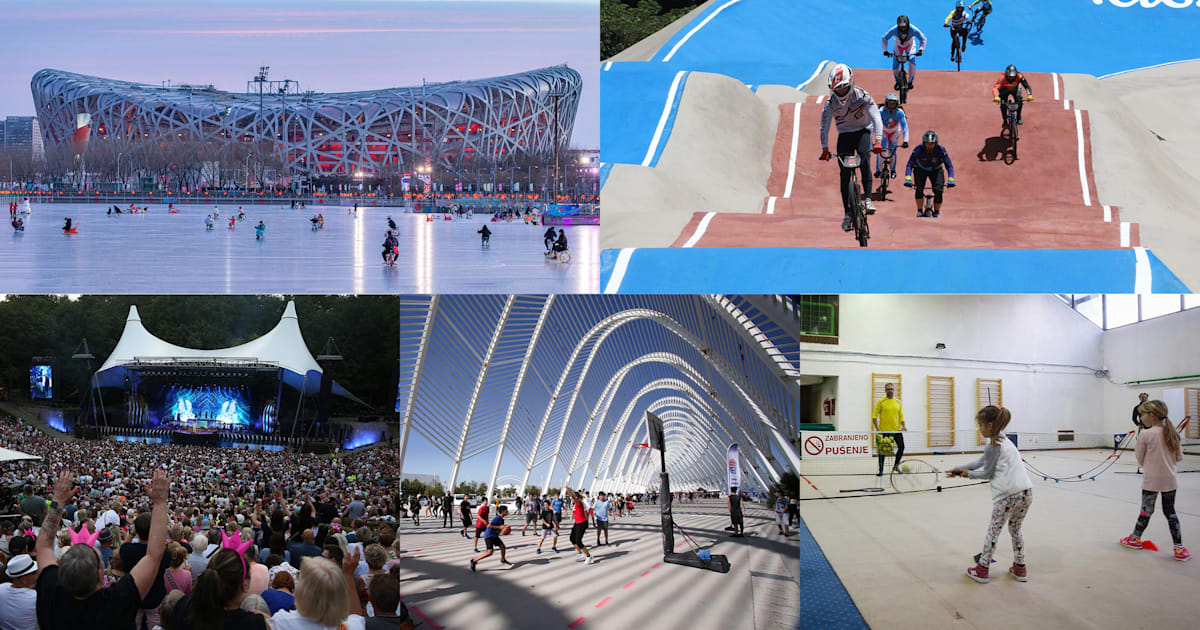
The recently updated IOC Venues Report shows how Olympic venues continue to be used after the Games – across sport, culture and community life – and how their legacy can differ from one host city to the next. The sections below draw on that evidence to provide context on a number of editions and sites that are frequently misrepresented in legacy discussions.“Venue legacy is rarely defined by a single photo or one moment in time,” said Arram Kim, IOC Head of Legacy. “Across Olympic Games editions, most Olympic venues continue to serve their communities long after the Games – hosting sport, events and public activity.Berlin 1936: competition venues still in use nearly 90 years onNearly 90 years after Berlin 1936, the post-Games picture reflects both long-term continuity and the realities of history. Several venues were affected by redevelopment and changing city needs over the decades. At the same time, a large share of the competition venues have remained part of Berlin’s landscape.Some of the images most often associated with Berlin 1936 show the former Olympic Village in Elstal, including the swimming hall and gymnasium, used as training centres.After World War II, the Village was used as accommodation for Soviet soldiers and their families before being abandoned. A major fire destroyed the swimming hall in 1993. The site is now a protected heritage area, and parts have been renovated and opened to the public. Since 2017, the House of Nations – the former athletes’ dining hall and communal centre – has been renovated and converted into 117 rental apartments. New houses have been built around it, designed to reflect the architectural character of the original Olympic Village, with further houses planned to be built in the future.As for the competition venues, 20 venues were used for the Berlin 1936 Olympic Games. Fourteen remain in use today, supporting activities ranging from major competitions and high-performance training to grassroots sport and cultural events.Berlin Olympic Stadium remains a major venue for football, athletics and large-scale events. Within the wider Olympic Park, venues such as the Olympic Swimming Stadium, May Field and the hockey stadium remain in use, while the Waldbühne has been repurposed as a leading open-air performance venue.Another 1936 competition venue still in use is the Gymnasium and Cupola Hall (Haus des Deutschen Sports), which has recently been renovated and now serves as a federal training base for rhythmic gymnastics and a venue for competitions, including the annual international fencing tournament “Weißer Bär”.Over the decades, some sites did not survive. The Polizeistadion was destroyed during World War II. The Deutschlandhalle, damaged during the war and later repeatedly closed for structural repairs, was demolished in 2011. The former shooting ranges at Ruhleben are no longer used as a competition venue, and the site was converted into a recreational area in 2007. The former Döberitz drill grounds, used for the equestrian cross-country section, are now a nature reserve.Sarajevo 1984: resilience shaped by war, restoration and reuseSarajevo’s Olympic legacy is one of resilience. Many of its Olympic venues were directly affected by the Bosnian War (1992–1995), and yet a large part of the Games infrastructure has been rebuilt, restored and brought back into community and sport use in the decades since.Some of the images most often shared from Sarajevo 1984 reflect places that were heavily affected by the conflict or are no longer used for their original winter-sport purpose. Hotel Igman, a non-competition venue, which housed media and athletes in 1984, was bombed during the war and remains in ruins.Athens 2004: a legacy shaped by long-term redevelopmentHosting the Athens 2004 Olympic Games was used as an opportunity to accelerate major improvements in urban planning, including the renovation of the historic centre of Athens, and the expansion of its transport system. The city of Athens became more connected to its surrounding municipalities thanks to two new lines opening in the Athens metro system. Other metro lines were extended to reach the inner suburbs of Athens; and new bus terminals were created close to the metro stations, easing traffic congestion.Currently, 67 per cent of the Athens 2004 Olympic venues remain in use, with the rest out of use due to planning and management issues. While this percentage is the lowest among Summer Olympic Games editions hosted after the 1950s, the 21 venues that remain in use are serving diverse purposes, including hosting high-performance and recreational sport events, and housing the city’s leading sports clubs, together with cultural events.Legacy debates around Athens 2004 often focus on venues that went through uneven or delayed post-Games transitions. One example is the Schinias Olympic Rowing Centre, which hosted rowing and canoe sprint in 2004 and was recently the focus of restoration work led by the Hellenic Olympic Committee. The upgrades have helped bring the site back into fuller operational use for rowing and canoe-kayak, alongside training and future competitions.A larger cluster of venues faced longer-running challenges at the Helliniko Olympic Complex, built on the site of the former airport. Several venues there, including the Olympic Canoe and Kayak Slalom Centre, as well as the hockey, fencing, indoor arena, baseball and softball venues, were used only intermittently after the Games and then remained closed for many years amid political, economic and administrative challenges, and changes in ownership.As of 2025, the six former Helliniko venues have been demolished as the wider redevelopment of the former airport site moved into delivery, shifting the area from disused venue structures towards a new mixed-use district with significant public-space ambitions. As part of that wider transformation, a first section of the new Ellinikon Park opened to the public in 2022, introducing new green space and recreation areas on the former airport site.Beijing 2008: iconic venues still active, with temporary sites dismantled and redevelopedBeijing 2008 combined permanent venues designed for long-term use with temporary sites intended to be removed after the Games. While some temporary sites went through longer transition periods, today all 30 permanent competition venues remain in use, and the temporary venues were dismantled as planned or repurposed over time. Some of the images that circulate most often focus on temporary sites captured during transition periods.One example is the Laoshan BMX venue, which was built as a temporary venue. After the Games, the site went through a period of inactivity before being converted into a public leisure park, with areas used for various activities over time, such as paintball.The Chaoyang Park Beach Volleyball Ground followed a different pathway. After the Games, the field of play was dismantled, while parts of the venue infrastructure remained on site for longer. The site has since been fully dismantled and has continued to host cultural activities, including a Beijing 2008 memory exhibition. More recently, the area has been redeveloped through a new esports cultural complex, anchoring a wider urban renewal project that is positioning the area as a hub for esports events.Several other flagship venues continue to be used and were part of the Beijing 2022 Olympic Winter Games. The National Stadium (Bird’s Nest) hosted the Opening and Closing Ceremonies in 2008 and 2022, and has welcomed more than 40 million visitors since it opened in 2008, staging hundreds of large-scale events.The National Aquatics Centre (Water Cube/Ice Cube) remains a multi-functional sports, recreation and fitness venue, is open to the public and receives around 5,000 visitors a day. It was also adapted to host curling in 2022.The Wukesong Sports Centre stages more than 500 sports and cultural events a year, while the National Indoor Stadium remains a multi-purpose venue and hosted ice hockey in 2022.Beyond these landmarks, other venues continue to support sport and public activity. The Olympic Green Tennis Centre has hosted the China Open since 2009, and is open to the public when competitions are not taking place. Shunyi Olympic Rowing-Canoeing Park remains open for events and recreational water activities, and the Beijing Olympic Village transitioned into residential use, reaching a 95 per cent occupancy rate by 2016.Rio 2016: venues in use across sport, education and public lifeRio’s post-Games transition was not without setbacks. In the years after 2016, governance and operational challenges slowed aspects of delivery, and a number of sites went through periods of inactivity and deterioration before returning to regular use.The legacy of Rio’s temporary venues in particular took time to take shape. The temporary Olympic Aquatics Stadium was designed to be dismantled after the Games, with its pools planned for relocation and reuse. While some stages of this process took longer than originally planned, the venue is now fully dismantled and all the pools have now been repurposed in stages across Brazil, culminating in the reopening of the main competition pool in December 2025 at Parque Oeste Ana Gonzaga as a community facility in Rio’s West Zone.Overall, across Rio 2016, all 34 competition venues remain in use today, supporting elite training, professional sport, local clubs and community recreation, together with concerts and cultural events across Barra, Deodoro and Copacabana, alongside football stadiums nationwide.“Across host cities, venue legacy rarely follows a single, linear path,” said IOC Head of Legacy Arram Kim. “Some sites remain in continuous use, others evolve into new functions, and a smaller number go through longer transition periods shaped by local circumstances. Over the long term, some venues also reach the natural end of their lifecycle and are demolished as part of wider redevelopment plans.“Looking across these editions, the overall picture is one of venues continuing to support sport and community life – and of planning choices that increasingly prioritise existing and temporary infrastructure to align Games delivery with long-term needs.”

Most Popular


Spain v Cape Verde: World Cup 2026 - live
1 hour ago