
Five things we learned from Pakistan, Bangladesh tours
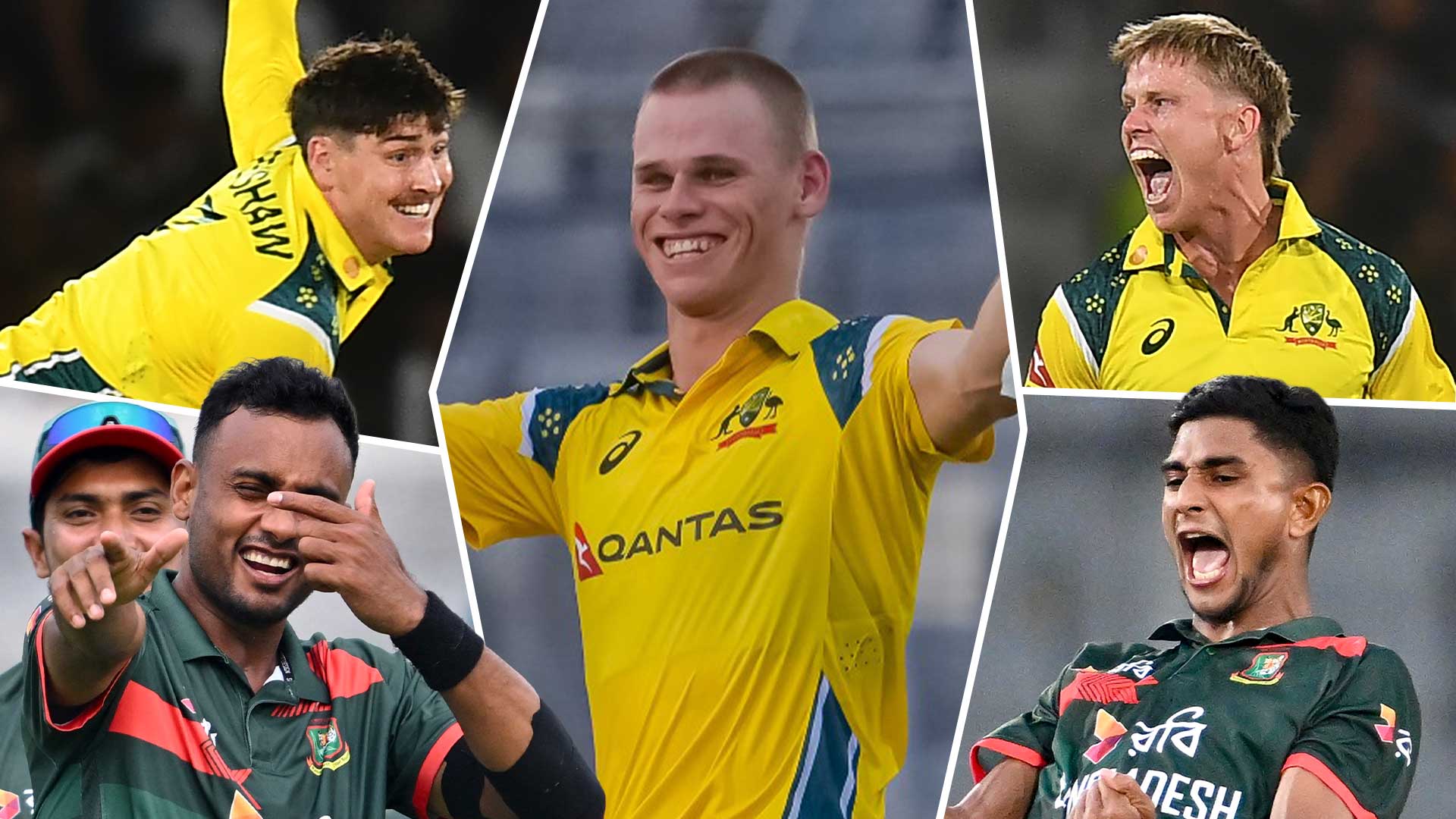
Cooper Connolly has made a play for a top-order spotThere was something about the cover drive Cooper Connolly hit off the second delivery he faced in Sunday night's third T20I. Facing a rising delivery from speedster Nahid Rana, the young leftie simply transferred his weight forward and middled the ball on a worn pitch that had confounded the home side. Connolly only made 15, and while this was a tour on which he also made three single-figure scores in seven hits, he returns to Australia with the air of a far more confident player than before."There's definitely moments in the game where you're like, 'Am I ready for this?' or 'Can I perform at this level?'" Connolly told cricket.com.au after his memorable 149 in Dhaka. Before his maiden ton, he had averaged 12.61 from 16 innings across all three international formats. But, as he did in a breakout recent IPL, the 22-year-old clearly prospered from a consistent role batting in the top three, adding a fluent 27-ball 47 in the first T20I against Bangladesh.The main question for Australian selectors now is whether his returns justify an ongoing top-order spot, which might depend on how they plan to structure their batting line-up in what will be a busy 18 months in the ODI format.Questions linger over the ODI batting mixIf George Bailey and co. were drawing up their top seven for next year's ODI World Cup, it is hard to see any names other than Travis Head, Mitch Marsh and Josh Inglis being put down in permanent marker. While several newcomers were blooded over the nine games in Pakistan and Bangladesh, and the 'Big Three' quicks were all missing, there was a glut of experience still on the park during the consecutive ODI series defeats. Cameron Green (164 runs at 32.80) hit two half-centuries but has not nailed his role in the 50-over side, Marnus Labuschagne (109 runs at 21.80) finished his tour batting at seven, while Alex Carey (106 runs at 17.66 from six ODIs) only passed 20 once. Matthew Renshaw (more on him below) and Matthew Short (who was dropped after three consecutive ducks), a pair less experienced than the others but also no strangers to international cricket, both fizzled out with the bat after promising starts to their trip.The batting unit's struggles on dusty decks in Pakistan that were being questioned even in that country was one thing; it was another to be consistently handicapped on more even batting surfaces in Bangladesh. There, Australia were 2-2 in the first ODI, 3-0 in the second (their worst ever start to an innings), and then lost 4-5 at the death in the third to almost squander Connolly's brilliant ton. Their battles against the new ball will be of particular concern given next year's World Cup, in southern Africa, should see plenty of early movement for seam bowlers.All up there were 17 single-figure dismissals from the top seven across the six one-dayers. Selectors, trying to find replacements for David Warner, Steve Smith, Glenn Maxwell and Marcus Stoinis from their 2023 World Cup-winning squad, will need to weigh up whether they stick with their underperforming seasoned players like Carey and Labuschagne, or whether the likes of Ollie Peake can join Connolly in a more youthful top-order.Already a T20 lock, Ellis is making his 50-over case tooNathan Ellis dominating at the death in both white-ball formats was nothing new. Even at full strength he is one of the first picked in the T20I side.But his new-ball wickets in the ODIs demonstrated Ellis is now a bowler that can be relied on at any stage of the innings at international level. In the second ODI in Pakistan, Australia's only win of the series, the right-armer had the home side in early strife with two wickets in the first five overs, including the prized scalp of Babar Azam.He would not be the first pace bowler in the Big Three era to be squeezed out of a spot when Australia return to full strength. But at this rate he could make a case to be in the mix no matter what when the Aussies arrive in southern Africa for next year's 50-over World Cup. Then he took the first two wickets in the ODI series opener in Bangladesh, before Musaddek Hossain's unbeaten 86 saw the hosts take a 1-0 lead. All up for the subcontinent tour, Ellis claimed team-leading 13 wickets in eight matches, averaging 19.85 per wicket with an excellent economy rate of 4.78.And with Spencer Johnson back fit and firing and also taking wickets with the new ball (including 2-6 off four overs in the third T20I), Australia's pace depth looks sounder than when the side was bundled out of the T20 World Cup at the group stage in February.Australia find an unlikely bowling option amid Renshaw's up-and-down tourIt is difficult to sum up Matthew Renshaw's tour succinctly. One of only two players to feature in all nine games of the trip (Josh Inglis was the other), Renshaw's form with the bat trended up, then bottomed out, then trended up again as he was deployed in every spot between No.3 and 7 across both formats. In the low-scoring ODI series against Pakistan, he expertly managed tough, turning conditions with scores of 61 and 43 in the first two games, before falling for 4 and 2 in his next two hits, and then registered consecutive ducks against Bangladesh's left-arm seamers, both after coming in against the new ball following early collapses.The rollercoaster continued in the shorter format. His 28-ball 18 in the first match was the slowest innings ever recorded by an Australian who has batted that long in a T20I. He responded by peeling off a match-winning 89no two nights later, clearing the rope five times and firing Australia to their highest score in almost 12 months.All this while he emerged as a surprise force with his off-spin, as Renshaw indicated he had taken motivation from a critical comment about his part-timers from one of the Bangladesh players. Only Ellis took more than his nine wickets across the nine matches, Renshaw's tally even bettering lead spinner Adam Zampa's (who finished with eight wickets from as many games). Renshaw's offies are vastly improved, with a consistent shape on the ball from his considerable height troubling left-handers in particular. With Glenn Maxwell questionable to return to the T20I side (and retired from ODIs) and Matt Short's future up in the air, Renshaw could be a surprise all-round force for both limited-overs outfits going forward.Bangladesh shouldn't be underestimated in Top End TestsThe biggest difference between the sides in the ODI series was the potency of the Tigers pace attack, which bears a familiar look to the one that has powered Bangladesh to four straight Test wins.In the first ODI it was speedster Nahid Rana who terrorised Australia's batters with 4-41, in the second it was Taskin Ahmed with three wickets, and in third left-armer Shoriful Islam claimed a career-best 6-48 to almost pull off a remarkable comeback.All three are capable of consistently bowling above the 140kph mark, but it is the towering 23-year-old Rana who is truly express, often pushing into the 150s, as Australia found out in the first ODI in Dhaka. In that match he delivered just one ball below 140kph – an intentional slower delivery – while in one two-over burst he didn't drop below 145kph and took two wickets.Rana was the leading quick in Bangladesh's 2-0 Test series win over Pakistan last month. While Australia's red-ball top order is more experienced than the one that turned out for the ODIs, with Travis Head and Steve Smith to be back in the fold, if Bangladesh's attack can sustain similar speeds in Darwin and Mackay, they're sure to be a handful for any batting line up.Qantas Tour of Pakistan & Bangladesh 2026Australia ODI squad v Pakistan: Josh Inglis (c), Alex Carey, Cooper Connolly, Nathan Ellis, Cameron Green, Matthew Kuhnemann, Marnus Labuschagne, Riley Meredith, Oliver Peake, Matthew Renshaw, Tanveer Sangha, Liam Scott, Matt Short, Billy Stanlake, Adam ZampaMay 30: First ODI, Pakistan won by five wicketsJune 2: Second ODI, Australia won by 41 runsJune 4: Third ODI, Pakistan won by four wicketsAustralia ODI squad v Bangladesh: Mitchell Marsh (c), Xavier Bartlett, Alex Carey, Cooper Connolly, Ben Dwarshuis, Nathan Ellis, Cameron Green, Travis Head, Josh Inglis, Matthew Kuhnemann, Marnus Labuschagne, Matthew Renshaw, Tanveer Sangha, Liam Scott, Adam ZampaJune 9: First ODI: Bangladesh won by 86 runs (DLS Method)June 11: Second ODI: Bangladesh won by five wickets (DLS Method)June 14: Third ODI: Australia won by one wicketAustralia T20I squad: Mitchell Marsh (c), Xavier Bartlett, Nikhil Chaudhary, Cooper Connolly, Tim David, Joel Davies, Nathan Ellis, Aaron Hardie, Travis Head, Josh Inglis, Spencer Johnson, Matthew Kuhnemann, Riley Meredith, Josh Philippe, Matthew Renshaw, Adam ZampaJune 17: First T20I: Australia won by four wicketsJune 19: Second T20I: Australia won by seven runs

Most Popular




Live: All Whites v Egypt
3 hours ago