After scoring 400 goals, Uli Hoeneß declared him unsellable. Yet this once-in-a-generation talent at Bayern Munich still fell from grace
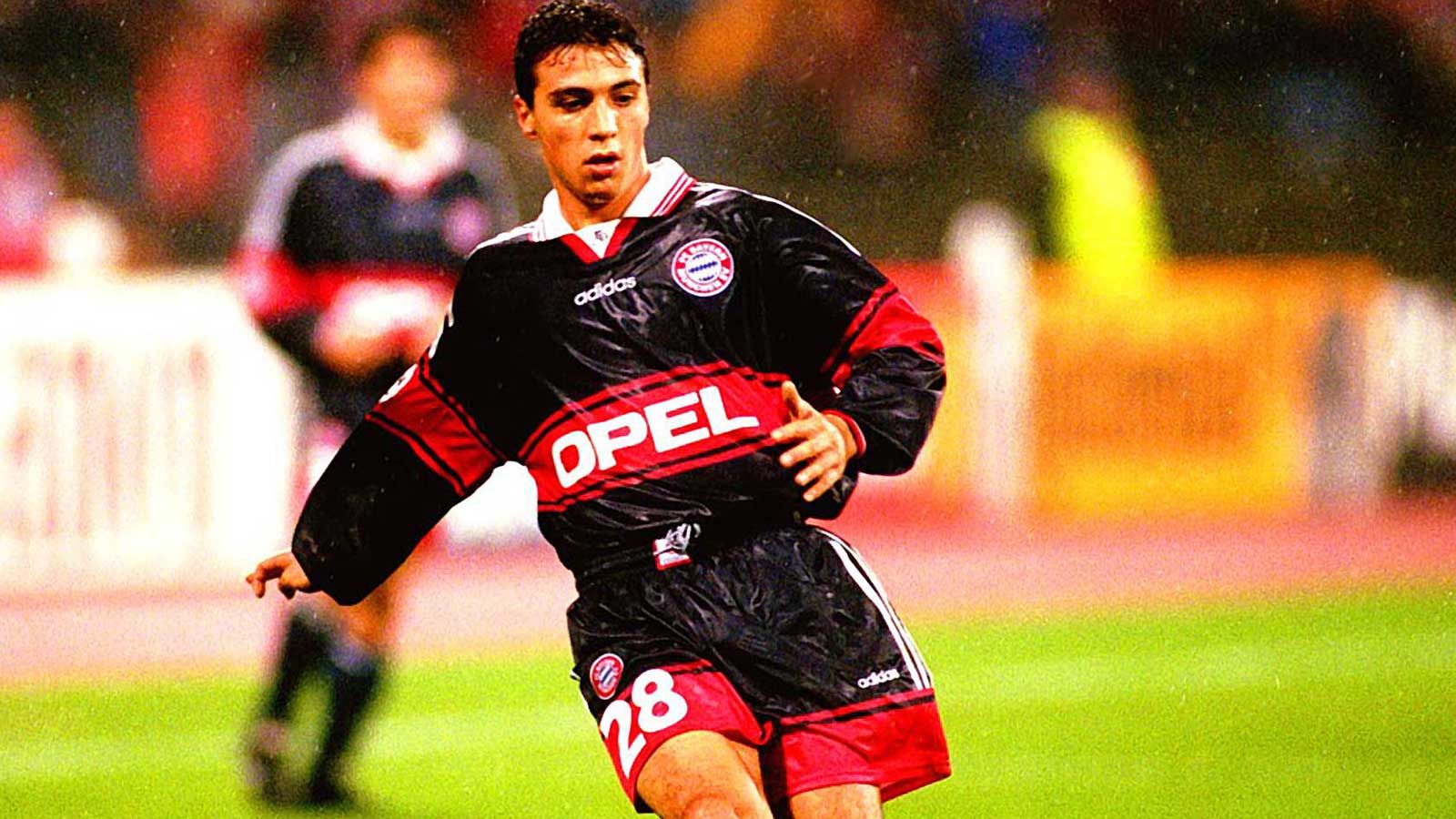
Less than ten years ago, the English Garden was his playground. Yet at 25, Berkant Göktan is light-years from those carefree summer days of 2006. Right now, he has hit rock bottom. “We often played football in the English Garden with other multicultural lads,” the German-Turkish player once told 11Freunde about that period. For several weeks he has not played for any club, simply trying to stay fit. He had cut short his spell at 1. FC Kaiserslautern, another unsuccessful stop.To understand how he got here, we need to rewind to his roots, when everything felt right for young “Berki”. He began his career at Helios Munich, a modest club in eastern Bavaria, and was snapped up by Bayern Munich at the age of eight after impressing during a trial. At Säbener Straße, he quickly earned a reputation as a prodigy, a goalscoring sensation."There were about 400 games in a D-youth season. I often scored 10 or 12 goals in a single match," Göktan recalls. Bayern Munich, unsurprisingly, had high hopes for the young striker; at 13, he had already signed a pre-contract. He neglected his schoolwork, rarely attended classes and staked everything on football from an early age. At first, his trajectory appeared inevitable: straight to the top.His potential seemed limitless. Halil Altintop, who later played alongside the prodigy—by then already past his peak—at Kaiserslautern, once remarked: “What he did with the ball was absolutely mad. I’ve probably never seen a player with such technical skill again.” Yet his immense talent proved insufficient. Göktan’s personality, character and attitude toward the game remained underdeveloped.Even as a teenager, Göktan was causing a stir. Those close to him say that, even at 16, he would occasionally get up to drunken antics, step out of line and put on airs. “He was convinced from a very early age that he was a star,” recalled Herbert Harbich, who for years served as a volunteer coach for Bayern’s youth teams, in the tz. “That’s not enough.”Harbich still recalls the 1998 German U19 final, where Göktan’s selfishness cost Munich its first ever youth title. Bayern’s U19 side, featuring the likes of Owen Hargreaves and Daniel Bierofka, led Borussia Dortmund 2-1 with about 20 minutes left. A penalty was awarded, and though Göktan was neither the senior nor the designated taker, he seized the ball and blasted it over the bar, spurning the chance to kill the game.The drama then escalated: BVB equalised in stoppage time, and the game went to penalties. “Göktan stepped up again—and missed again,” Harbich recalls. Dortmund lifted the trophy; Göktan was left to shoulder the blame.For years, Göktan brushed off such criticism, focusing instead on his burgeoning talent. He trained with Giovanni Trapattoni’s first team at 16, holding his own against world stars like Lothar Matthäus. By 17, he had signed his first professional contract, left school, and was ready to hit the ground running.Göktan made his Champions League debut for Bayern at 17 years and 9 months, entering the group-stage clash with Manchester United at Munich’s Olympic Stadium. He replaced Hasan Salihamidzic with just under half an hour remaining and immediately went toe-to-toe with the likes of David Beckham and Paul Scholes. “I was in a trance,” he recalls.He nearly scored on his debut in Europe’s premier club competition, and he still believes that single left-footed strike, which curled just wide of the right-hand post, could have altered the course of his career. “Sometimes I think: if that had gone in, perhaps everything would have turned out differently.” Had the shot gone in, he believes, someone might have kept him grounded. Yet no mentor ever materialised.That game against United would remain the biggest stage of his Bayern career. Distracted and prioritising everything but football, he made only two further competitive appearances for the club, and coach Ottmar Hitzfeld soon dropped him. In early 1999, still only 18, he was loaned to Borussia Mönchengladbach, and six months later sent to Bielefeld to join his former mentor Hermann Gerland.Yet the highly talented youngster suddenly found himself lagging behind. He made just five appearances for Gladbach and 16 for Bielefeld, scoring only one goal. He despaired, wanting too much too quickly. In the summer of 2000 he returned to Bayern, but played almost exclusively for the reserve team in the Regionalliga. “The big turning point at Bayern was that I was training just as hard as ever, but my performance wasn’t improving,” he later told kicker. He was stagnating, making no progress, but earning relatively well. “I gradually lost my motivation. I then pretended everything was fine and focused on the money. Football was just a side issue.”Göktan’s Bayern Munich chapter ended in 2001, and the 20-year-old talent shocked many by joining Turkish Super Lig giants Galatasaray. “It was mad!” There were twenty cameras and loads of journalists at the contract signing—I’d never experienced anything like it,” Göktan enthused to 11Freunde. On the pitch, his form blossomed after a six-month settling-in period. He chipped in five goals to Galatasaray’s Turkish league title triumph and even featured in the Champions League against Liverpool and Barcelona.Yet the highs proved fleeting. In his second and third seasons he barely featured, and after moving to Besiktas in 2004 he was completely sidelined. A laid-back attitude and poor timing with coaching changes derailed his progress. “It really took its toll on me mentally. I thought: ‘Boy, you’ll never play again, you’re just a substitute.’ With every step I took, I felt myself getting closer to rock bottom,” he explains.Michael Henke, his former assistant coach at Bayern who had once hailed him as the “talent of the century”, brought him back to Germany with Kaiserslautern. Henke was soon sacked, however, and under his successor, Wolfgang Wolf, Göktan remained on the sidelines. In April 2006 he terminated his contract with FCK and returned to Munich, to his home near the English Garden.Göktan is doing everything he can to stay fit; he seems to have had a change of heart and is suddenly acting humble. “On the artificial pitch at my first club, I put my brother in goal and practised. I did everything back then: played football, cycled, went swimming, went jogging.” His big break came when 1860 Munich heard that the former wonderkid of their great rivals from Säbener Straße wanted to make a comeback. The club initially signed him for the reserves, and he went on to enjoy what many consider his two best years as a professional with the Lions.He became the team’s star and the face of 1860. “I finally had the good fortune to work with a coach in Munich who trusted me, knew how to handle me and could do so over a sustained period.” Marco Kurz had brought him into the amateur side—and when Kurz was promoted to first-team manager, Göktan took off with the Blues. He scored ten goals in 13 second-division appearances in his first season for 1860; in his second campaign he added another ten despite a three-month injury lay-off.“I didn’t repeat the mistakes I’d made in the past. I was successful again, but this time I kept my feet on the ground,” Göktan said in 2007. He regretted his failure at Bayern, admitting, “I was a mess. It was a big problem that I was too impatient, too impulsive. Success went to my head.” Determined to improve, he set his sights on a return to the Bundesliga. Yet an October 2008 incident would derail that ambition.The club had ordered a cocaine test after noting his erratic behaviour and receiving tips from Munich’s nightlife; the result was positive. A nagging foot injury added to his struggles, as did reported family tensions, especially with his father Fahrettin. The club offered support and proposed suspending his contract, but Göktan rejected the help, packed his bags and walked away. At not even 28, he had played his last game in German professional football."I was glad it all came out, because that left me with no way out," he said years later about his cocaine abuse. “At the airport, I had two options: Mexico or Thailand.” Göktan chose Thailand, walked away from football, explored Buddhist teachings and found the love of his life. Just under 18 months after leaving 1860, he tried another fresh start with top Thai club Muangthong United. It was a brief interlude.By late 2012, at 31, he abruptly announced a comeback in Germany. Yet his options had dwindled: only Regionalliga Bayern side SV Heimstetten would take him. He made only one competitive appearance for the club, coming on as a substitute for six minutes in a 0–5 loss to Bayern Munich’s second string at the end of October 2013.Since then, Göktan has not featured in any match reports, and even his Instagram activity has tapered off. Until 2021, he had regularly shared photos portraying himself as a content family man, smiling alongside his children.Rumour has it he occasionally kicks a ball around in Munich’s English Garden, drawing casual glances from passers-by who have no idea they’re watching a former once-in-a-century talent. After a few minutes, they simply walk on.

Most Popular