Thibaut Courtois, Senne Lammens and the big call that backfired on Belgium

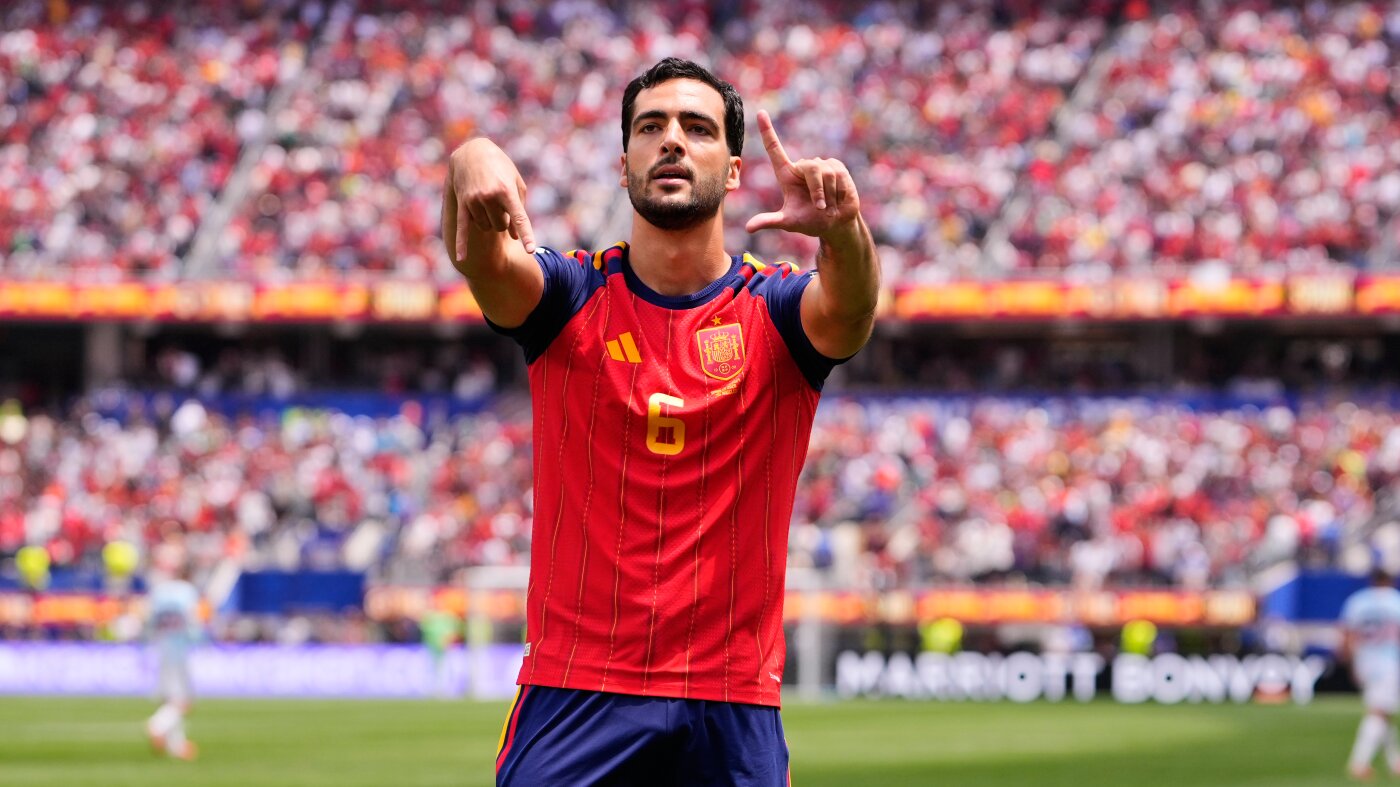
When beating the U.S. in the World Cup last 16, Belgium had to overcome FIFA, a host nation and its President. It was quite a feat.During their quarter-final against Spain, though, they came up against a force that was impossible to surmount: fate.First they lost combative midfielder Amadou Onana to a torn anterior cruciate ligament (ACL) last week; then Youri Tielemans, the team’s metronomic pace-setter in possession, limped out of the warm-up to the Spain game with a hamstring injury.They were still offering impressive resistance to Spain, drawing 1-1 in the 70th minute, when the final blow arrived: Thibaut Courtois, one of the world’s finest goalkeepers, coming off in tears with his own leg injury.In terms of a back-up, Manchester United’s Senne Lammens looked a secure option but asking a 24-year-old to make his World Cup debut in a quarter-final against Spain in front of 70,000 people proved a step too far.With just two minutes remaining, Lammens parried Pau Cubarsi’s awkward, bouncing 25-yard shot into the path of Mikel Merino, who gobbled up the rebound. Belgium were finally beaten.U.S. readers watch here:UK readers watch here:It felt like fate had intervened decisively. But did it? In a television interview, Courtois suggested — with as much equanimity as he could muster — that he could have stayed on the pitch longer, only for head coach Rudi Garcia to decide to bring him off.“Ultimately, the team comes first,” Courtois said. “I can understand it, because Senne is a good goalkeeper. I was willing to stay on for another five or 10 minutes, as long as I didn’t have to kick the ball very far. I’ve had to do that a lot in recent weeks. At a certain point, your body has had enough of it.”Garcia, who has a reputation for impulsiveness, confirmed it was his decision to substitute Courtois, who had sat down on the turf after initially seeming to suffer the injury in saving a shot from Mikel Oyarzabal.“From the beginning of the World Cup I didn’t want players on the pitch who were not 100 per cent,” Garcia said. “That was the case for Thibaut. We didn’t want his injury to get worse and that’s why I decided to sub him off. It’s part and parcel of high-level sport, you need to be concentrated and 100 per cent focused.”Whether Lammens could possibly be 100 per cent focused himself in those circumstances is another question, but Garcia had plotted Belgium’s winding route to the quarter-finals by taking unorthodox risks — he substituted off star players Kevin De Bruyne and Jeremy Doku with the team 2-0 down to Senegal in the last 32 and won 3-2 — and he wasn’t going to stop now.It was a cruel twist of, yes, fate that Lammens was the one to make the decisive mistake, given how he earned a reputation at Old Trafford last season for being so dependable.Many Manchester United goalkeepers have wilted under the pressure of playing for one of the biggest football clubs in the world but Lammens, who came from relative obscurity at Royal Antwerp, was a steady hand (or two) amid the chaos endured by many Premier League goalkeepers from incessant long throws and set pieces.Courtois embraced his team-mate on the pitch at full-time.“Of course I gave Senne a big hug,” Courtois said. “I can’t do more than that. For a goalkeeper, this is a s—-y feeling. But he is a very good one, so he will grow out of this. He is a strong guy with a strong mentality. I have no doubt about his season (ahead) with Manchester.”Courtois has been part of the golden generation of Belgian players who took the nation to unprecedented heights, at least in the FIFA rankings where they were regarded for some time as the number one international side in the world.A World Cup semi-final in 2018 in Russia, though, was the closest they got to transforming that talent into actual gold.Courtois, 34, said afterwards he was considering the possibility of a year-long sabbatical from the national side to “rest”, although he insisted he had enjoyed the tournament.With the 35-year-old De Bruyne, who also came off injured here just before Spain scored their winner, and Romelu Lukaku, 33, now in the winter of their international careers — given their injury history it’s hard to envisage they will emulate Lionel Messi or Cristiano Ronaldo and play on for another four years — the dying embers of that generation perhaps flickered for the final time in Los Angeles.Despite what happened here, Lammens is clearly a big part of the next generation coming through. So, too, is the impressive 21-year-old left-back Joaquin Seys (of Club Brugge) who came on and improbably muzzled Lamine Yamal for the final 30 minutes. Charles De Ketelaere scored his third goal in two matches, Doku can win games single-handedly and Nathan Ngoy (a 23-year-old centre-back with Lille) had a great tournament.Garcia gathered the squad for a post-match huddle in the centre circle and animatedly told them they had looked Spain in the eye and tried everything to beat them.“We were beaten tonight because many things went against us,” Garcia said. “When you lose your captain and your goalkeeper, who happens to be one of the best in the world and when you are also forced to substitute De Bruyne, the fact that you ultimately don’t reach extra time is tough.“Fate was not on our side. To go far, you also need luck. But I am proud of our players and our World Cup. We are leaving with our heads held high. I hope I have made the country dream,” Garcia said. “Unfortunately, the stars weren’t aligned.”
Most Popular