Did India ever qualify for the FIFA World Cup?
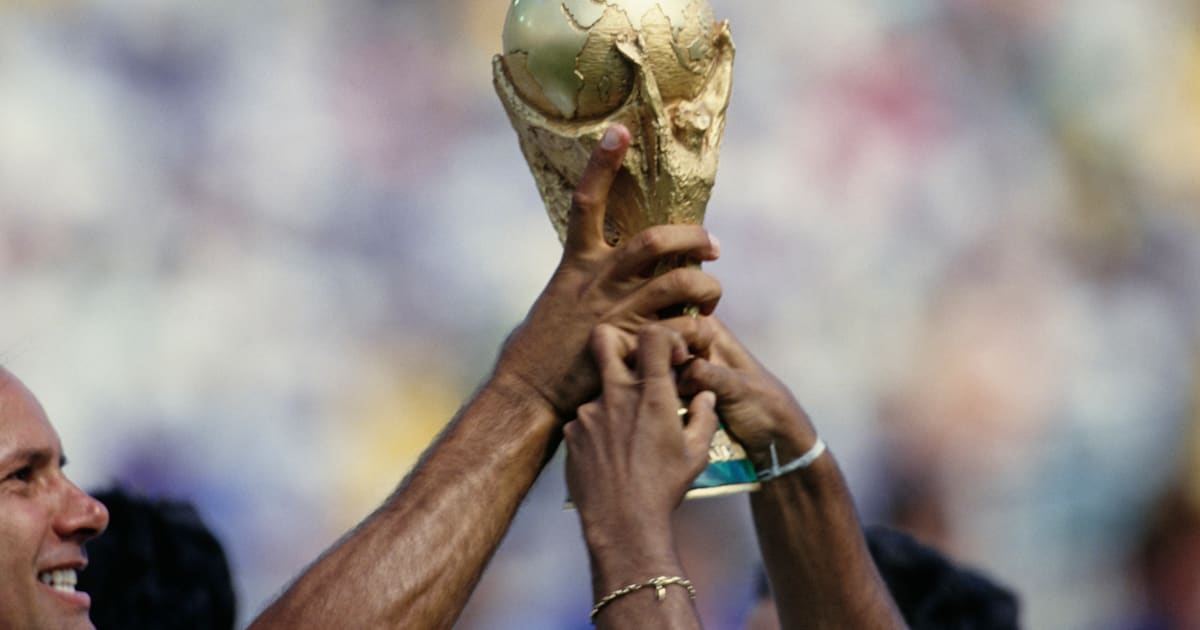
Indian football’s history is littered with tales of unrealised promise and missed opportunities - none, perhaps, more haunting than what transpired in 1950.Despite qualifying for the FIFA World Cup in Brazil, India chose to walk away, turning what should have been a historic debut into football’s biggest ‘what if’ story.A World Cup appearance and perhaps a memorable result in Brazil could potentially have done for football in India what Kapil Dev and Co. did for cricket with their 1983 World Cup triumph - transform the sport from a passionate pursuit into a national obsession.Here’s a chronology of the incredible set of events that culminated into the infamous ‘Summer of 1950’.How India qualified for the 1950 FIFA World CupTo understand India’s qualification, it is important to understand the state of world football in 1950.The tournament in Brazil was only the fourth FIFA World Cup ever staged and the first after World War II - which led to two editions being cancelled.The majority of the world was still recovering from the economic devastation left behind by the war and international travel remained expensive and complicated.Several nations across continents either withdrew during qualification or declined participation altogether because of financial hardship and logistical concerns associated with travelling to South America at the time.The qualification process itself was far smaller than the sprawling global system seen today. Only 13 teams eventually participated in the FIFA World Cup 1950.A total of 34 teams entered the qualification round to decide 16 teams. India, having achieved independence in 1947, entered the mix for the first time.India were placed in an Asian qualifying group alongside the erstwhile Burma (now Myanmar), Indonesia and the Philippines.But the other teams withdrew even before the qualifiers began, leaving the Indian men’s football team with an uncontested path to the 1950 FIFA World Cup.India even featured in the final FIFA World Cup draw held in Rio de Janeiro on May 22 - just a month before the tournament was scheduled to start - and were placed in Group 3 alongside Sweden, Paraguay and defending champions Italy.In a cruel twist of fate, though, India never showed up for their opening match on June 28.Why did India not play the FIFA World Cup 1950Over time, several myths cropped up surrounding the reason for India’s absence from the 1950 FIFA World Cup.One of the most popular versions claims that India withdrew because FIFA refused to allow the players to play barefoot.Just a couple of years back, the Indian football team, in what was their first-ever international match, had pushed European heavyweights France to the brink at the London 1948 Olympics before conceding late to go down 2-1.Several players in that team, captained by the charismatic Talimeren Ao, played without boots - with their feet taped heavily.The image of barefoot Indians fearlessly taking on European opposition quickly became iconic, casting India as football’s unlikely underdogs - the Davids daring to challenge the sport’s established Goliaths.Consequently, FIFA’s boot mandate theory gained a lot of traction in its early days.After all, it played to the romantic notion of proud Indians - having gained their independence from the British only recently - refusing to abandon their style to match West-imposed convention.However, it was merely a myth. FIFA had no rules mandating boots till 1953. In fact, India continued playing barefoot at the Helsinki 1952 Olympics without any objections.More than boots, it was administrative cold feet, priorities and financial constraints which kept India from making a historical FIFA World Cup debut.The financial challenge of reaching Brazil was enormous - particularly for Asian nations still grappling with the economic aftershocks of World War II. In the end, the 1950 FIFA World Cup featured no Asian representatives at all.For India, barely three years removed from Independence, financing and organising a voyage halfway across the world for a football tournament was an overwhelming prospect for a fledgling All India Football Federation (AIFF) still navigating the realities of a newly independent nation.However, multiple meetings were held and for a brief period of time, the improbable prospect even looked possible with the Brazilian federation and FIFA pledging their support and state federations promising financial aid.Unfortunately, though, after flirting with the idea for months, the AIFF finally pulled the plug after a meeting in Calcutta (now Kolkata) on May 23 - less than a month before the team was supposed to travel to Brazil.“India will not participate in the World Cup or the Jules Rimet Cup. Due to late information reaching India, the team will have to be flown to Rio resulting in cancellation of team selection. Since there is not much time, the Indian team will not be able to prepare and hence it will not be correct to send the team.” - cited AIFF’s official press release.However, the reasoning was only part of the whole truth.Several accounts point to the fact that the financial burden was a put off for the AIFF, who also wanted to prioritise the upcoming Olympics in Helsinki, which would again take a big toll on the treasury.Priority OlympicsToday, the FIFA World Cup is the undisputed pinnacle of football.But in 1950, that was not necessarily the case. The World Cup was still a relatively young competition, trying to rebuild after massive wartime disruptions.Olympic football, meanwhile, carried enormous prestige and was considered the premier international stage by many countries outside Europe and South America.For Indian footballers and administrators, the Olympics represented the ultimate dream.India’s impressive performance at the London 1948 Games had created genuine optimism that the country could become a respected force in Olympic football.Much of the focus inside Indian football, therefore, remained centred on future Olympic ambitions rather than the World Cup in Brazil.“We had no idea about the World Cup then. Had we been better informed, we would have taken the initiative ourselves. For us, the Olympics was everything. There was nothing bigger,” Sailen Manna, one of Indian football’s star names of that era, later told Sports Illustrated.Manna was also the captain of the Indian football team which won the gold medal at the first-ever Asian Games in 1951.Sheoo Mewalal, who scored the winning goal against the Islamic Republic of Iran in the final to hand India the glory, corroborated his captain in a separate interview.“In our time, World Cup was not important. Olympics was. To us, the World Cup was still a vague idea,” Mewalal was quoted as saying. “The dream was to play the Olympics. When India withdrew from the 1950 World Cup, we were hardly disappointed.”In fact, India’s first genuine attempt to qualify for the FIFA World Cup on the pitch came only ahead of the 1986 edition in Mexico.Since withdrawing from the 1950 tournament, India have participated in 10 World Cup qualifying campaigns, but the dream of returning to football’s biggest stage has remained elusive.Furthermore, it’s also been reported that Moin-ul-Haq, the erstwhile AIFF president, was concerned that an amateur Indian team could face heavy defeats against European and South American teams, which would be largely fielded professional players.This, he believed or feared, could undo the prestige and reputation which the Indian team had earned at the London Olympics two years earlier.Additionally, domestic matches in India at the time were often played over 70 minutes instead of the international standard of 90, raising quiet yet legitimate doubts about fitness and endurance against the world’s best teams.History will always remember that India qualified for the FIFA World Cup in 1950 and chose to walk away.What it will forever wonder, though, is how differently the story of Indian football might have unfolded had the administrators taken the risk and onboarded the team on a plane to Brazil.

Most Popular