Why CSK lost and RCB won this year's IPL at the auction table
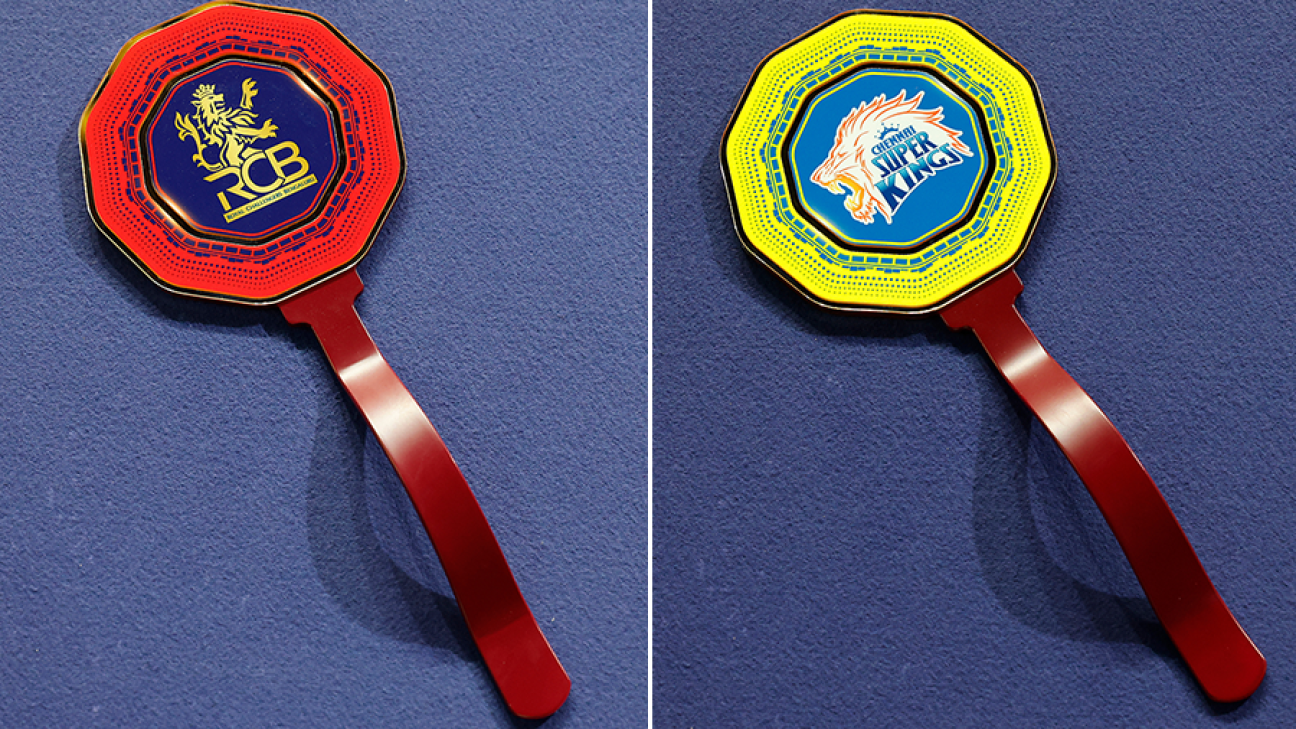
On the other hand, RCB now look like the CSK of old, with their emphasis on role clarity and continuityAbhinav MukundPublished: Jun 6, 2026, 10:43 AM (4 hrs ago)The IPL has matured to a point where the success of a franchise is substantially determined by what it does at the mega auction. Squad construction has become the foundation of sustained success. Data has consistently showed that teams willing to invest 80-90% of their purse in acquiring their strongest playing XI or XII tend to find success.Chennai Super Kings used to be a perfect example of this. On the other hand, recruitment was historically one of Royal Challengers Bengaluru's biggest weaknesses. But if you look at recent auction cycles, there is clear evidence the franchise has learnt from its mistakes. The 2022 auction was the last mega auction but one and RCB finished fourth that season. They were sixth in 2023, and fourth again in 2024. While they were not title winners during that period, they consistently remained competitive. Last year, after the most recent mega auction, they won.CSK, meanwhile, finished ninth in 2022 and needed to course-correct. They spent heavily on Ben Stokes, who barely featured, and it needed the ability of MS Dhoni to maximise the resources available to him for them to win the title a fifth time. Their best acquisition that year was arguably Ajinkya Rahane at base price, who ended up providing immense value.RelatedIPL 2026: How the ten teams stack up after the auctionIPL 2026 auction: what the ten teams have, and who they will be desperate to get'Everyone is going at a rate of knots'; CSK still in the noughtsMo Bobat: RCB 'walk towards pressure situations rather than away from them'The biggest factor behind CSK's success remained unchanged: role clarity. For years they followed a remarkably consistent blueprint. Ruturaj Gaikwad and Devon Conway enjoyed their best IPL season as an opening pair in 2023, continuing the franchise's long-standing formula of combining an Indian opener with an overseas one. Every player understood his role, and more importantly, the team recruited specifically for those roles.Deepak Chahar was a specialist powerplay bowler. Twenty-seven of his 34 overs came in that phase that season. Matheesha Pathirana operated at the opposite end of the innings. He bowled almost exclusively in the middle and death overs; 18 of his 19 wickets came at the death. (Before Pathirana, it was Dwayne Bravo who executed that role for Super Kings.)Every player had a clearly defined function. That clarity was one of the biggest reasons behind CSK's title-winning campaign.Only ten players remain in the current CSK squad from the group assembled at the 2025 mega auction. They finished last in 2025 and had to rebuild again. Given the limitations of the mini auction system, course correction has become increasingly difficult. The new rule requiring overseas players to register for a mega auction if they want to be available for purchase in subsequent mini auctions has further reduced the quality of replacements available mid-cycle.What makes CSK's recent auction strategy surprising is not merely the players they acquired but the philosophy behind it. For years CSK was built around experience. They targeted players who understood the demands of the IPL and could contribute immediately. Starting with the auction for the 2025 season, however, there has been a noticeable shift towards youth and potential. It has felt distinctly unlike the CSK that built its reputation on certainty, stability and experience.RCB, meanwhile, moved in the opposite direction. They strengthened their squad with experienced players who understood their roles and could fit into a larger system.The IPL is not a developmental league. CSK were proof of this principle for over a decade. It is a league for finished products, players who understand the demands of the tournament and can execute under pressure. Success comes from identifying those players and placing them in clearly defined roles.CSK trading in Sanju Samson was undoubtedly a positive move. However, the recruitment of Kartik Sharma and Prashant Veer was harder to understand, given only one realistically fit into the playing XII.In practical terms, CSK replaced Ravindra Jadeja with a combination of Veer and Akeal Hosein. Conway made way for Samson. R Ashwin was replaced by Rahul Chahar. Nathan Ellis was marked for Pathirana's role, but unfortunately Ellis was injured and was subsequently replaced by Spencer Johnson. Picking Matt Henry and Zak Foulkes proved futile as they were primarily powerplay specialists and didn't have many chances of making it to the XI.The issue was not necessarily the quality of the players involved; it was that CSK moved away from the structure that had defined them. The experienced middle order was weakened. They didn't have their experienced specialist powerplay bowler. The dedicated death-overs enforcer was no longer present.Super Kings' squad construction looks increasingly unbalanced: they have five specialist openers (Gaikwad, Samson, Urvil Patel, Ayush Mhatre and Matt Short), while their three main spin-hitters (Kartik, Shivam Dube, and Dewald Brevis) all bat at No. 4 and typically need time to settle into an innings. Dube has been pushed into the finisher's role despite him having aced batting in the middle overs during CSK's title-winning season. Brevis batted at No. 4 versus Kolkata Knight Riders, when CSK won back-to-back games at home early in the season, yet he was inexplicably pushed to No. 6 in the next game, a failed chase against Sunrisers Hyderabad. The confusion over whether to play seven or eight batters remained evident throughout the season.In trying to refresh the squad, CSK moved away from the very blueprint that had brought them success. RCB, on the other hand, look very different from the side that entered the 2025 season.Certainly, their squad would have looked very different had they managed to secure Venkatesh Iyer at the mega auction. Yet one could argue that their success in 2026, despite Phil Salt being unavailable for significant parts of the season, validates the choices they eventually made. They likely would not have been able to acquire Salt, Bhuvneshwar Kumar and Josh Hazlewood had they secured Iyer. This squad screams of the traditional CSK model.For years RCB were dependent on individual brilliance. Their fortunes often rose and fell with the performances of a handful of players. Today they are a balanced team with clearly defined roles throughout the line-up.Just by looking at their batting order, you can identify the players who provide control. Virat Kohli at the top and Krunal Pandya in the middle offer stability. Around them are players whose primary role is to maximise scoring opportunities from the outset. Even Devdutt Padikkal completely transformed his approach in 2026. Rajat Patidar, Tim David, Jitesh Sharma and Romario Shepherd were all enforcers.This is where squad construction matters. RCB have always had Kohli. They have usually been able to rely on him for 500 runs every season. The difference now is that every player around him understands his role. RCB are no longer a team built on Kohli. They are a team built around him.One statistic perfectly illustrates the difference between the two franchises: RCB used 16 players through the season, the fewest they have ever used in an IPL campaign; CSK used 21. Only three teams in IPL history have used fewer players in a season than RCB did in 2026: CSK in 2015 and Mumbai Indians in 2018 and 2020.That is not a coincidence. The most successful teams tend to trust the players they recruit. They build around a core group, resist the temptation to make frequent changes, and ensure that every player understands his role.To be able to do that, however, you need to get your auction right. Either you invest heavily in a starting XII that you trust, or you need extraordinary luck in finding suitable replacements during the season. With the current auction regulations, the second option is becoming increasingly difficult.CSK had already begun a reset with the arrivals of Mhatre and Brevis. That made the decision to add even more youth ahead of a three-year cycle difficult to understand.Iyer was available, as were Ravi Bishnoi, Jason Holder and Cameron Green. The Samson trade had already strengthened the squad and CSK entered the last auction with the second-highest purse. There was a genuine opportunity to rebuild around proven IPL performers.It is fair to point out that CSK endured significant injury issues throughout the season. But RCB dealt with their own challenges. Salt was replaced by Jacob Bethell, who later made way for Iyer. Hazlewood missed games and was replaced by Jacob Duffy. Yash Dayal's absence opened the door for Abhinandan Singh, before Rasikh Salam eventually came into the side. Mangesh Yadav, another player purchased at the auction, was also available if required.The personnel changed, the identity did not. That is the crucial difference. Every replacement slotted into an existing structure. The roles remained constant even when the names changed.I cannot stress this enough: the auction is about more than talent. It is about understanding the identity of your side.For two consecutive cycles, CSK have struggled to do that. In trying to evolve, they have drifted away from the principles that made them successful in the first place.Brendon McCullum, who has represented both franchises, has described the difference between the two teams as being simple. In Cricket 2.0, a book by Freddie Wilde and Tim Wigmore, he is quoted as saying: "One team gives selection loyalty and works on the team they have; the other chases a perfect team and doesn't have a blueprint for how they are going to play."This quote comes from late in the last decade. Anyone reading it today might assume McCullum is referring to RCB as the stable franchise and CSK as the one searching for answers. That is how dramatically the landscape has changed.Not all is lost for CSK. They still possess enough talent to compete over the remainder of this cycle. The solution is not another major reset. It is a return to the principles that brought success in 2023.That team had a prolific top order. It had clearly defined bowling roles in both the powerplay and death overs. It attacked spin effectively through the middle overs. Above all, every player understood his place in the team.Their record of four wins in seven home matches this season provides a useful starting point in understanding conditions once again.It is worth remembering that CSK won the 2023 title despite spending Rs 16.25 crore on Stokes, who played only two matches. That season was not won because every recruitment decision worked. It was won because the structure of the team was strong enough to absorb mistakes.That is the lesson.There is no need for a huge reset. There is a need for role clarity, continuity and stability. Ironically, those are qualities that RCB have borrowed from the CSK blueprint and made their own brilliantly over the last two seasons.Recruit the right personnel, trust them, give them clearly defined roles, maintain continuity. With stability and continuity come the freedom to take risks.In the IPL, recruitment is often half the battle won.Abhinav Mukund is a Tamil Nadu batter who has played seven Tests for India


Most Popular