
Alexandra Eala: The Wild Card Who Refused to Disappear

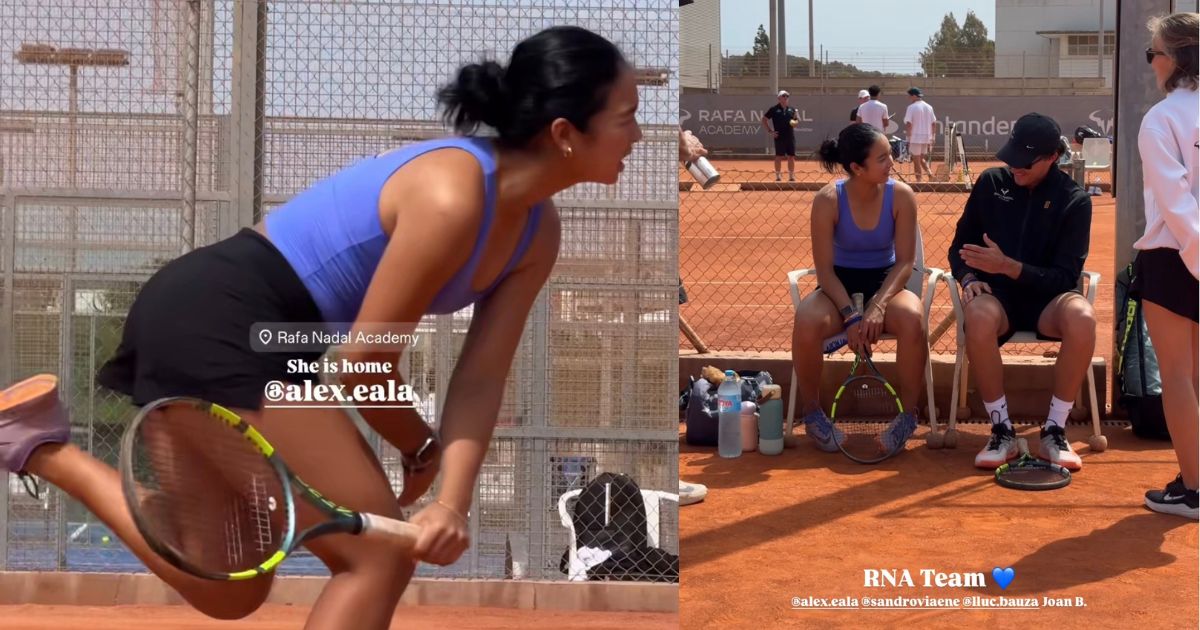
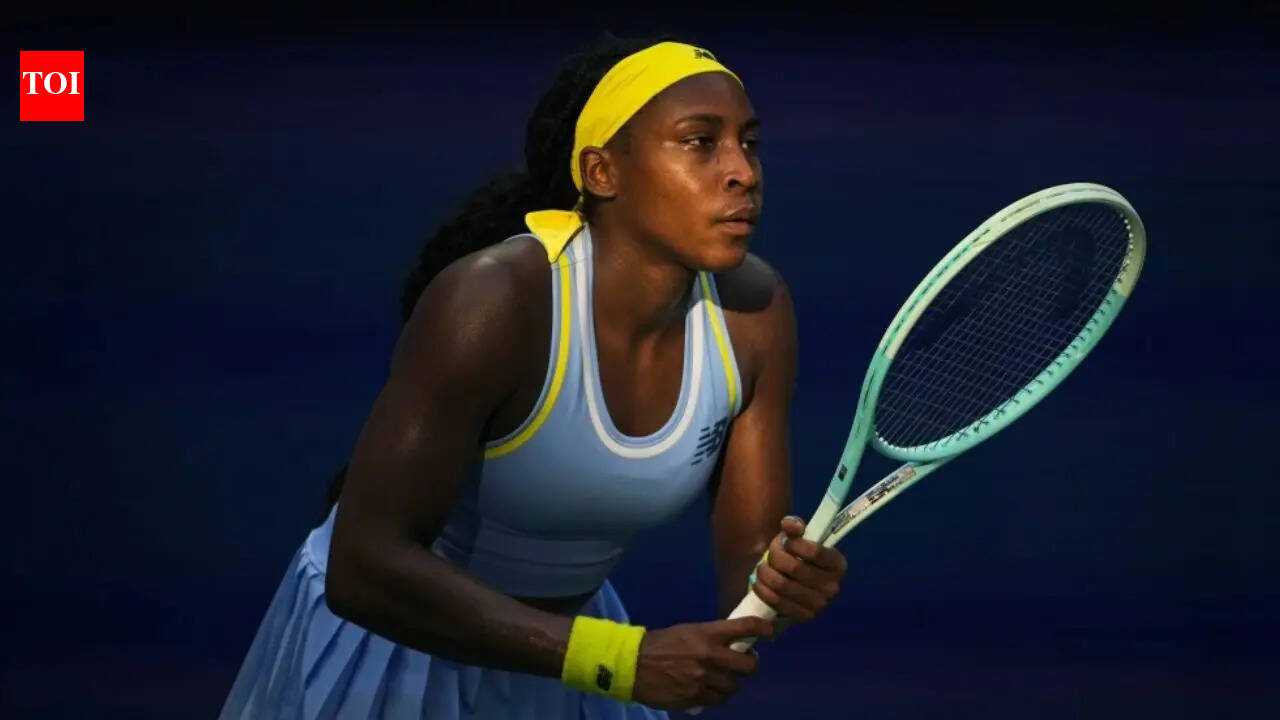
Twelve months ago, Alexandra Eala arrived in Miami as an afterthought. A wildcard. Ranked outside the top 100, unknown to most of the crowd filing into Hard Rock Stadium. She was 19 years old. She had never won a main draw match at a WTA 1000 event. And over the next ten days, she would beat four really good players in consecutive rounds and force the entire sport to learn her name.She dispatched Jelena Ostapenko, a former French Open champion. Then Madison Keys. Then world number two Iga Swiatek. Three Grand Slam champions in a row, on the biggest stage of her young career, in the city where she would announce herself to the world. She fell in the semifinals to Jessica Pegula after two and a half hours of punishing, physical tennis, and by the time she walked off the court, the sport had a new name it could not ignore and a new trajectory it could not easily explain.She is back this week as the 32nd seed.Tennis is full of players who produce one extraordinary week and then spend the rest of their careers trying to recapture it. Eala skipped that part entirely. That single shift from wildcard to seed, understated as it looks on a draw sheet, contains an entire year of relentless, methodical work, and it tells you everything you need to know about who she is.From Manila to Mallorca to the Top 30Eala’s path to the professional tour is the kind of story that tennis, at its most romantic, occasionally produces and almost never sustains. Born in Quezon City in the Philippines, she began playing at four years old and moved to Spain at 13 to train at the Rafa Nadal Academy in Mallorca, one of the most demanding developmental programmes in the sport. She graduated in 2023 with a diploma handed to her by Nadal himself. Her junior career peaked with the 2022 US Open girls’ singles title.What followed was the long, grinding process of converting junior excellence into professional credibility, which is a transition that defeats most promising players before it even begins. The women’s tour is unforgiving, stacked with depth, and offers very little patience for credentials earned on the junior circuit. Players who dominated at 16 routinely vanish by 21, swallowed by the gap between beating other teenagers and beating grown women who have been doing this for a decade. Eala navigated that gap with a maturity that belied her age, building her game on a solid baseline foundation and a mental composure that coaches and opponents alike have noted.The Miami run of 2025 was the moment that compressed all of that quiet, invisible work into a single, undeniable week. But what matters more, what separates Eala from every other feel-good wildcard story the sport has produced and then forgotten, is what she did afterwards.She did not fade. She kept winning. She kept climbing.By the time the 2026 season began, she was posting semifinal appearances at the Auckland Open, beating top-10 player Jasmine Paolini in Dubai, and reaching the last 16 at Indian Wells before falling to Linda Noskova. She even had a retirement win over Coco Gauff when the American pulled out at 6-2, 2-0 down, her arm described afterwards as feeling, in her own words, “like it was on fire.“The trajectory is not a story of one magic week followed by a graceful return to earth. It is a story of a player who arrived at the top level, looked around, and simply decided to stay.390 Points on the ClockThere is real, quantifiable pressure attached to this return, and it would be dishonest to write around it. Eala arrives in Florida needing to defend 390 ranking points, the entire haul from last year’s semifinal run, which represents roughly one quarter of her current total. A first-round exit would send her ranking tumbling, potentially out of the top 50, back to a position where qualifying for Grand Slams becomes a fraught, anxious exercise again. Back to the margins she just fought her way out of.This is the tax that success levies on players who rise quickly. The ranking system is relentlessly mathematical, indifferent to narrative, and the points she earned last March expire the moment this year’s tournament begins. She cannot bank them. She cannot point to last year’s draw sheet and ask for credit. She can only replace them or watch them vanish.But watch the way Eala talks about this, and the nerves, if they exist at all, are buried deep beneath something sturdier.“Miami last year was a beautiful time for me, and it was the start of all of this,” she said recently. “But since then, I’ve achieved a lot as well. I’ve grown a lot, and I’ve had so many good matches, so many tough losses, so much experience. And that’s helped me build confidence, self-esteem, and I know that I belong here.”That last phrase is the one worth sitting with. I know that I belong here. There is a difference between a player who hopes they belong at a certain level and a player who knows it, and that difference tends to reveal itself most clearly when the match is tight, the crowd is loud, and the ranking points are sitting on the other side of a tiebreak. Hope wobbles. Knowledge holds.A Seed, Not a CinderellaThe most telling part of the Eala story, the thing that separates it from the dozens of wildcard fairy tales tennis has produced and discarded over the years, is her flat refusal to be defined by Miami 2025 alone. The Cinderella narrative is a story tennis loves, because it is easy and it is tidy and it requires nothing of the audience beyond a single week of attention. A young unknown beats a few famous names, social media explodes, and everyone moves on. Eala rejected that framing without ever explicitly saying so. She rejected it simply by continuing to show up at the next tournament and the one after that and winning there too.Tournament director James Blake confirmed this week that Eala will receive main stadium billing at Miami, a recognition not just of her seeding but of her draw. She has become one of the most followed tennis players in Southeast Asia, and the Filipino fanbase that filled social media timelines during last year’s run has only grown in the months since. That kind of attention brings its own complications, its own gravity, if you will. She carries a country’s expectations every time she steps onto a court, representing a nation where the sport has no real history of producing players at this level. Every match she plays is someone’s first time watching professional tennis and thinking, that could be me.She is 20 years old. She is ranked 29th in the world. She trained at the Nadal Academy, won the US Open juniors, and has beaten Swiatek, Gauff, and Paolini in the same twelve-month stretch. She is treating 2026 as a building year, not a peak. She has spoken openly about 2027 being the season where it all comes together at an even higher level, which is either the confidence of youth or the certainty of someone reading her own career more accurately than anyone on the outside.Miami gave Eala her moment last year. She arrives this week not to relive it, not to chase the memory of what that wildcard week felt like, but to prove it was only the beginning.The Cinderella story is finished. The real one just started, and it doesn’t need a fairy godmother or a lucky draw or a wildcard to keep going. It just needs what Eala has given it from the start: time, work, and the stubborn belief that she was always supposed to be here.Main Photo Credit: Mike Frey-Imagn Images
Most Popular


Iran, World Cup loom over FIFA Congress
11 hours ago

Every word: Arteta's post-Atletico Madrid presser
11 hours ago


.jpeg?width=1200&auto=webp&quality=75)