Inside the Northampton Saints plan to create a Prem title dynasty

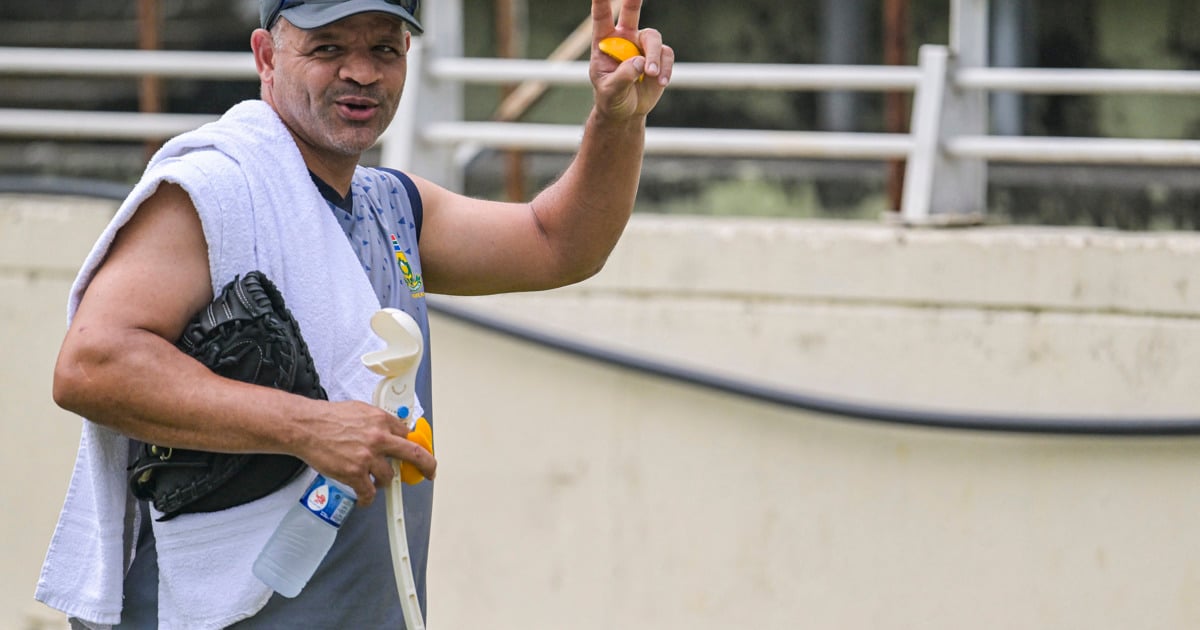
At Northampton Saints they are thinking about legacies and dynasties.Delusions of grandeur can be dangerous, but going into another season as the Gallagher Prem holders, Northampton are keen to establish themselves as the dominant English team of the era.The most recent team to repeat a title win was Saracens in 2018 and 2019 — and as Northampton’s director of rugby, Phil Dowson, notes, that achievement comes heavily laced with a salary cap-breaking asterisk. The last time Saints tried it, in 2024-25, they finished eighth.“No one’s gone back-to-back for a long time, but the era-defining teams of Leicester, Wasps and Saracens are there. F***, why don’t we want to be one of those?” is Dowson’s blunt summation.Northampton addressed this legacy piece first in Sri Lanka, on a week-long pre-season trip to Colombo where they had fun, played cricket with Mahela Jayawardene, ate crab at his restaurant, played the Asia-Pacific Lions in an exhibition game and set goals.Good teams win, great teams win again.“When you do something like that, a lot of people remember that group of players — it holds on,” Tommy Freeman says.With all this comes the usual sporting clichés of it being last season’s team that won the title, and this one having nothing to their name, but Saints are aware of their quality, their potential and where it will take them and their coaches.The intriguing bit, which we will return to, is that the more successful they are, the more likely it is that Dowson, and his sidekick Sam Vesty, the head coach, will be snaffled up by a Test team. So they, and Saints, are plotting to create something for now, and to leave more behind for when they depart.Sustainable success seems an impossible dream in English rugby, where top teams have the cream cut off them, and strong academy groups cannot stay together as young players like Henry Pollock suddenly want £1million a year. Perhaps Saints have the best chance of achieving it as a team who spend under the league’s £6.4million salary cap — they had the sixth-largest budget last season and will probably sit outside the top spots again — play a stunning style of rugby, run by young English players and coaches, which has taken them to three major finals in three seasons, and two league titles.But they want the comparisons with last season to stop now, as they prepare to open against Newcastle Red Bulls on Friday.“After we won the Prem the first time, the next year we tried to compare and be like [the previous] season’s team too much,” says the fly half Fin Smith, still just 24 but with a wise head.“We spoke too much about ‘last season we did this and it was great’, ‘do what we did last year and we’ll be sweet’. I don’t think that works when every team is evolving. There’s no way you’re telling me Sale, Quins and others will perform at the level they did last year — they’ll be miles better. It’s important to add strings to our bow.”One such string is a more aggressive defensive system. Lee Radford joined as the defence coach in 2023, tasked with transforming a swashbuckling attacking Saints side into one that could hit, not just hope, when they did not have the ball. His impact was stark, and propelled Northampton to a first title in ten years, in 2024. His success led to him departing for Scotland, after a secondment during last season, and Jim Henry has been promoted from within.Together with Dowson and Vesty, he has studied the Springboks, Toulouse and Bordeaux Bègles to enhance the Northampton way. It will be punchier, more one-in, all-in, designed to retrieve the ball quickly, and make a mess of breakdowns, as Dowson explains.“We’re probably defending for too long in phase counts and defending well at times, but we want to get the ball back a little bit quicker,” he says. “We want to have a bit more of an effort post-tackle. You look at South Africa, Bordeaux play and Toulouse play. Those two men in the tackle are making it tough to win fast ball. That’s something that we can implement.”Freeman adds: “When one person makes a decision, the next one has to follow. We go together. We want to hit for each other, and any opportunity to be physical, you take.”Saints’ attacking DNA of ball movement, and targeting space, is unchanged, though. Freeman notes how having a strong identity is vital in the modern game — as he saw play out in the Springboks-All Blacks “greatest rivalry” series.“You saw two teams with a way of playing and backing it 100 per cent,” he says. “There’s teams that when something’s not quite working, they try and problem-solve, or do something else to make it work. If you try to create a game plan around the opposition, that will never bode well for the people you’ve got on your team.”Are you listening, Steve Borthwick?Saints’ magpie nature — nicking shiny things from other top teams — does not stop there. They have spoken to Matt Peet from Wigan Warriors (who have won three Challenge Cups, two Super League titles and the World Cup Challenge since 2023) about backing up success with more of it, and Dowson has studied the career of two dynasty-making coaches: Bill Belichick, who led the New England Patriots for 23 years, and Phil Jackson, who won 11 NBA championships with Michael Jordan’s Chicago Bulls and then the LA Lakers in the 1980s, 1990s and 2000s.The lesson Dowson has taken from Jackson is there is no need for a grand pre-season theme; the character of the group will dictate the story you need to tell them for the run-in.In 2024 Dowson used The Last Dance — the Netflix documentary series about Jordan’s final season with the Bulls — as a motivator for his group, when Courtney Lawes, Alex Waller and Lewis Ludlam, among others, were leaving, but pitched it to them only for the final weeks.“You don’t want to have a theme for the sake of having a theme,” Vesty says. “You want to have a theme because it helps you be better on the rugby pitch.” This is something of a lesson Vesty took from working briefly at England with a volatile Eddie Jones in 2017.Vesty presented three training ideas, as the first two were rejected, and then Jones asked: “Are you getting transfer?” — ie how will you know if they’re picking up your ideas? Vesty was not sure, so Jones quipped: “What’s the f***ing point then?”The Belichick example is pertinent to Dowson, as whatever you build, and however successful it is, your time does end.“Everything finishes up. Bill Belichick eventually got fired,” Dowson says, before Vesty picks up the theme. He is conscious that the New Zealander Chris Boyd, the former director of rugby who pulled back as they took over, left the club in a better place, and so he would like to too.“We’ll get fired at some point,” Vesty says. “Boydy had a great effect on this place as a club and he’s got a legacy with us. Him doing the time he did has helped us take this club to where it could be. Hopefully when our time comes to do something different, the club will still thrive and we will be in a great spot to go on for ever.”Dowson is energised by seeing how far the youngsters James Pater, Hugh Shields, Edo Todaro, Sonny Goode and Freddie St John can go. He feels his squad will be better equipped for a title defence than in 2025, having had fewer senior men depart than in 2024 — despite letting their captain, George Furbank, go to Harlequins to balance the books. Everything finishes up.Dowson and Vesty’s ambitions will take them away one day.“We’d like to coach international rugby, because it is different, and that’s different to the NFL. Bill Belichick stays at the Patriots because he’s got nowhere else. There’s another opportunity, the same sport but a different element to it, that we want to do,” Dowson explains.“There’s no timeline on that. That’s not just England. That’s just the opportunity to go and do something different, to test ourselves, either as a team or individually, to put ourselves under different pressure and to have new experiences.”The oddity here is that there seems to be no clear plan for Dowson and Vesty’s accession to the England team from the RFU. Vesty coached the A team in 2024, and helped to beat Portugal 91-5, but has not been invited back.Dowson’s only opportunity at international level came when working with Jim Mallinder in June 2019, coaching an England XV against the Barbarians.The Times understands that Northampton have had no conversations with England about either of their coaches, which, as they are likely to be on the lookout for a new head coach in 2028, feels baffling. If the RFU misses out on either of them, what a muddled system it runs.If a call did come, Saints are determined that their coaching unit is not gutted, as happened at Leicester Tigers in 2022, and they would also not appoint a star name to replace Dowson and Vesty.With a new minority investor, Steve Zander, in place, and buoyed by recent successes, Saints have completed a seven-figure upgrade of their supporter village at Franklin’s Gardens — complete with a covered barn bar for gathering fans, and an Amazon shop-style drinks cabinet where fans scan their phone, pick a drink out of the fridge and walk out, after which they are charged. The new fish and chip van will serve a pollock priced at a cheeky £1million, of course. All these licks of paint should enhance the match-day experience, save, and make them cash.More investment will be needed soon, to keep up with big spenders like Newcastle and Bath, but the club is a model for others, with a tightly managed budget, academy pipeline of top talent, vibrant young coaching team, and trophies in the cabinet.Defending their Prem title would rubber-stamp Saints as the defining English side of the 2020s. Do that, and then they can worry about the future beyond.Northampton Saints v Newcastle Red Bulls

Most Popular