WHOOP Cristiano Ronaldo World Cup Campaign 2026

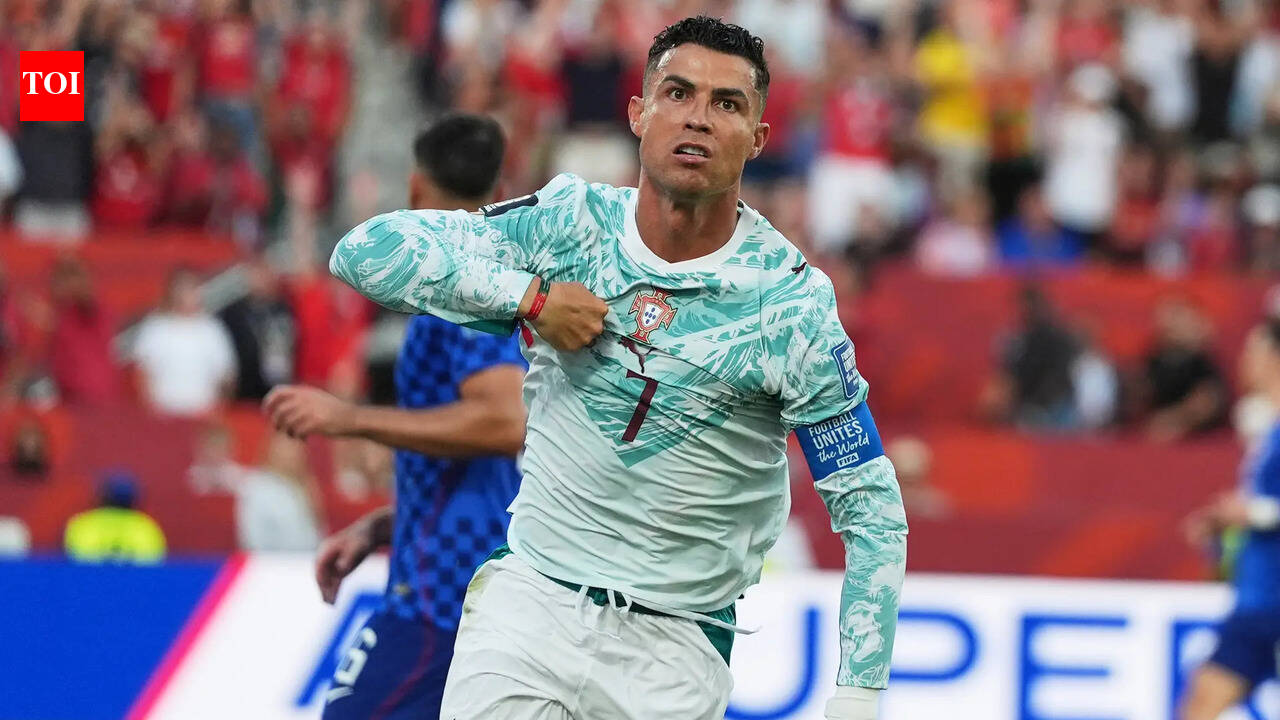
No World Cup has ever looked like this one in terms of age. Eight players aged 40 or older are featuring at the 2026 tournament, according to FIFA—more than in all 22 previous editions combined, when only seven players ever crossed that threshold. Italy’s Dino Zoff was first, at Spain 1982; Mexico’s Alfredo Talavera was the most recent, at Qatar 2022.This year alone doubles that tally. And for the first time in the competition’s history, the list is no longer a goalkeepers’ club: Cristiano Ronaldo, Luka Modric and Edin Dzeko are outfield players in their 40s, still starting for their countries, alongside veteran goalkeepers Craig Gordon, Guillermo Ochoa, Manuel Neuer, Vozinha and Fernando Muslera.Advances in sports science, recovery technology and workload management are among the factors commonly cited by coaches, sports scientists and performance specialists. Few players have made that case as visibly—or as commercially—as Ronaldo.That context gives WHOOP’s new World Cup campaign the perfect hook to go beyond a standard celebrity endorsement. The wearable fitness tracker has built “In the Blood” around a claim that also works as a product demo: Ronaldo’s body, according to the company’s own data (first shared a year ago), tests roughly 11 years younger than his calendar age.The campaign pairs a cinematic origin story with a companion social series revealing Ronaldo’s so-called ”WHOOP Age,” turning one of the tournament’s headlines into a walking case study for the wearable’s core sales pitch: that recovery and self-optimization, not raw talent, is the real differentiator at the elite level.The film was shot on location in Madeira, Portugal, Ronaldo’s home island. It traces his path from a boy on local pitches to captain of Portugal’s national team at 41, blending new footage with archival material. The 30- and 15-second cuts are running across social, digital and broadcast globally, timed to peak tournament attention.Biology, not performance highlightsThe social content rolling out this week says WHOOP’s sensors put Cristiano Ronaldo’s physiological age at 28.9 when he was 40, a gap the brand has promoted since Ronaldo shared it directly with Will Ahmed, WHOOP’s chief executive, in 2025.WHOOP’s core product is a subscription recovery and strain tracker, and Ronaldo’s data serves as proof of concept rather than a purely aspirational endorsement. The consumer message is simple: continuous physiological monitoring can support better recovery and, in WHOOP’s framing, a “younger” body.For the record, this is Ronaldo’s performance at the 2026 World Cup so far:The insider why: performance marketing meets athlete-owned venturesThe “WHOOP Age” campaign may have launched around the World Cup, but it is built to outlast the tournament. Rather than pushing a single performance claim, it positions WHOOP as an always-on identity marker — a hero message that can carry the brand beyond one moment.That is where the athlete-economy angle matters. Cristiano Ronaldo’s role is not a conventional sponsorship in which a brand simply rents an athlete’s image. Ronaldo is also building on the narrative as an operator: he co-founded and helped launch AVA (Advanced Recovery for Athletes), created in partnership with Avanutri, a Brazilian sports recovery technology company.AVA is not integrated with WHOOP, but the story Ronaldo tells links the two: he uses WHOOP to track daily strain and sleep, then applies that data to decide how much recovery he needs — and which recovery tools and products to use. The result is a neat, commercially potent loop: biometric tracking becomes the proof point, and athlete-owned recovery solutions become the next step in the routine.For football-loving readers in their 40s looking for motivational messaging: the 40-something players from today’s and past FIFA World Cups:


Most Popular