
2026 World Cup: Group I Preview

Group I includes France, and any group with France has to start with discussing them (especially in the new 48-team World Cup format, where groups are weaker). Conventional wisdom says they will top this group without breaking a sweat, but taking a closer look at Norway and Senegal, it will not be so easy. Erling Haaland, Martin Ødegaard, and Sadio Mané will be looking to lift their nations, and challenge France in Group I. Let’s take a look at Group H to quickly examine the teams and their chances.France won the World Cup in 2018 and lost in the final in 2006 and 2022. They crashed out in the group phases of 2002 and 2010, and lost to eventual champions Germany in the 2014 quarterfinals. This year’s squad is just as talented as ever, and a new generation of young players emerging only helps. The attack is unbelievably strong, led by Kylian Mbappé (Real Madrid), Michael Olise (Bayern Munich) and PSG trio Ousmane Dembélé, Désiré Doué, and Bradley Barcola. Didier Deschamps opted *not* to select Real Madrid holding midfielder Eduardo Camavinga. Even in Camavinga’s absence, the midfield features his Real Madrid partner Aurélien Tchouaméni, Adrien Rabiot (Christian Pulisic’s teammate at AC Milan), N’Golo Kanté (now 35, at Fenerbahçe), Warren Zaïre-Emery (PSG) and Manu Koné (Roma). The defense is led by William Saliba (Arsenal), Jules Koundé (Barcelona), Dayot Upamecano (Bayern Munich), Théo Hernandez (another former Pulisic teammate at Milan, now with Al-Hilal), Ibrahima Konaté (Liverpool), and Lucas Hernandez (PSG). Another Pulisic Milan teammate, Mike Maignan, is the presumed #1 in goal. Antoine Griezmann (now 35) has retired from international play, and Christopher Nkunku is out injured.Just how far can Erling Haaland and Martin Ødegaard carry a team? We’re about to find out. Norway has not been to the World Cup since 1998, when they lost to Italy in the round of 16. The two main men are joined in the attack by Alexander Sørloth (30, Johnny Cardoso’s teammate at Atlético Madrid), Andreas Schjelderup (22, Benfica), Antonio Nusa (21, RB Leipzig), Oscar Bobb (22, Fulham from Man City), and Jørgen Strand Larsen (26, Crystal Palace). Ødegaard’s midfield could also include Fredrik Aursnes (30, Benfica), and Sander Berge (28, Fulham). The back line will be anchored by Kristoffer Ajer (28, Brentford), and Norwegian-American fullback Julian Ryerson (28, Dortmund) is a likely starter. Ørjan Nyland (35, Sevilla) is an option in goal.Senegal made it to the quarterfinals in 2002, missed out on three straight tournaments, returned in 2018 to lose in the group phase, and lost to England in the round of 16 in 2022. Former Liverpool attacker Sadio Mané, now 34, remains the main man, playing his club football with Al-Nassr. He’s joined in the attack by Iliman Ndiaye (26, Everton), Nicolas Jackson (24, Bayern Munich), and Ismaila Sarr (28, Crystal Palace). Kalidou Koulibaly (34, Al-Hilal) will likely anchor the defense, with Édouard Mendy (34, Al-Ahli) in net. Midfield options include Pape Sarr (23, Tottenham), Pape Gueye (27, Villarreal), Lamine Camara (22, Folarin Balogun’s teammate at Monaco), and Idrissa Gueye (now 36, at Everton).Iraq’s only prior World Cup experience came in 1986, when they lost in the group phase. 10 of the squad play in Iraq, and 2 more in the UAE. There was surprise when Hammarby attacker Montader Madjed was left off the roster. Iraq is captained by 35-year-old goalkeeper Jalal Hassan, who plays his club soccer in Baghdad with Al-Zawraa. Key names on the squad include center mid Kevin Yacob (25, AGR Aarhus), left back Merchas Doski (25, Viktoria Plzeň), and midfielder Zidane Iqbal (23, Utrecht). MLS fans may be familiar with forward Ahmed Qasem (22, Nashville SC). Forward Marko Farji (22) is Gianluca Busio’s teammate at Venezia.Who will advance from Group I? What matches are most interesting to you? Let us know in the comments.
Most Popular
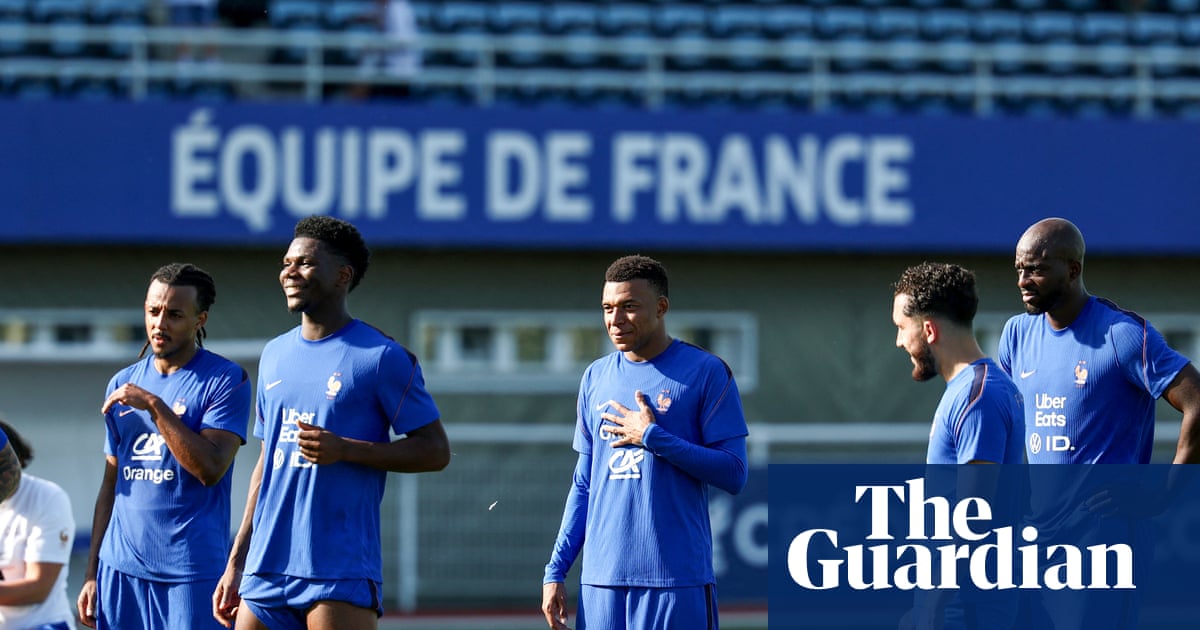
France World Cup 2026 team guide
9 hours ago



Lay loving life as first lady of Lord's turf
8 hours ago