
World Cup 2026: Are Portugal a better team without Cristiano Ronaldo?
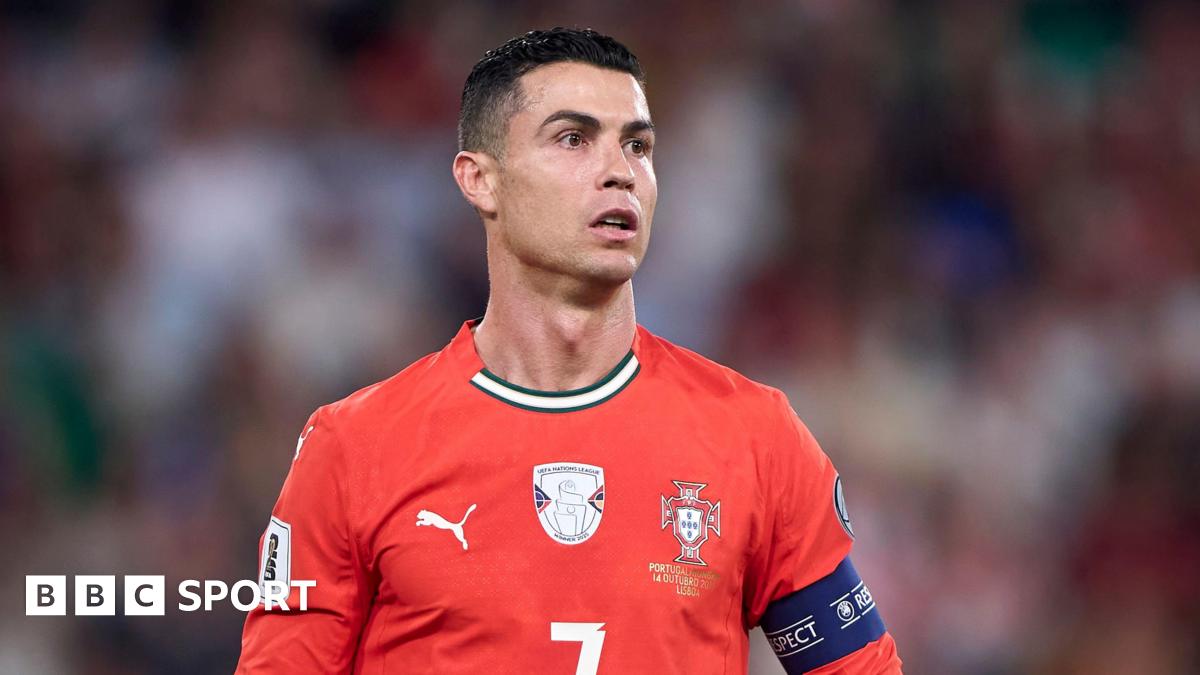
It was the sort of friendly that could easily have slipped from memory.Played early in the season against Kazakhstan, who had only recently joined Uefa, the fixture took place in front of a sold-out crowd of just 8,000 fans and on a pitch so shabby that the grass had to be painted to improve its appearance.And yet, that narrow 1-0 win in Chaves in northern Portugal has never really faded away.That is because 20 August 2003 is the day Cristiano Ronaldo's story with the senior Portugal national team began.It would have been a stretch at the time to anticipate the boy from Madeira making his World Cup debut three years later, and entirely unrealistic to predict that he would go on to feature at a record sixth World Cup in 2026 - along with Argentina's Lionel Messi and Mexico's Guillermo Ochoa, both fellow six-timers.But Ronaldo - the all-time leading scorer in international football with 143 goals - has reinvented Portuguese football, transforming its mentality like no player before him and, most importantly, redefining what an entire nation believed was possible."We are a small country that rarely has global impact outside football," Joao Aroso, who worked with the forward both at Sporting and at the national team, told BBC Sport."Cristiano allows our small country to be known worldwide for something great - because of all the positive things he stands for."In his previous five World Cups, the superstar, now 41, always arrived with an untouchable status. It won't be different this summer, even if the scrutiny back home around his role has only intensified since Qatar 2022.For a long time, openly questioning Ronaldo's place in the team almost felt like treason. Not any more."He doesn't play to win, he plays to be the main figure," argued Antonio Simoes, a member of the Portugal side that finished third at the 1966 World Cup."Do you understand that it's the opposite of Eusebio? Let's call things by their name. I have nothing against him. I can still see, I can still hear and I can still think. But I can't run away from the reality of the facts."Portugal coach Roberto Martinez has dismissed the debate around Ronaldo as "lift talk".Whenever Martinez is asked questions about the five-time Ballon d'Or winner, he has pointed to the same statistic in all his recent interviews - 25 goals in his past 31 games for the Selecao."We are talking about the greatest player of all time. He is here because he is still performing at a very high level, not because of what he achieved in the past," Martinez explained.Having scored at each of his five World Cups, Ronaldo will have another chance to answer critics on the pitch.The Al-Nassr man has eight World Cup goals to his name, one short of Eusebio's Portuguese record, but the ultimate prize is obvious: helping Portugal lift the trophy for the first time.Ronaldo has already confirmed that this will be his final World Cup.Even if he is no longer at his peak physically, there's little doubt Portugal will revolve around him when they begin their campaign against DR Congo on 17 June."Cristiano understands the big moments better than almost anyone in football," former Portugal international Abel Xavier told BBC World Service."That experience can be decisive in a World Cup."His presence is very important. People focus on the physical side, but there is also the technical side and especially the mental side. The younger players look up to him and he always gives something to the team."Former Portugal goalkeeper Ricardo, who was on the pitch for Ronaldo's international debut in 2003 and is part of the national team coaching staff, takes a similar view to Xavier."The speed may no longer be quite the same," Ricardo said. "Instead of running at 200km/h, he is running at 195km/h now. It is still incredibly high."As long as the physical, technical and mental qualities are still there, he remains a devastating force. With him, danger is never far away."Under Martinez, who took over in 2023 after leaving Belgium, Ronaldo has so far featured in 31 of the Spaniard's 39 games in charge, with most of his absences coming through injury or suspension.Portugal recorded their biggest win of the cycle in one of those matches when Ronaldo was not involved - a 9-0 drubbing of Luxembourg in Faro in September 2023.Their second-biggest victory, a 9-1 over Armenia in Porto last November, also came without Ronaldo.Unsurprisingly, after both games, discussions over whether the team play better without their captain quickly returned."He doesn't have the football any more to be a starter for a side that wants to win the World Cup," said Sofia Oliveira, a pundit for CNN Portugal, DAZN Portugal and TSF radio."But it is easy to arrive at this tournament and say Ronaldo should not be starting, which I agree with. The problem is that the national team has not been preparing for it."Handling a footballer who has become an icon was never going to be easy.Fernando Santos knows that better than anyone else.After dropping Ronaldo to the bench at the 2022 World Cup, the then Portugal manager faced a backlash on social media from members of the forward's family and left his post shortly afterwards.Asked earlier this year if he feared the same fate if he made a similar decision this summer, Martinez played it down.Such is Ronaldo's power in the country that Pedro Proenca, president of the FPF (Portuguese Football Federation), had to address in an interview with SIC whether the forward would have any say in choosing Portugal's next coach if Martinez were to leave. Proenca denied it.With Ronaldo still part of the current squad, the FPF's announcement in February of a partnership with AVA CR7, a physical recovery company owned by the player, inevitably raised eyebrows.The federation, however, insists there is no conflict of interest."In the FPF's view, this partnership complies with all applicable compliance rules and does not constitute any conflict of interest in relation to Cristiano Ronaldo's status as captain and player of the national team," the FPF told BBC Sport in a statement."It should be clarified that Cristiano Ronaldo was never involved in the negotiations, nor was he a subject of those negotiations, with the entire process having been conducted exclusively with AVA's management team."Over the past months, with the former Manchester United and Real Madrid forward nearing the end of his career, there has been growing discussion over whether the FPF is ready for life after him.In May, it approved its 2026-27 budget, projecting record revenue of €161m, after closing the previous financial year in profit for the 13th consecutive year."The FPF is preparing for this moment without dramatising it. Cristiano will always be intrinsically linked not to the federation, but to Portugal as a country," Proenca said at a recent event."The FPF has always prepared for its present and its future. Of course, we know the importance Cristiano has. The two brands overlap - Cristiano Ronaldo and the FPF - I have to be honest and sincere about that."What I can guarantee is that the federation's operating revenues are secure for the continuity of a cycle that will happen naturally and normally, which is Cristiano's departure."More than two decades after that night in Chaves, the forward remains at the centre of Portuguese football. One final World Cup now awaits.


Most Popular




Norway World Cup 2026 team guide
2 hours ago