
World Cup 2026: Erling Haaland carries pressure of guiding Norway to first major tournament in 26 years
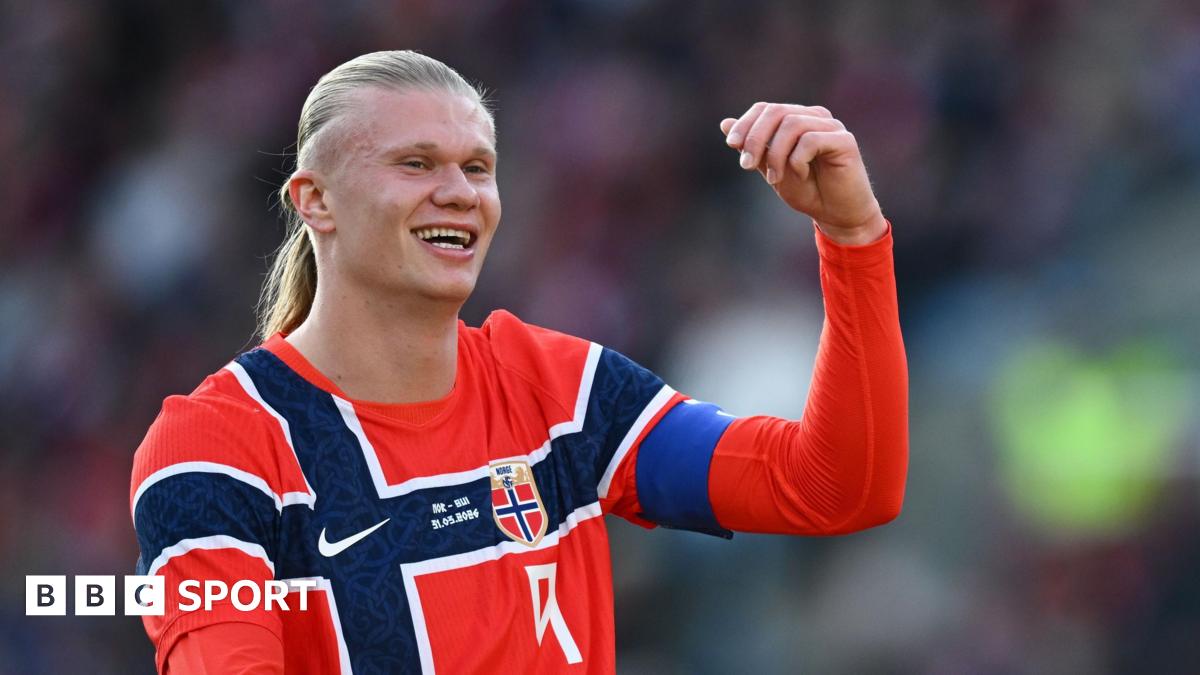
The last time Norway competed at a World Cup, Erling Haaland was not even born.Yet by helping to confirm their place in the tournament for the first time since 1998, Haaland has not just chalked off a personal milestone; he has completed a mission he has carried on his shoulders for years.Hopes of the Scandinavian nation ending their 28-year World Cup absence rested on the 25-year-old long before he fired in 16 goals across eight matches in a dominant qualifying campaign. And that was considered the case even before he became the fearsome Manchester City striker he is today.Those hopes for Haaland can probably be traced back to when, in his early teens, his talent was spotted at Norwegian side Bryne and fast-tracked through their youth teams.The talent grew and promise intensified during a club career carefully crafted to suit Haaland and now, having won everything there is to win in club football with City, he is fulfilling his destiny for the national team too.But things could have looked different.Born in Yorkshire, the forward was eligible to play for England. But affinity with his home country meant there was little chance of that happening, even if it meant the chances of winning something at international level, or even regularly reaching tournaments, were slim.With that decision could have come the career no superstar player wants - one that does not involve playing at a World Cup.Haaland will now avoid that fate. But what is it like being a global name from a nation with a population of just 5.5m people? And is it really just Haaland carrying this Norway team to the World Cup?When England's manager at the time, Gareth Southgate, was asked in 2020 whether there was ever a possibility of Haaland playing for the Three Lions, he shut it down pretty quickly."With players like him, they're quite clear where they want to play," Southgate said. "He feels that allegiance to the country that he's playing for now and you're always very respectful of that."Haaland was born in Leeds - where his father Alf-Inge was playing at the time - in 2000.The family moved to Bryne in Norway three years later following Alf-Inge's retirement through injury, which ended a spell at Manchester City.The young Haaland's talent was spotted early and he quickly moved through the youth teams at Bryne before being taken on by Molde in 2017, joining a club then managed by Ole Gunnar Solskjaer.Solskjaer helped to turn Haaland into the attacking force he is today and has often spoken highly of his former player, expressing regret that he could not bring him to Old Trafford when he became manager at Manchester United.The young forward began to draw attention during his time at Red Bull Salzburg before a spell at Borussia Dortmund really announced him on the world stage.Erling Haaland's move to Manchester City came in 2022 - one many felt had been inevitable with his father's history with the club and his own love of English football.Amid all the upheaval, drama and success in his life, Haaland has felt the pull of home, frequently returning to his native country where he owns several properties."Despite Haaland's global superstar status, he remains the exact same guy," Norwegian football journalist Andreas Korssund told BBC Sport."He knows exactly where he comes from and regularly visits his small hometown in Rogaland. He is incredibly proud of his roots and always makes himself available to the Norwegian press when representing his country."Haaland has discussed his desire to run a farm in his home country when he retires and he can frequently be spotted strolling around Oslo, where he owns an apartment.He has leaned into Norway's Viking history and is fiercely proud of representing his country.It is that affinity with his heritage that has also led to him sporting his full title of Braut Haaland on the back of his national shirt - Braut is his mother's maiden name and combining that with his father's name is a common Norwegian tradition."Haaland means everything to Norway," says Korssund."He has become an unprecedented superstar in the world's biggest sport. For a nation of just over 5.5m people to produce one of the absolute greatest footballers on the planet is immense."Towering at 6ft 5in tall, with long, flowing blond hair, Haaland has become one of the most recognisable players in football.His charisma has begun to shine through while at City, with his humour - which is at times very English - endearing him to fans.His YouTube channel, where he films 'day in the life' videos, has 1.6m subscribers while he is also set to feature in animated film ViQueens as the voice of a Viking, named, of course, Haaland.But Haaland is not a typical Norwegian hero."I think Erling is in some ways not a completely typical Norwegian," said Norwegian journalist Lars Sivertsen."He's confident and can be a little bit brash. He knows his value and he knows his quality and he backs himself."Scandinavia has a culture that's more about humility. Erling would complain if he was on the bench. So I think he is a little bit untypical of Norwegians."That makes him an interesting hero for us, because there will be moments of backlash."But Haaland's stock is undeniable and with that comes all those other things associated with being a superstar - shirt sales, increased interest in the World Cup, and inspiring youngsters."He is now just in a different strata of star than what we are used to from our sporting heroes," said Sivertsen."But I think if you look across the country, there is just an extraordinary sense of pride that a player doing the things he does is from our country."

Most Popular