These are the questions AFL boss must answer on Geelong’s concussion deal
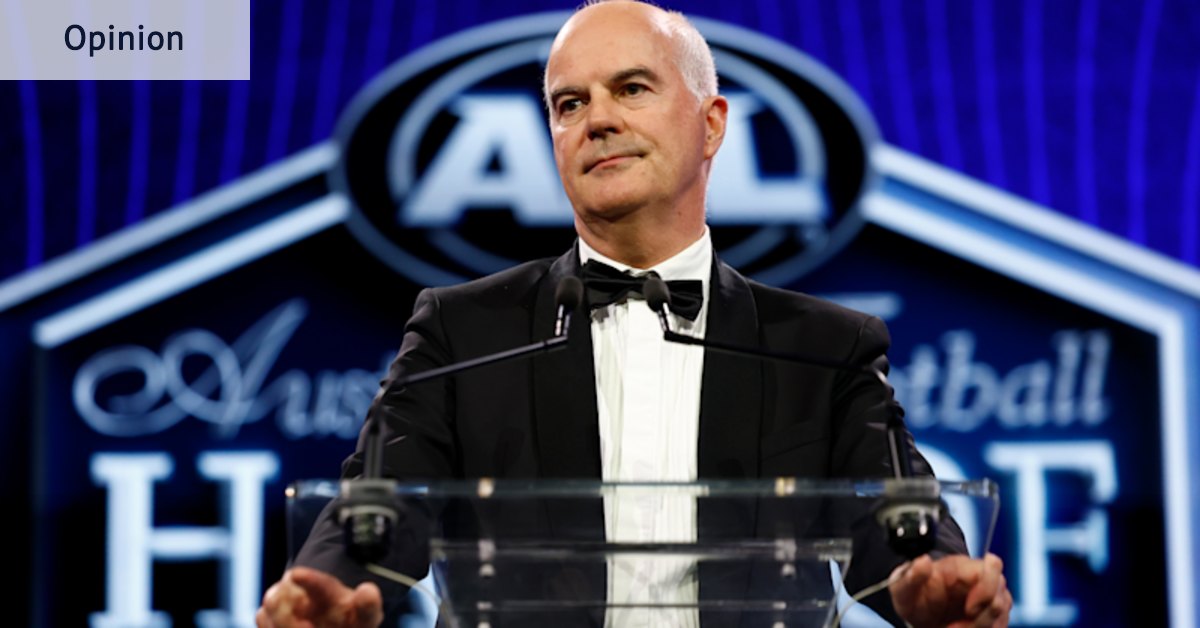
AdvertisementOpinionThese are the questions AFL boss must answer on Geelong’s concussion dealJake NiallChief football writer, The AgeAugust 7, 2026 — 12:54pmAugust 7, 2026 — 12:54pmYou have reached your maximum number of saved items.Remove items from your saved list to add more.AFL Commission chairman Craig Drummond was president of Geelong, and part of the deliberations and ultimate decision, when the Cats struck what has been acknowledged was an inappropriate waiver with a player who had a history of concussions.On Thursday, as the story detonated that the Cats had signed the player to a waiver that diminished his legal rights – at least on paper – Drummond was asked to respond to questions from this masthead, and doubtless other media, about his role in the shonky waiver.The AFL chairman, who holds the highest office in the game, issued a brief statement that did not address the obvious questions that he should have taken on, given his twin hats as AFL chairman and the president of the club at the time that this hubristic document was signed, without the AFL’s consent or knowledge.Drummond’s AFL chose not to sanction Geelong, a matter of months after Carlton were fined $75,000 for their handling of the Elijah Hollands affair, which was about a different kind of player safety – mental health.AdvertisementThe AFL took weeks to sort through the messy Hollands imbroglio before settling on a sanction. The league needed only half a day to rule that the Cats were off the hook.Drummond’s time as AFL chairman has won praise within clubs for the energetic reshaping of the commission and introducing the kind of governance – term limits for the board, most of all – that were not evident during the Richard Goyder era, in which Gillon McLachlan was allowed to run his race.LoadingBut, as with political leaders, AFL honeymoons are as fleeting as Essendon winning streaks and Drummond did not last the whole 2026 season without finding himself in political cow manure.His statement contained the clichéd motherhood lines about the clubs and AFL continuing “to prioritise the health and safety of all our players”.AdvertisementThose words read as utterly hollow, since Geelong had not made the player’s “health and safety” their priority in the now-recanted part of the agreement. The whole objective of the waiver was to absolve the club of responsibility for the player’s long-term health (in relation to head injuries) and put the onus on the player.The only excuse for the Cats is that it would have been easier to not offer the player a contract (the AFL concussion panel had cleared him to play). While it was the player’s initiative that this deal be struck, the Cats went off the reservation by getting him to sign away legal protections.Carefully crafted statements, without answering questions, is a strategy that could succeed for Drummond and the AFL given society’s attention spans, which are shorter than the time it took the league to clear the Cats.Drummond, however, has a responsibility to address questions about an embarrassing, ill-considered and furtive arrangement that has not – to my knowledge – been tried on by other AFL clubs. If an oft-concussed player signed a waiver or its equivalent in the VFL, before he was drafted on to an AFL list, that still falls short of Geelong’s too-clever ploy.AdvertisementDrummond was at the helm of Geelong when this happened, and holds even greater responsibility now as AFL chairman. These questions, which he hasn’t yet padded up for, should be answered candidly, in full:As president of Geelong in 2024, do you take responsibility for the waiver the club signed with the player? Do you and Geelong owe the player an apology?Why was this waiver necessary? Did any parts trouble you then?You’ve called Geelong’s changes “appropriate”. Can you clarify if you regret that you were a party to this arrangement?You say health and safety of players is paramount. Why was Geelong not sanctioned, for an arrangement that went outside the AFL and the AFL Players Association, and which will be disallowed in future?Carlton was sanctioned with a $75,000 fine for allowing a medically unfit player on the field. Please explain the vast gap in consequence for Carlton’s offence and Geelong’s missteps?Given the conflict of interest between your roles as Geelong president then, and AFL chairman now, how did you ensure that the decisions and discussions within the AFL were not influenced by your interests? What steps, if any, did you take?This episode underscores that Geelong’s greatness as a footy club has little basis in some imagined moral superiority of “values” and decency; the narrative some ex-Geelong players and officials unwisely spruik. Yes, the Cats are exceptional – in coaching, recruiting and development, not in niceness, humility and tender care.They come across as a ruthless organisation that makes hard calls and is focused on winning games, not friends or wellbeing awards.Keep up to date with the best AFL coverage in the country. Sign up for the Real Footy newsletter.You have reached your maximum number of saved items.Remove items from your saved list to add more.More:AFL 2026For subscribersOpinionGeelong CatsCraig DrummondConcussion crisisJake Niall is a Walkley award-winning sports journalist and chief AFL writer for The Age.Connect via X or email.

Most Popular

Hall of Fame Game
3 hours ago