Ken Early: Jude Bellingham could be the de facto manager of England for a long time

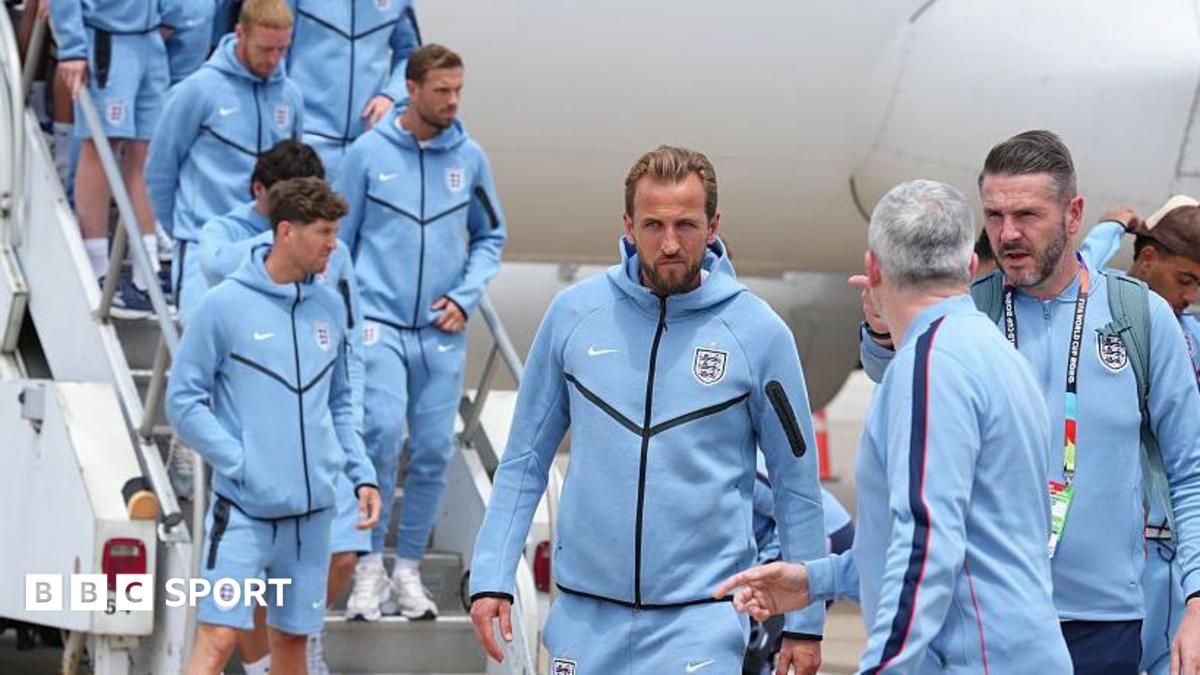
Some people think internal harmony is an essential element of a winning team. Others, like the cynic Steve Archibald, classify it alongside “team spirit” as “an illusion glimpsed in the aftermath of victory”.While people vary in their estimation of its importance, most seem to agree it’s generally a good thing. But what is the best way to actually achieve it?If winning the World Cup is about harmony, then Fifa should follow their hearts and just give it to Argentina already. Lionel Scaloni has talked so much about the importance of barbecues over the last few weeks that he starts to sound like the guru of some meat-worshipping cult.Argentina arrived in America with 500kg of meat, which actually doesn’t sound like enough, judging by how often they mention it. The apparent idea behind all the barbecues is that forging deep personal bonds between the players helps to unite their emotional energy in pursuit of the common goal.In all of their knockout games so far, Argentina have gone through periods where they look like a clown car on fire, but they keep coming through in the end and then everyone weeps in each other’s arms.You do notice, though, that all this harmony exists under the benevolent despotism of a Sun King. Lionel Messi’s status as the best and most important player is undisputed. He is a mighty oak and the rest contentedly eat barbecue in his shade.France, too, appear to be experiencing a moment of harmony, with the players regarding Didier Deschamps, who has managed the national team since most of them were boys, as a kindly uncle.But the senior figure in the dressingroom is not really Deschamps, who is more of an overseer. It’s the man the other players jokingly call Mobutu. Actually, the memes depict Kylian Mbappé as a dictator more in the visual style of Idi Amin, but the real Mbappé has a more relaxed style of leadership. More relevant is that France look like another example of the benefits of a clear, undisputed hierarchy.Spain, more than any of the other remaining teams, are united by a style – the Spanish idea of how to play football, or at least the idea of Spanish football that has dominated there for 20 years. The captain is Rodri and he’s the purest exponent of that style. But Spain’s best player is Lamine Yamal, who represents something different: dribbling, unpredictability, uncanny individual talent.Yamal’s performances so far have been way short of his best. He came into the tournament injured and most people have excused his average form as related to this lack of fitness or sharpness.But maybe there’s also an element of tension, of the star being slightly out of sync with the rest. There were times in the quarter-final against Belgium when team-mates seemed frustrated with his refusals to pass. (If an Argentina player ever felt himself doubting one of Messi’s on-field decisions, he would regard it as thoughtcrime and suppress it immediately). Maybe this Spain are a little less harmonic than the first two.And then there’s England, where possible internal disharmony is the big current talking point.The interviews of Thomas Tuchel and Jude Bellingham after the quarter-final victory against Norway were more spectacular than the game.A lot has been said about these interviews – much of it centring on the supposed malpractice of ITV’s experienced interviewer, Gabriel Clarke. Some of Clarke’s critics alleged that he was being obtuse when he asked Tuchel whether his team’s difficulties had something to do with “mentality”, after the manager had stated clearly that he was unhappy with the low quality of their technical performance.But given that Tuchel had just accused a group of highly skilled internationals of suddenly being unable to execute basic technical tasks, Clarke was entitled to ask why that might be so. It’s not unreasonable to wonder whether the problem might somehow be in the players’ heads. Hence, Clarke’s reference to mentality, which Tuchel appeared to take as an insulting suggestion that his team lacked the will to win.Clarke was even criticised for putting the fact that Tuchel had just expressed unhappiness with the performance to Bellingham. ITV’s man has been painted as a villain plotting to divide and sabotage the team, even though getting people to react to the reactions of others is the basic material of post-match discussion and analysis.No one can deny that Clarke’s question to Bellingham revealed something interesting. Bellingham’s reaction to Tuchel’s supposed dissatisfaction was more contemptuous than Tuchel’s reaction to Clarke.Another reporter, Rob Dorsett of Sky, asked Bellingham in a later interview if the fact that Tuchel was unhappy with the performance meant that there was even more to come from this team.Bellingham replied: “Maybe, or maybe that means he doesn’t know what it’s like to play in those kind of conditions against Erling Haaland, Ødegaard, Nusa, Sorloth …”We should be clear: this was a calculated insult against a coach who didn’t have a top-level playing career. Would Bellingham have said anything like this about his former manager at Real Madrid, the decorated Roma, Milan and Italy midfielder Carlo Ancelotti? Clearly not.Did Tuchel really think he could talk that way about Bellingham, could criticise his attitude, could flirt publicly with the idea of leaving him on the bench, and leave his friend at Real Madrid, Trent Alexander-Arnold, out of the squad – did Tuchel think he could do all that, and get away with it?Miguel Delaney of independent.co.uk wrote a couple of weeks ago on how Bellingham’s role models are not ex-England footballers, but American superstars like LeBron James, Kobe Bryant, and he who still towers above all the rest – Michael Jordan (MJ).Since The Last Dance, everyone knows that the key to MJ’s greatness, at least according to MJ, is his lifelong habit of relentlessly dominating and punishing everyone who ever looked at him funny, expressed in the catchphrase, “I took that personally”.Bellingham is MJ now and MJ does not forgive or forget. He has scored six goals and won four man-of-the-match awards in six World Cup games and he’s cracking the whip on Tuchel, who needs to understand that his new job, for as long as he can stand it, is to be Bellingham’s aide and facilitator.It will be the same for whoever succeeds Tuchel as England’s puppet coach. Jude Bellingham could be the de facto manager of England for a long time to come.Some in England, where they traditionally exalt the role of the manager, will greet this development with scepticism and foreboding. But the examples of Argentina and France suggest that the emergence among the players of a new universally acknowledged King of the national team might not actually be a bad thing.Submitting to the reign of Bellingham might not even be that big of a leap for the English. They already know the words. God save the King! Long live the King! May the King live forever!(Although, as the example of Portugal’s national team suggests, the last part is best not taken literally).

Most Popular