Who is Didier Deschamps, the France coach aiming for a third World Cup title?

Read moreMbappé heads up France squad in Deschamps' final World Cup bidLong before he became the face of French football, Didier Deschamps was a teenager running around the fields of Bayonne, in southwestern France. He played every sport he could: rugby, athletics, handball and cross-country running.His career in football came almost by chance. Encouraged by his childhood friend Emmanuel Darnauthandy, Deschamps joined a local club at the age of 11. What began as a hobby quickly turned into something more serious. His first youth coach, Norbert Navarro, immediately noticed a player ahead of the game: physically strong, tactically aware and fiercely competitive. Within two weeks of joining the Aviron Bayonnais FC, he was already playing with the age group above. It was to be the start of an incredible journey.A born captainThroughout Deschamps' career, the captain's armband became almost a permanent accessory. Whether at Nantes, Marseille, Juventus or with the French national team, teammates naturally looked to him for direction."He had this ability to read the game, to take charge, but always with the right word for his teammates," says his first coach Navarro. "That is innate, it is not calculated."Those qualities helped transform the midfielder into one of the most decorated figures in European football. Deschamps understood early on that football is not always won by the most spectacular players. Often, it is won by the most organised team. Individual talent helps, but teamwork is a priority.A dream that became realityAs a teenager watching France face Brazil at the 1986 World Cup, Deschamps imagined himself one day winning the top title. Twelve years later, that dream became reality. In 1998, he captained France to its first-ever World Cup title on home soil. The image of Deschamps lifting the trophy after a 3-0 victory over Brazil remains one of the defining moments in the history of French football. Two years later, he won the European Championship. By the time he retired as a player, he had won league titles in France and Italy, as well as the UEFA Champions League. Yet his greatest successes were still to come.Rebuilding Les BleusWhen Deschamps started coaching France in 2012, the national team were still recovering from a disastrous 2010 World Cup in South Africa, where French players went on strike. Deschamps set himself a goal: rebuilding the reputation of Les Bleus. He integrated a new generation of talent, including Antoine Griezmann, Paul Pogba and Kylian Mbappé, while restoring a sense of collective purpose. "The guys were prepared to die on the pitch for their coach. To go far in a major tournament, you need a top-quality squad but also a coach that can get the best out of them," explains Philippe Tournon, author of "La vie en bleu".Critics often accuse Deschamps' teams of being pragmatic rather than spectacular. But from Deschamps' point of view, the only thing that counts is the score. His method paid off in 2018, when France bounced back and won a second World Cup title, this time in Russia.Deschamps' legacyDeschamps has now been coaching the French national team for a record 14 years. His longevity owes much to an ability to evolve. He has managed several generations of players, adapting his communication and leadership style without compromising his standards.Read moreFrance kick off World Cup campaign, with Senegal looking to repeat 2002 upset"There's a lot of detail in what he does, in what he says, in the preparation for set pieces. There are a lot of individual instructions, it's a very precise system of play," says his longtime assistant coach Guy Stephan. "We're in a period where the players are around 21 years old. It's a generation that doesn't listen as well as before, which means the team talks can't go on too long: 10 minutes max."From the football pitches of Bayonne to the world stage, Deschamps and his team are now aiming for yet another goal over in the US: a third World Cup trophy for his final competition as head of Les Bleus.
Most Popular


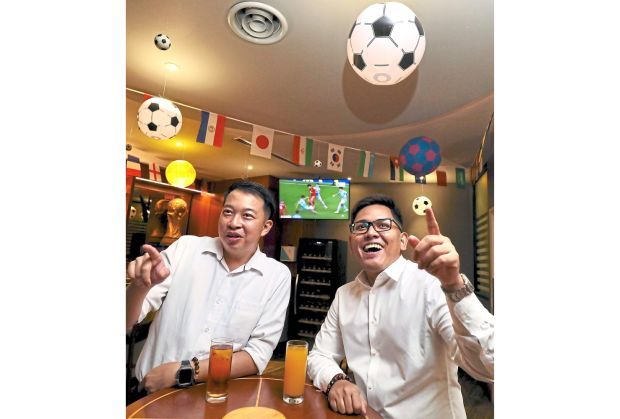
Fans flocking to hotels for World Cup action
14 hours ago