How is Fifa justifying the mad decision to let a US footballer play after he got a red card?
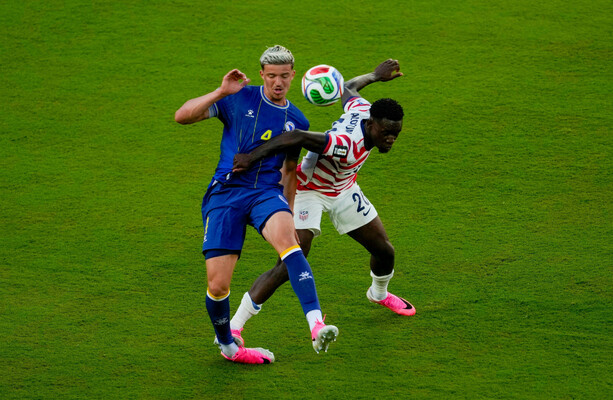
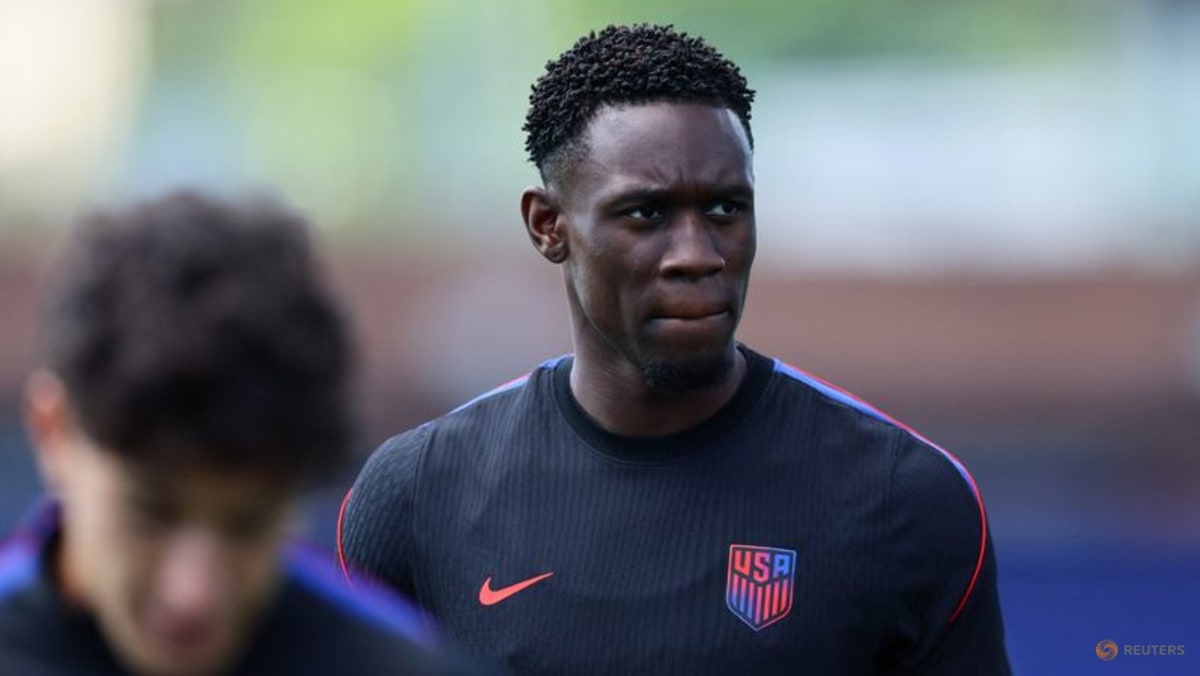
WHEN FIFA ANNOUNCED that US footballer Folarin Balogun would be allowed play against Belgium tonight after all, plenty of fans assumed football’s governing body had simply overturned his red card.It hasn’t, and the sending-off still stands.Instead, Fifa has relied on a rarely-used provision in its disciplinary code that allows it to suspend the punishment without cancelling the offence itself.The decision has prompted lots of accusations of political interference after multiple media reports confirmed that US President Donald Trump personally called Fifa president Gianni Infantino to ask for the punishment to be reviewed.It has also sparked criticism from everyone from Belgium manager Rudi Garcia, pundits across the globe and even former Fifa president Sepp Blatter (you know, the man who was implicated in multiple ethics violation scandals and fraud charges during his tenure).So what exactly happened?The red cardBalogun was sent off during the United States’ 2-0 victory over Bosnia and Herzegovina in the Round of 32 on Thursday.Initially, referee Raphael Claus did not even award a free-kick after Balogun accidentally planted his foot on the ankle of Bosnian defender Tarik Muharemović.However, following a VAR review, Claus upgraded the incident to a straight red card for serious foul play.The decision was widely criticised as harsh.US manager Mauricio Pochettino insisted it was never a red-card offence, while Balogun himself said afterwards he simply had to accept the punishment.Normally, that would have been the end of the matter. Under Fifa’s competition regulations, a straight red card automatically carries a one-match suspension.Fifa itself initially confirmed there was no appeal available.Article 27Instead of overturning the dismissal however, Fifa’s disciplinary committee invoked Article 27 of its disciplinary code.The article allows the committee to suspend the implementation of a disciplinary sanction.In simple terms, the punishment still exists, but it does not have to be served immediately.Balogun’s one-match suspension has instead been placed on hold for a one-year probationary period.If he commits another similar offence within the next year, the suspended ban will automatically come back into force alongside any new punishment.Crucially, Article 27 does not explain the circumstances in which Fifa should decide to suspend a sanction.That discretion rests entirely with the governing body’s disciplinary committee and Fifa has offered no explanation why it has taken the decision in this case.Has this happened before?Yes, but rarely.The highest-profile previous example involved Portugal captain Cristiano Ronaldo.Ronaldo was given a three-match suspension after elbowing Irish defender Dara O’Shea during a World Cup qualifier last year (which Ireland won 2-0, in case you forgot).Fifa later used article 27 to suspend two matches of that ban, allowing Ronaldo to feature in Portugal’s opening World Cup fixtures after serving only a ban for only one game.The Balogun decision is different, however.His suspension related to the automatic one-match ban that follows a World Cup red card, rather than a longer disciplinary sanction handed down afterwards.Why is it so controversial?The timing of Fifa’s decision and the lack of a reason has been widely criticised.AdvertisementMultiple media outlets, including the Wall Street Journal, the New York Times and the Guardian, reported that Trump personally contacted Infantino after Balogun’s dismissal, urging him to review the decision.Trump later thanked Fifa publicly.“Thank you to FIFA for doing what was right, and reversing a great injustice!” he wrote on Truth Social.Trump and Infantino are close, and Fifa’s sudden reversal will raise further questions about their relationship.Belgium reacted furiously to the news.Its football federation said it was “astonished” by the ruling, arguing it contradicted Fifa’s own regulations providing for an automatic suspension.Manager Rudi Garcia joked that Fifa had apparently confused 5 July with April Fools’ Day.Public criticismEurope’s football governing body Uefa also weighed into the controversy, backing Belgium’s objections and accusing Fifa of undermining confidence in its own rules.In a strongly-worded statement, Uefa said the decision had “crossed a red line”.Uefa argued that an automatic one-match suspension following a red card “is not a discretionary option” and warned that making an exception in the middle of a World Cup created a precedent for the remainder of the tournament.“When the certainty of rules is no longer guaranteed by its guardians, the integrity of the game is at stake and the credibility of a competition is undermined,” the statement said.It concluded by describing Fifa’s decision as “unprecedented, incomprehensible and unjustifiable”.Even Blatter questioned the decision.Writing on social media, the former Fifa president said: “Red cards are not overturned by political phone calls. They are overturned by rules, evidence and independent bodies.”“Football must never become a playground for political power,” Blatter added.England manager Thomas Tuchel also questioned where the line would now be drawn.English player Jarell Quansah also received a red card during their win against Mexico last night and should consequentially miss England’s next match.“Who overturns this decision and when and on what grounds?” Tuchel said of the Balogun decision after the match. “We want consistency.”Tuchel also questioned whether Harry Kane should “ask President Trump” if England receive another red card.The matter has gone as far as 10 Dowming Street, with a spokesperson for UK Prime Minister Keir Starmer responding to a query as follows:“Those decisions are a matter for the football world governing body and should stay that way, and we are clear in that position.”Former England captain Wayne Rooney was even more blunt.While he said Balogun probably should never have been sent off in the first place, he argued Fifa had chosen the wrong mechanism to fix the mistake.“Either take the red card away, which I think was probably the right decision, and then he can play,” Rooney said on the BBC.“But to suspend it for a year I think is an absolute disgrace.“Infantino should be ashamed of this… If I’m the USA’s opponent I’d be absolutely fuming.”Former Liverpool manager Jürgen Klopp also criticised the reports of Trump’s involvement.“If that really was the case, then that’s crazy,” Klopp said.“These two people, who both have no idea about football, should have nothing to do with that.”

Most Popular

Wimbledon is hawk's pigeon-scaring playground
6 hours ago