Day 10 Match of the day: An all

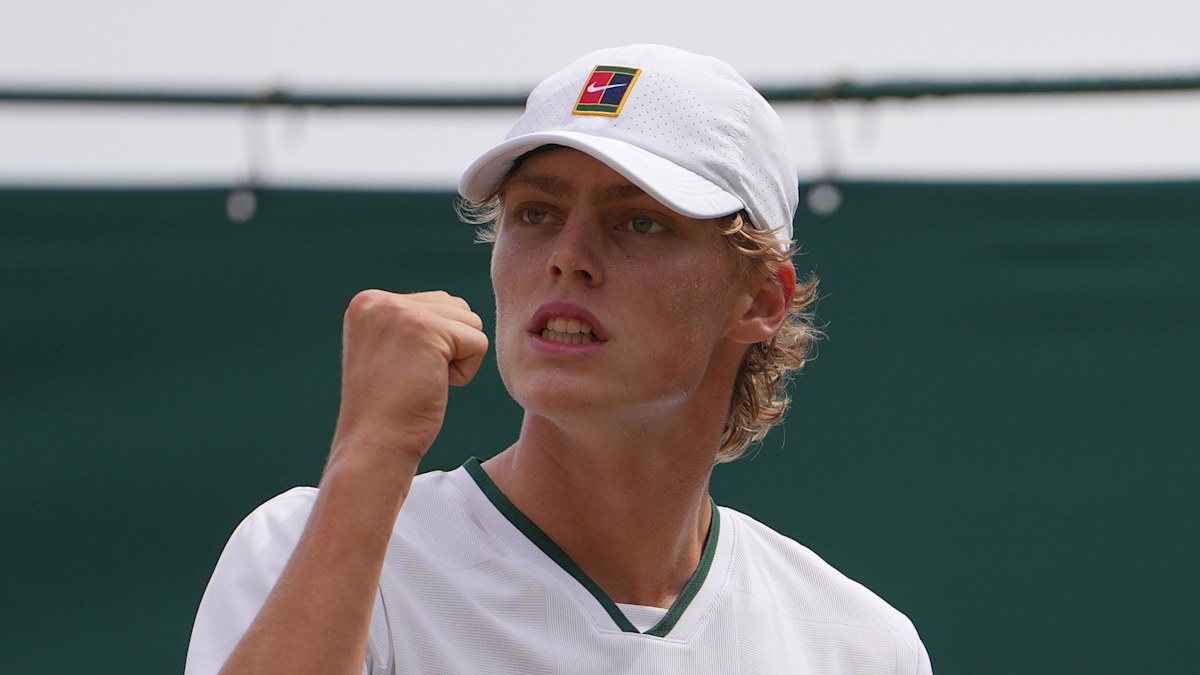
“I feel like it's going to be an exciting battle for Ukraine; that there will be one Ukrainian in the semis," she said. "I think it's really cool. I think it never really happened before, so yeah, it's exciting.”The current situation in their homeland gives both women a sense of perspective. Tennis is their job; it has been their lives but compared with what is happening back at home, it is just a game. But when they are on court, it is a different matter.Svitolina is a ferocious competitor (“I think it's like Eastern European mentality to really go through hell kind of to win matches,” she said) who has twice come back from a set down to get this far. Kostyuk is on a 16-match unbeaten streak and is playing with a level of – so far – unmatchable consistency that she has never experienced in her career.Svitolina is 31; Kostyuk is 23. Svitolina is the world No.7; Kostyuk is No.15. They have played twice before; they have one win apiece. And they are both playing for the people they love back home. In short, there is barely a gnat’s whisker between them.“Sometimes it gives you different perspective,” Kostyuk said of the situation in Ukraine. “It depends on the day what you think, but for sure, it gave me more space and understanding that there are much bigger things in life than tennis. And I try to keep that in mind always.”That perspective has spilled over into her current winning streak. The new consistency is, she thinks, down to a grown-up view of life: tennis is a sport, not a drama.“I would say right now the biggest thing that I do is that nothing is that big, like not one point is that important,” she said. “You know, there is another one always coming. So I always try to keep that in mind and always try to think about longer perspective on what kind of player do I want to be and where I want to be.”Svitolina took her time to find what kind of player she wanted to be. Pushed by her parents when she was young, she needed to find the right balance between the freedom and independence of getting older and finding that intense drive that had propelled her in her youth.“I feel when you're pushing your limits, when you're going through these moments, you are growing and you're learning, and it's the process of that. It's important that it doesn't break you mentally, and that's always been the goal for me, to always stay strong. OK, you can have bad days, but the life is still good.”The end result is that both women are at the peak of their powers. And Ukraine will win on Tuesday, no matter what.Court Philippe-Chatrier, first matchMirra Andreeva (8) vs Sorana Cirstea (18)Perhaps Sorana Cirstea should have considered retiring years ago. Since she decided that this season would be her last, she has been playing like a woman possessed and is now in her first quarterfinal here in 17 years. Or maybe that is the point: she is no longer possessed; she is free and she is having the time of her life.“I came into my last year, wanted to go out of the front door of the sport, wanting to really do well, but I didn't really think it was going to go that well,” she said, happily. “Also, I'm really enjoying. I think the last couple of years I realised how much I love this sport. I'm also working hard but also having fun. You can see this a little bit. Of course, I'm a competitor. I want to win every single match, but in the same time I'm not putting as much pressure. I'm not so hard on myself.”She hasn’t dropped a set so far but in Mirra Andreeva she faces a tough challenge: the world No.8 ended Cirstea’s run in Linz in the quarterfinal six weeks ago. On the other hand, this is her last Roland-Garros, she wants to end her career on a high. And she is at a career-high ranking of No.18. Andreeva could face a different Cirstea on Tuesday.“I've said it many times: I was always a very dangerous player,” the Romanian warned. “Always I could be top 10, and I could do good results, but maybe sometimes I was a little bit up and down.Now I think my base level improved, and every time I'm on the court I manage to get to at least a seven out of 10.”Court Philippe-Chatrier, third matchAlexander Zverev (2) vs Rafael Jodar (27)Alexander Zverev is impressed. Very impressed. When 19-year-old Rafael Jodar started the clay-court season, he was ranked No.89. As he comes into Tuesday's quarterfinal (his first in only his second Grand Slam tournament), he is No.29 and if he beats the experienced German he could be knocking on the door of the top 10. He has been sensational on the red dirt this year.“It's a fun time for any player when you're first coming up because you’ve got no pressure,” Zverev recalled, fondly. “You play freely. You experience all these big things for the first time. It's a lot of fun to be in that position.”That said, he likes his own position. At the age of 29, he has spent the last decade in the upper reaches of the rankings and most of it in the top 10 (his career high is No.2). He has been in three Grand Slam finals (including here in 2024) and he has won the ATP Tour Finals. He knows all about getting to the sharp end of the biggest tournaments in the world.But for the first time, he is the favourite to win the title – and that brings with it a whole new raft of pressures, ones that he is doing his best not to think about. With no Sinner or Alcaraz to stand in his way, this is an opportunity like no other.“I will focus on the matches that are ahead of me,” he said. “This is the only thing that I can control. I'm going to focus on Jodar next and hopefully play a good match. That's the only thing that is in my concern. I'm here, I'm feeling confident with my game.”As for Jodar, he is lapping up the new experiences and trying to learn as much as he can as quickly as he can. That is the joy of being young.

Most Popular