
Afcon’s biennial switch cost African governing body deal worth more than $1bn
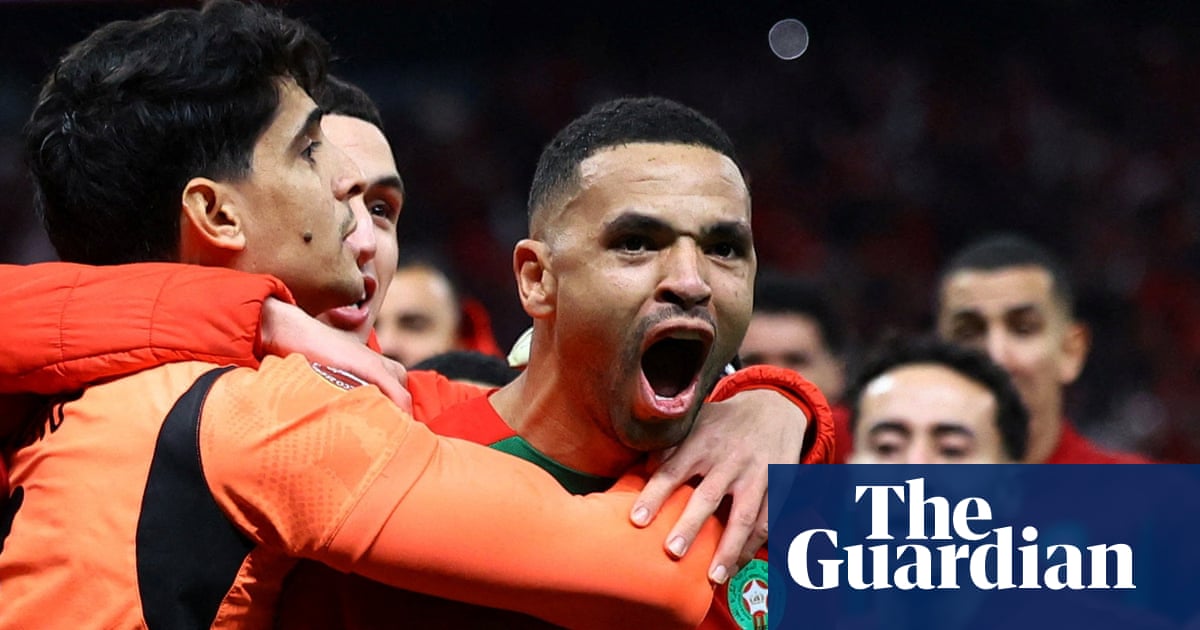
A deal worth at least $1bn in secured income over eight years was abandoned by the Confederation of African Football (Caf) because the governing body decided to switch the Africa Cup of Nations from a biennial to a four-yearly event, the Guardian can reveal.On 5 July 2025, the eve of the delayed Women’s Africa Cup of Nations in Morocco, the Caf president, Patrice Motsepe, told the Guardian in Rabat, after a prolonged discussion of the bidding process at an executive committee meeting, that a decision on a winning bid would be made “in due course”.“We announced in Addis Ababa this $1bn partnership that we are looking at over the next eight years. There is a lot of good progress that has been made,” he said.On 23 July, four days after the World Cup final in New York, Caf opened a fresh tender for the marketing and commercial rights of the 2028, 2032 and 2036 Africa Cup of Nations (Afcon) tournaments, with bidders given until 24 August to hand in their bid books.The tender is in complete contrast to the 2025 bidding round, in which the entirety of Caf’s competition portfolio was bundled for sale.Luxolo September, Caf’s head of communications, confirmed that the change in Afcon frequency is wholly responsible for the abandonment of the 2025 bidding round that was on the verge of completion.“As foreshadowed by the president in his comments last year, following the receipt and evaluation of bids and presentations from the bidders, in the second half of 2025, Caf entered into detailed discussions with shortlisted bidders regarding the precise terms and conditions of their proposals.“However, at its meeting on 20 December 2025, the Caf executive committee took a unanimous decision – in the interest of African football – to move the Afcon to a four-year cycle, bringing the competition into alignment with the international match calendar,” September said. “This was a significant decision for African football. That executive committee decision materially changed the scope of the commercial rights available for tender, with the result that the 2025 ITT (Invitation To Tender) process could no longer proceed in its existing form.”It has been seven years since Caf has had a long-term deal to secure its financial future. The 2016-2028 billion-dollar “minimum guarantee” revenue contract that it signed with the French company Lagardère during the tenure of Issa Hayatou, the late Cameroonian president of Caf, was the first of its kind for the organisation.“The Memorandum of Understanding with Lagardère was agreed by a team I led with Hicham [El Amrani, then Caf general secretary] in May 2015, in Zurich,” Suketu Patel, then chair of Caf’s finance committee, said in 2019.“On that same day, we met with Infront. Their indicative offer on the table was a $450m minimum guarantee for eight years, as opposed to the $1bn, for 12 years, from Lagardère.“If you look at our earlier contract of 2009, we had a minimum guarantee of $150m, but our income for the period was actually around $350m. We anticipated that the 12-year contract would have yielded about $1.3bn.“I can tell you that whilst President Hayatou and I had differences on political matters, we never had one on the management of Caf finances. He did not interfere with the processes established for good governance.”But that agreement was unilaterally terminated in December 2019 during the tenure of Ahmad Ahmad, Hayatou’s successor as Caf president.A protracted legal dispute at the International Chamber of Commerce led to Caf, just over a year into the presidency of Motsepe, paying Lagardère a final settlement of $50m, as compensation for the breach of contract, just before the 2022 World Cup in Qatar.“There is no way that any sponsor will be prepared to pay the same amount of money for a deal in which you would normally have four Afcons over an eight-year period, when you will now only have two. That is certainly a no-brainer,” said a former FA president with expertise in financial matters.


Most Popular
No.1 Sabalenka and Pegula advance at Toronto
6 hours ago


Hall of Fame Game
7 hours ago
