Why this was one of footy’s saddest rounds
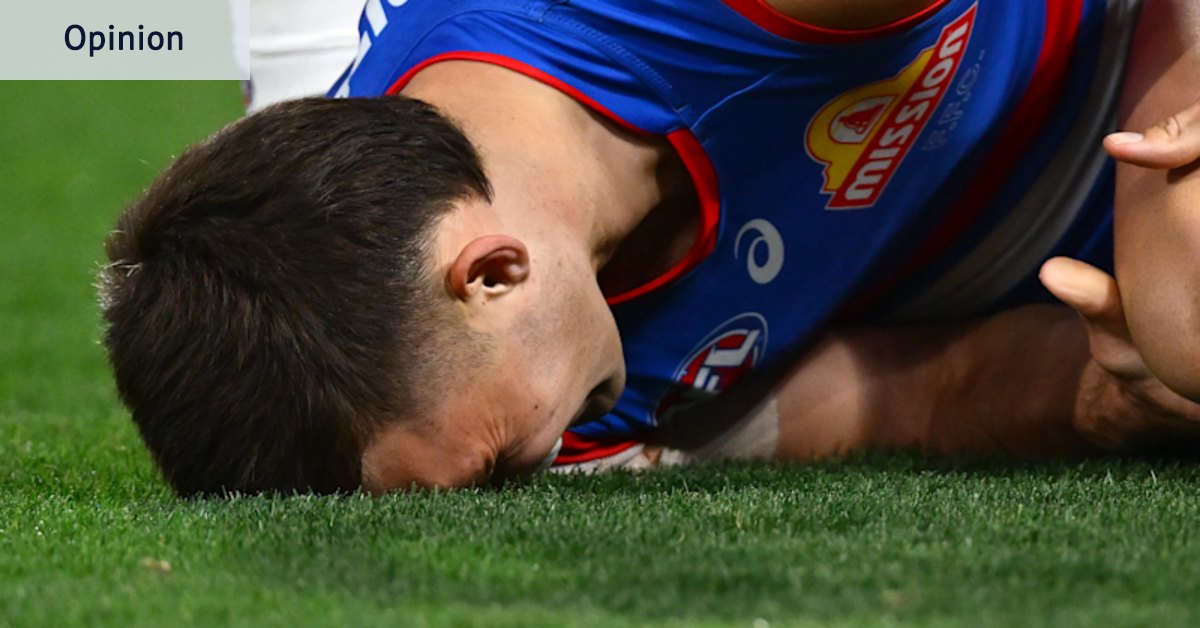
AdvertisementOpinionWhy this was one of footy’s saddest roundsMichael GleesonSports columnistApril 22, 2026 — 11:51amApril 22, 2026 — 11:51amYou have reached your maximum number of saved items.Remove items from your saved list to add more.Save this article for laterAdd articles to your saved list and come back to them anytime.Sam Darcy’s body gave way. One of the best and most athletic players in the competition, he collapsed to the ground, his body crumpling beneath him. He grabbed at his knee then punched the ground in an anguished cry. He’d wrecked his knee.It was sad, but not shocking. Another week, another injury. Shrug. Shit happens.His Western Bulldogs teammate Tom Liberatore copped a knock to the head. Again. He might come back from the concussion in a fortnight, but also might not. Two seasons ago he was jogging in a game when he lurched forward and face-planted to the ground. No one could identify a hit to precipitate the fall, but his numerous previous concussions were noted. He needed the approval of a panel of specialists to be allowed to return to play and expose himself to more head knocks.A query must linger now over when or if he returns. A question will also hang asking, why? Why submit yourself to this again? And then, when and if he does come back, breath will be held each time he goes near a pack.AdvertisementOn Sunday Melbourne’s Harrison Petty, like Liberatore two years ago, suddenly went woozy. He tried to kick a ball out from full-back only to miss his target. Petty wobbled and dropped to a knee. Two teammates held him up with arms both supportive and protective. They waved for help to get him off the ground.The Adelaide captain, Jordan Dawson, could not play. He sat in the stands, a public figure trying to privately grieve the awful, sudden death of his brother.In a reserves match on Saturday, Lucas Camporeale dived to smother a kick and was caught heavily in the guts. Doctors treated him, but detected no structural damage. He thought he’d just been winded and bruised and urged them to let him back out there. He played out the game untroubled. He spent the next days in hospital with a lacerated kidney.His twin brother, Ben, was concussed in the same game. The boys’ dad Scott, a former Carlton and Essendon player, now an assistant coach at Adelaide, could empathise with his sons.AdvertisementThis was all after the round began with a player having a mental health episode in the middle of the MCG in front of 78,000 people and millions more on TV. Officially, Carlton’s Elijah Hollands had just one possession against Collingwood, but his fidgety discomfort became everyone’s possession.Footage of him running backwards waving his arms, nearly missing his foot to kick, and nervously patting his coach on the back and not knowing where to put his arms quickly spread across social media. It was so weird it caused some to laugh, others to be mystified, more to be horrified and all to speculate about what was going on. It quickly became not funny at all.To discover that Carlton did not suspect him to be under the influence of illicit drugs or alcohol, which might have explained his erratic behaviour, and that they were treating it as a mental health episode, fundamentally altered the idea of what we had seen. A player on drugs hardens hearts; now hearts were breaking for Hollands. But the pity also turned to anger as the search began for someone to blame. Why didn’t someone stop him playing? Why didn’t someone get him off the ground and save me from feeling guilty for initially laughing at those videos?Would perceptions change again if it were to emerge that Hollands was self-medicating with drugs and/or alcohol? Would the empathy disappear? Would someone in a fit state of mind really plan to go on the field loaded? To learn that Hollands has volunteered to take drug tests only adds to the sadness. It suggests that he knows the presumption of guilt he carries, and that for many people, the only logical explanation for his unusual behaviour was going to be drugs or alcohol.AdvertisementPlayers are often accused – and I am guilty of this cynicism – of “playing a mental health card” when they are caught using drugs and rationalise that the drugs were the consequence of mental health problems. It has felt like a convenient excuse to explain hedonistic behaviour; a card to be played in the game of deceit. And for some it is, but right now, it doesn’t feel that way.Hollands’ father, Ben posted a sad, but beautiful, message on social media on Tuesday. He was a dad also in pain, hurting for a son, not for a footballer.Later in the round, back at the same ground, Lachie Neale – whose private life has been anything but, who over the summer was the focus of keen media attention for his infidelities – played his 300th game. Moral judgments aside, for any player to reach 300 games in an environment when the game feels harder than ever to play, when the job of being a footballer makes a player’s life the sport of others, is remarkable.To play, as Neale has played, garlanded with medals, is a testament to his physical and mental endurance. He has played the game in a manner, and at a level, most cannot hope to reach. Yet, before too long someone else will hit a similar milestone.AdvertisementThe game, if we need reminding, reminded us how bloody tough it is. It takes a physical toll we have become inured to and a mental toll we don’t understand or prefer not to contemplate.This was, in so many ways, just another round of football. A round attended by more people than any other this year, a round of close, thrilling finishes and beautiful play. A round where injuries were nasty but also familiar.A painful knee injury that upends a young athlete’s life and career is met with the question of what it means not just for him, but also his team’s premiership chances. That is as it has ever been. We all do it, and we will all continue to do it because that is the nature of sports. But it does not mean we should not pause to remember he is suffering for our entertainment.A concussion that happens in nearly every game is also a confounding existential problem for the game. One knock seems like a headache until we see a player drop like Liberatore or Petty did and realise the problem even they were unaware of.AdvertisementInfidelity and a marriage break-up becomes of the public interest, not just interesting to the public, because football has helped make that player a brand, not just a player.Then there is Hollands.A week earlier we had Gather Round in Adelaide. It was a jolly festival of football, showcasing the beauty and excitement of a game that binds communities. Round six became a meditation on the price of playing.The game is not responsible for everything that happens in players’ lives, but the past round was a reminder that the game is harder and more unsparing than it has ever been to play.AdvertisementYou have reached your maximum number of saved items.Remove items from your saved list to add more.More:AFL 2026OpinionFor subscribersCarlton BluesWestern BulldogsMelbourne DemonsCollingwood MagpiesBrisbane LionsAFL injury wardConcussion crisisMental healthMichael Gleeson is an award-winning senior sports writer specialising in AFL and athletics.Connect via X or email.


Most Popular