
'Football was always in our blood': Canada midfielder's journey to World Cup history
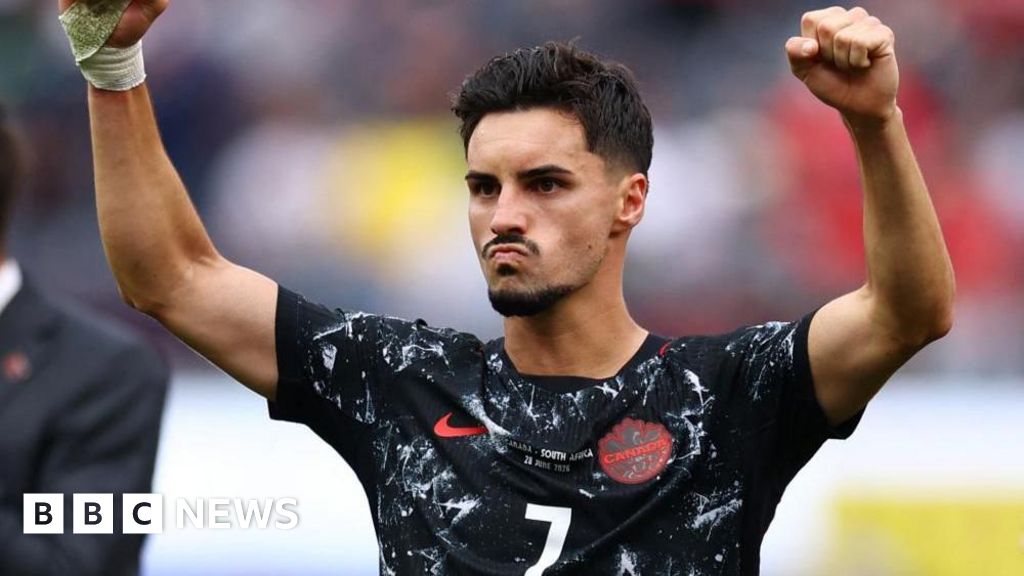
José Eustáquio got emotional as he watched his cousin, Stephen Eustáquio, score Canada's history making, game-winning goal against South Africa."I mean, it couldn't be better than that," said José, who watched Sunday's game on television from his hometown of Toronto with Stephen's older brother, Mauro, a retired professional football player and the head coach for local football team Inter Toronto FC."The chest control, the control of the ball, and a perfect shot into the corner," he said, analysing the goal that helped Canada go further in the World Cup than it ever has before.Stephen Eustáquio's goal was the decisive moment that kept the country's World Cup run alive, sending it into the last 16 in the tournament.For the Eustáquio family, it was the culmination of years of sacrifice and dedication that is reflective of Canada's large and vibrant Portuguese community, where a love for the Beautiful Game was passed down through generations and carried across the Atlantic.Canada is home to nearly half a million people of Portuguese descent, many of whom immigrated in the late 20th Century in search of better jobs. Among them were Stephen Eustáquio's parents, Esmeralda and Armando, a couple from the Portuguese coastal town of Nazaré who settled in the small town of Leamington, Ontario, in 1997.Armando, a fisherman in his home country, was able to find similar work on Lake Eerie, while his wife worked in a nearby fish plant.The couple enrolled Mauro and Stephen, who was born in Leamington, into local football programmes from a young age."Football was always in our blood," their cousin José said. He recalled how in Portugal, children in the family "would play on the cobblestone roads, and we would fashion soccer balls out of the socks from our great-grandparents".The brothers showed promise in the sport, prompting the family to relocate back to Portugal to support their training when Stephen was just seven years old.Both went on to play for clubs in Canada and Portugal, including FC Porto, one of the historic powerhouses of the Primeira Liga where Stephen played midfield before joining Los Angeles FC earlier this year.Eligible to play for both Portuguese and Canadian national football teams, in 2019 a 22-year-old Stephen chose his parents' adopted home."I have big dreams when it comes to playing for Canada," he said in an announcement video at the time.José said the decision was partly driven by his cousin's appreciation of what the country had done for his family."At the core of the family has always been the love and affection for what Canada had provided them, an opportunity for a better life, and so he was always proud of that," he said.It is a story echoed across the Canadian men's national team, whose roster is a reflection of the country's diversity - with players born in Canada to immigrant parents, as well as in Nigeria, England and the Ivory Coast. Their star player, Alphonso Davies, was born in a refugee camp in Ghana."This group puts flesh and bone on the promise Canada has long projected to the world: families arriving, settling, working, struggling, raising children, and building excellence in communities across the country," Aftab Ahmed, a columnist and policy analyst said of the team in a piece for publication The Line.In a country where ice hockey is traditionally considered the national sport, football has offered immigrants a way to connect with one another and with their home countries, said Manuel DaCosta, a Portuguese-Canadian business owner who immigrated to Canada 56 years ago."If you take away soccer and politics, the Portuguese don't have much to talk about," he joked.It is also much cheaper to play than ice hockey, a sport with notoriously expensive equipment, making it a popular choice for recent immigrants with modest financial means.In 2011, José helped start Toronto's Sporting FC academy - the first certified academy of the storied Portuguese football club of the same name outside of Portugal, offering both competitive and recreational programmes for youth.The academy, he said, was inspired by his own football ambitions growing up."Canada has allowed us an opportunity to dream, and we dream through our children," José said.He said Stephen's goal will undoubtedly inspire future generations of Portuguese Canadians to take up the sport."They're going to wake up this morning wanting to be the next Stephen Eustáquio and have a dream like he did," he said.But success on the pitch hasn't sheltered the Eustáquio family from tragedy.Esmeralda died from brain cancer in April 2023 and Armando died a year later from a heart attack.The dual losses have weighed heavily on Stephen and the rest of the family."You could see when Stephen was walking around the field post game, and he was very emotional... we knew that he was having thoughts of his parents and his brother," José said.Sunday's match was nearing the end without a goal scored from either Canada or South Africa, prompting Canada's head coach Jesse Marsch to send in Davies for the last 15 minutes - his first time playing in the tournament after recovering from a hamstring injury.

Most Popular

Madueke: 'I’m ready to step up'
32 minutes ago




'Japanese Messi' Kubo ruled out of Brazil showdown
22 hours ago

PH men’s football team secures Asian Games berth
13 hours ago