England should NOT sack Thomas Tuchel despite monumental World Cup semi-final failure - unless Pep Guardiola wants the job
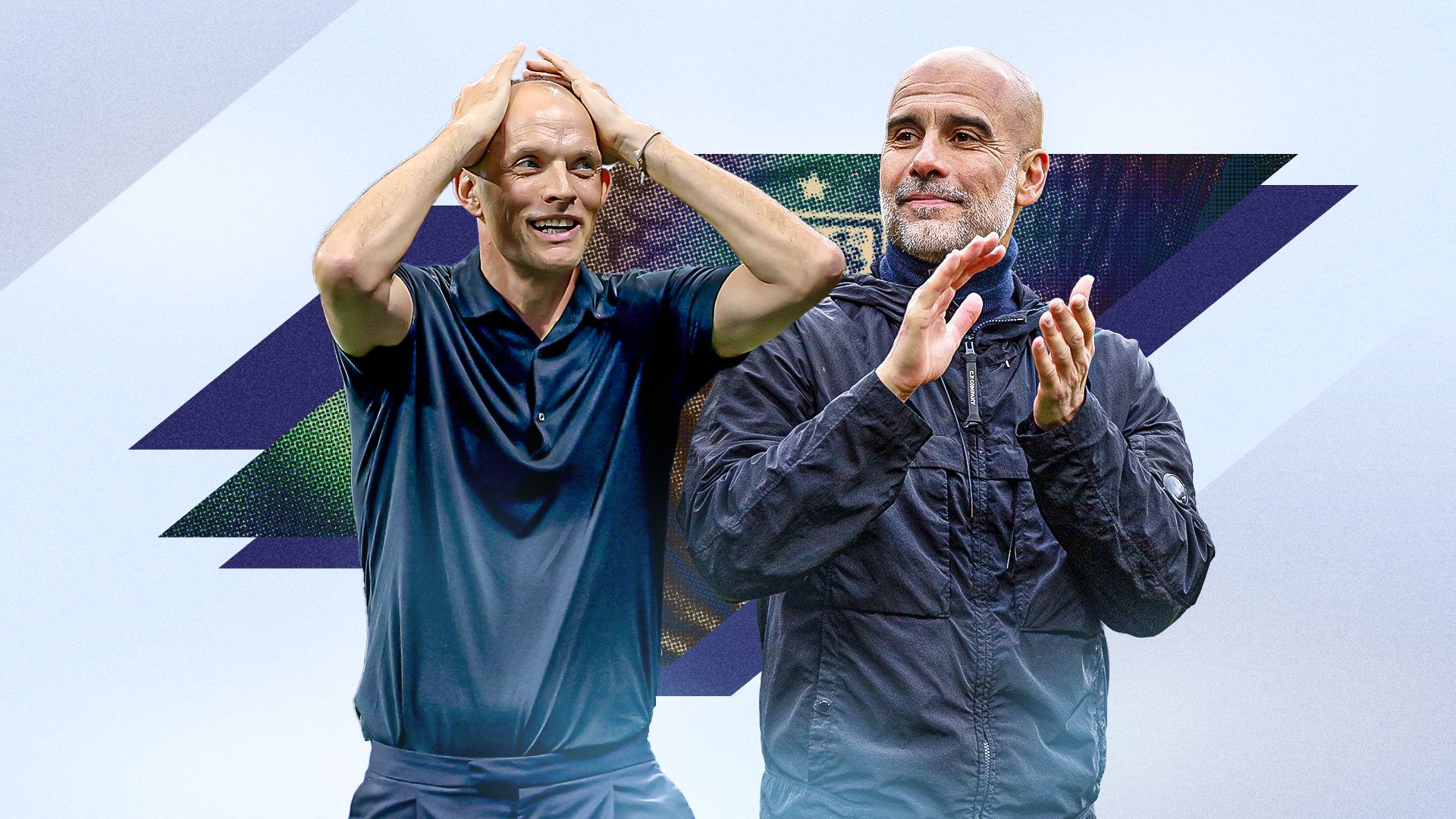
Tuchel certainly deserves his fair share of the blame and criticism for the capitulation in Atlanta, but England's performance once they had taken the lead early in the second half exposed something that both transcends the manager and was fuelled by his in-game decision-making.It what is undoubtedly a hangover from the Gareth Southgate era, his fatigued players seemed to sit in deep involuntarily, as though they were in complete disbelief that they could possibly be ahead against a team as revered as the world champions and simply had to grind it out, letting an ingrained inferiority complex take hold despite having the tools to comfortably beat this iteration of Argentina.That negative mindset switch is what prompted Tuchel to make his ill-fated substitutions in the final 20 minutes. He was merely attempting to replace players who had dropped into defensive positions with actual defenders, as his side failed miserably to press home their advantage. But the introduction of three defenders only encouraged his side to retreat even further and invite pressure. Argentina started to find pockets of space, and Messi ruthlessly exploited them.Many will argue that Tuchel should have reacted to England's reflexive negativity soon after going ahead with attacking, front-footed substitutions, because the game was there for the taking.It's become clear since the final whistle in Atlanta that there was no directive from the manager to sit deep and defend in a low-block. Instead, England's underdog mentality set in, and by the time Tuchel made changes (albeit the wrong ones) it was already too late.Amid the fallout, the coach's most telling interview was with ITV. "They had nothing to lose, we suddenly played like we had a lot to lose," he said. "We didn't have enough possession, we couldn't escape the pressure anymore. [We] tried everything but we couldn't get hold of the ball and then it's just like you're dying a slow death, it started straight away after the goal and it's basically the reason why we lost."Quizzed on his substitutions and the seemingly negative effect they had, Tuchel sniped back: "We sat deep straight away after our goal, you just said it. Not after the substitutions. But I take the responsibility for the substitutions. It's easy to be a coach after the game, you tell the story from the result. No one can prove what would have happened without the substitutions."England captain Harry Kane insisted that the manager had actually told his players to keep pushing forward. "Once we went 1-0 up, we seemed to just try and hold on, which at this level is just not enough, so I'm gutted," he said. "When we went ahead, the messaging was to go again and get another goal."That was echoed by centre-back Marc Guehi. "We should have carried on pushing," he said afterwards. "It kind of felt like we scored at the mentality was 'go back, defend'."Tuchel might have got the timing and nature of his substitutions wrong, but the brutal reality is that England's underlying mentality issue - which he referenced himself when he took the job in a clip that has been widely reshared since the final whistle in Atlanta - was never going to be a quick fix. The ex-Chelsea and Bayern Munich boss only began work in January 2025, charged with turning the Euro 2024 runners-up into world champions in the space of what was just six international camps before this summer's tournament.Despite the very public messaging that the objective was to lift the trophy, even the most optimistic England fan would admit that it was always a tall order in that relatively short timeframe, especially given the calibre and tournament pedigree of many of the other favourites to lift the trophy. The likes of Spain, Argentina and France were not operating under the weight of 60 years of hurt.As noted by The Athletic, "England almost always lead in knockout matches they are eliminated in" (Germany in 1996, Argentina in 1998, Brazil in 2002, Portugal in 2004, Iceland in 2016, Croatia in 2018 and Italy in 2021) before they ultimately throw it away. There is a sense that it is going to take much longer than Tuchel's 18-month tenure to date to change that.With that in mind, success at Euro 2028 on home soil actually feels like a realistic target. By then, the manager should have instilled the belief in this group of players that they deserve their place among the top seeds at major tournaments and can therefore play with the freedom that that belonging should bring, just like Argentina did in the second half in Atlanta.Despite the semi-final exit, the fact it was undoubtedly a tactical failure from both the players and manager, and the calls for his head fuelled by the nature of the defeat, it would feel knee-jerk to get rid of Tuchel at this stage, with his England project still really in its infancy. However, it is impossible to ignore that arguably the greatest coach of all time is available, and would potentially be open to taking what is widely considered to be the most difficult job in football.Pep Guardiola left Manchester City at the end of the club season, having made it abundantly clear during his time there that he had become enamoured with the English game, which, in turn, he revolutionised over the course of his decade at the Etihad Stadium. It is little surprise that he is the bookies' favourite to be the next England boss.If the FA were to consider pivoting away from Tuchel, the revered Catalan must be their first port of call as the only viable replacement capable of surpassing the marker the current incumbent has put down at this World Cup. Otherwise, they must persevere with a man who is still widely considered to be one of the best coaches on the planet.It remains to be seen what he future holds, but for now it seems Tuchel still has the support of those above him in the hierarchy. It was reported in the aftermath of Wednesday's defeat that the England manager retains the backing of the FA, who will consider the run to the semi-final a relative success in spite of the disappointing exit to Argentina.This is perhaps a predictable outcome, given the German tactician signed a new two-year contract extension in February having initially been hired on an 18-month deal until the end of the 2026 World Cup that had appeared to be tied to winning the tournament.Tuchel, then, is expected to lead the Three Lions at Euro 2028, which will be hosted by England, Wales, Scotland and Ireland. He will be expected to end the agonising wait for a major trophy on home soil, and if he doesn't, that will almost certainly spell the end of his tenure.It is vitally important now that this major setback doesn't define Tuchel's England tenure, and that it instead provides learnings and a platform to finally take that next stride forward on the biggest stage. That, it seems, is the manager's ambition."We keep on going with the contract until the home Euros," Tuchel said in his post-match press conference, confirming that he has no plans to step aside. "I'm looking forward to that, even though right now it's difficult to look that far ahead."We have to wait for four years [for another World Cup]. In itself it's an achievement, of course, it's a semi-final. A lot of big footballing nations are eliminated before the semi-final, so it is an achievement. No one wants to hear that at the moment, me neither, because we demand the most of ourselves because we are so competitive."And so we look ahead to 2028, where England will be among the favourites again with an exciting squad set to be enhanced by promising younger players coming through and perhaps returns for talents like Cole Palmer or Phil Foden. In the two-year interim, Tuchel must instil the belief required to finally go all the way.
)

Most Popular


awaited comeback, forward returns for Crows clash
11 hours ago

The economic cost of losing the World Cup
2 hours ago