Roger Federer and Rafael Nadal Made 2017 Bigger but Is The 2026 Laver Cup Actually Stronger?

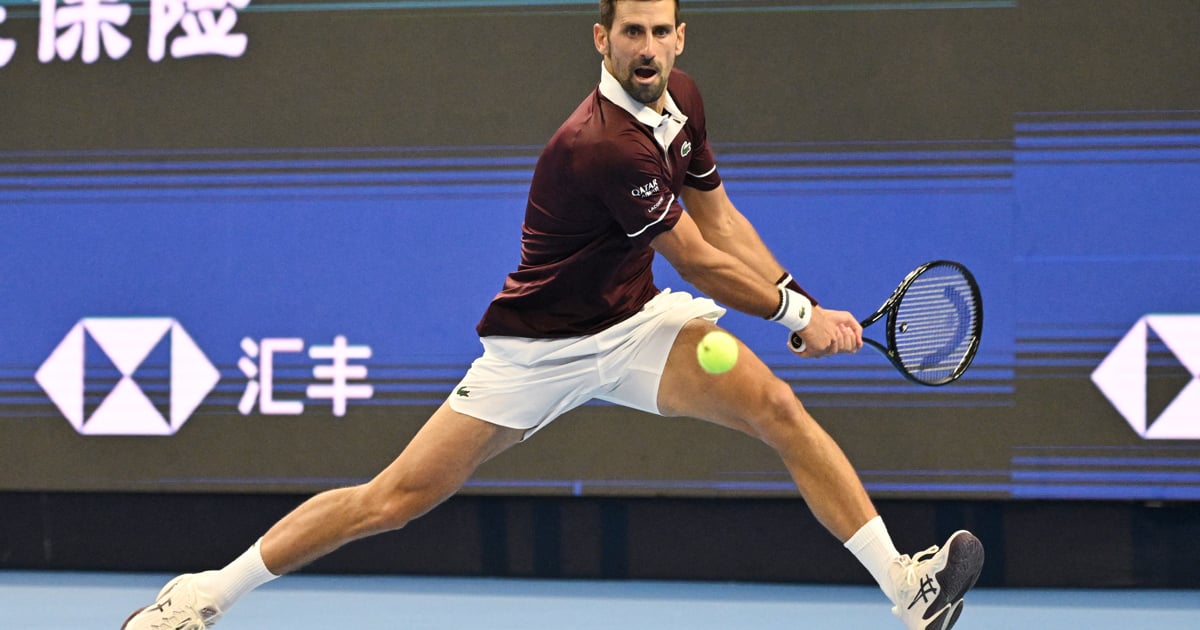
Put the first Laver Cup roster next to the current one and there is an obvious winner in one category. Name value. The inaugural 2017 edition had Rafael Nadal and Roger Federer on the same team, with a 20-year-old Alexander Zverev, Marin Cilic, Dominic Thiem and Tomas Berdych beside them. Team World brought Nick Kyrgios, John Isner, Jack Sock and several other recognisable names.That is difficult to compete with. But name value and playing strength are not necessarily the same thing. If we ignore what those players eventually achieved and instead compare how highly they were actually ranked when each Laver Cup took place, the 2026 field holds up remarkably well.AdvertisementIn fact, from top to bottom, it may be deeper.What Did the First Laver Cup Actually Look Like?For the inaugural event in Prague, the final six-man Team Europe was Nadal, Federer, Zverev, Cilic, Thiem and Berdych. Their ATP rankings on September 18 2017 were:Rafael Nadal No. 1, Roger Federer No. 2, Alexander Zverev No. 4, Marin Cilic No. 5, Dominic Thiem No. 7 and Tomas Berdych No. 19. That is absurdly strong. Five of the six were inside the Top ten, while Berdych was hardly some weak final selection at No. 19. Europe had an average ranking of No. 6.3.Team World was considerably weaker on paper. Sam Querrey was No. 16, John Isner No. 17, Nick Kyrgios No. 20, Jack Sock No. 21, Denis Shapovalov No. 51 and Frances Tiafoe No. 72. Tiafoe had entered late after Juan Martin del Potro withdrew. The average Team World ranking was therefore No. 32.8. That tells you almost everything about the first Laver Cup.AdvertisementEurope was ridiculous. World was entertaining. The overall field was not nearly as balanced as memory sometimes makes it seem.Now Compare That With 2026The current Team Europe consists of Alexander Zverev No. 2, Carlos Alcaraz No. 3, Flavio Cobolli No. 7, Rafael Jodar No. 14, Jakub Mensik No. 15 and Casper Ruud No. 17.Team World's final six are Alex de Minaur No. 9, Taylor Fritz No. 10, Learner Tien No. 13, Brandon Nakashima No. 16, Alexander Bublik No. 21 and Francisco Cerundolo No. 22.Those are the ATP rankings from the September 21 list immediately before the event. Ben Shelton and Tommy Paul had originally been selected for Team World, but both were replaced before play began, with Nakashima and Cerundolo entering the final competition roster. That leaves Team Europe with an average ranking of roughly No. 9.7 and Team World at No. 15.2.AdvertisementMore importantly, every single player at the 2026 Laver Cup is ranked inside the Top 22. That was nowhere close to being true in 2017.So Which Field Was Actually Better?This is where it becomes interesting. Both editions featured five Top ten players. In 2017, they were Nadal, Federer, Zverev, Cilic and Thiem. In 2026, they are Zverev, Alcaraz, Cobolli, De Minaur and Fritz.So at the very top, the numbers are surprisingly similar. The difference comes farther down. The median ranking of the 2017 field was No. 16.5. In 2026, it is No. 13.5. The average ranking across all 12 players was approximately No. 19.6 in 2017 compared with roughly No. 12.4 this year.AdvertisementThat is a meaningful gap. The first edition had two players ranked outside the Top 50 in Shapovalov and Tiafoe. This year's lowest-ranked player is Cerundolo at No. 22. The inaugural field also had a huge imbalance between the teams. Europe's average ranking was around No. 6 while World's was nearly No. 33.This year the gap is much smaller. Europe averages around No. 10. World averages around No. 15. Purely as a competitive tennis event, that matters.But 2017 Had Something 2026 Cannot ReplicateNumbers cannot entirely capture what walked onto the court in Prague. Nadal was No. 1. Federer was No. 2. Both were having enormous seasons. Nadal had already won Roland Garros and the US Open in 2017. Federer had won the Australian Open and Wimbledon. Between them, they had taken all four Grand Slams that season before arriving in Prague.AdvertisementThen there was Zverev at No. 4, Cilic at No. 5 and Thiem at No. 7. That peak is stronger than what 2026 offers. Zverev and Alcaraz give the current European team two genuine elite players, while Cobolli arrives at No. 7 after a breakthrough season. But there is no current No. 1 playing, with Jannik Sinner absent.So if the question is which edition had the strongest collection of superstars at the very top, 2017 wins fairly comfortably. If the question is which edition has the stronger player sitting in the fifth, sixth, tenth or 12th slot, 2026 becomes much more convincing.The Last WordThe first Laver Cup remains almost impossible to beat aesthetically. Federer and Nadal together. Kyrgios on the other side. A young Zverev and Thiem. Berdych, Cilic, Isner and Sock.AdvertisementEven Shapovalov and Tiafoe felt exciting because they represented what might come next. That roster looked like an event. The 2026 edition does not have quite the same aura. But take the names away and look only at where everybody stood in men's tennis when the event began, and the comparison changes.The inaugural Laver Cup had the better top end. The current Laver Cup has the better depth. In 2017, the field stretched from No. 1 to No. 72. In 2026, it stretches from No. 2 to No. 22. That probably sums it up best.Prague had more star power. London has fewer weak links.Main Photo Credit: Imagn Images via Reuters


Most Popular

Cameron Green out of Test series opener in Durban
18 hours ago

South Africa hope to host first African Olympics
18 hours ago